Sergei Prokofiev composed a full score for a ballet based on William Shakespeare in 1935 Romeo and Juliet. It would be five years before he could see it performed in full in Russia, as he was at odds with the regime. The process leading up to the release of the ballet was characterised by a series of problems, as the official Soviet attitude towards cultural works was that they should have a happy ending. However, after some debate, Prokofiev was allowed to keep the more traditional tragic ending.
Three different suites for symphony orchestra have been arranged over the ballet, and the one I will discuss below is the third. It consists of 6 movements, which in some cases are composed of different passages from the ballet. What is particularly characteristic of this version is that it focuses largely on Romeo and Juliet, while most of the other characters: Paris, Tybalt, Friar Laurence, etc. are not thematically represented in it.
We open the first movement with the overture, a beautiful lyrical passage in strings and woodwinds:
Three different suites for symphony orchestra have been arranged over the ballet, and the one I will discuss below is the third. It consists of 6 movements, which in some cases are composed of different passages from the ballet. What is particularly characteristic of this version is that it focuses largely on Romeo and Juliet, while most of the other characters: Paris, Tybalt, Friar Laurence, etc. are not thematically represented in it.
We open the first movement with the overture, a beautiful lyrical passage in strings and woodwinds:

Then we are introduced to Romeo, he makes his entrance to the bassoon:

But then he gets to express himself properly on the clarinet - the two deep woodwinds are his instruments:

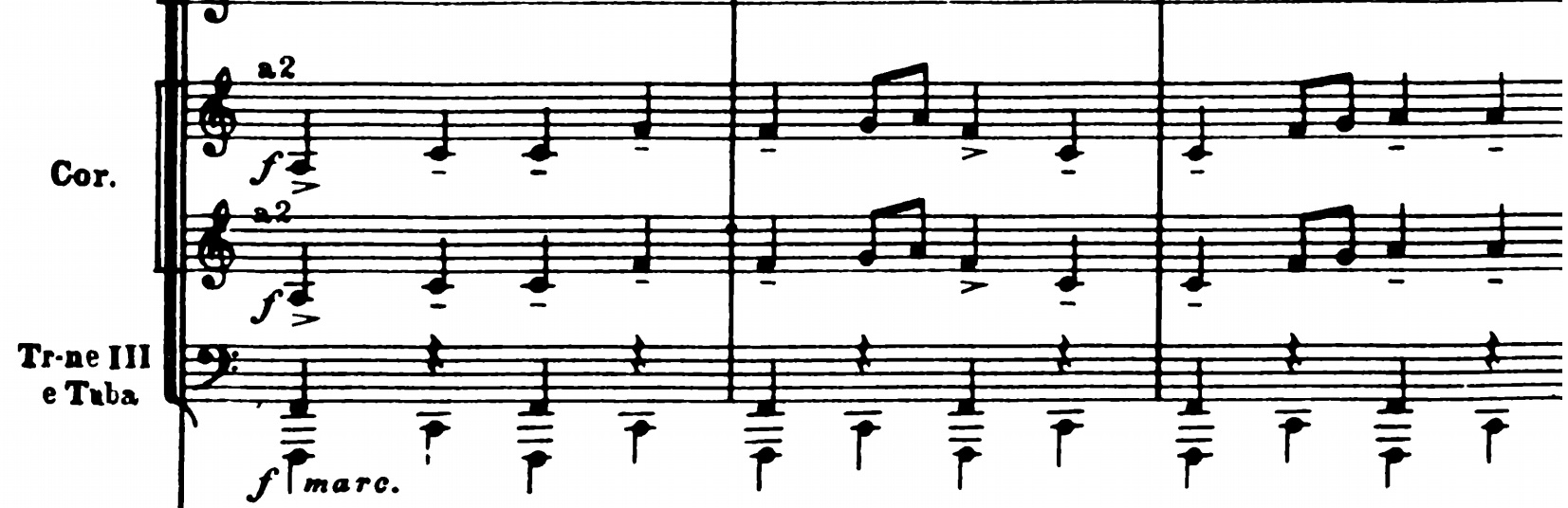
The second movement is a ’morning dance’ almost identical to that of the ballet, characterised by a horn and brass theme:
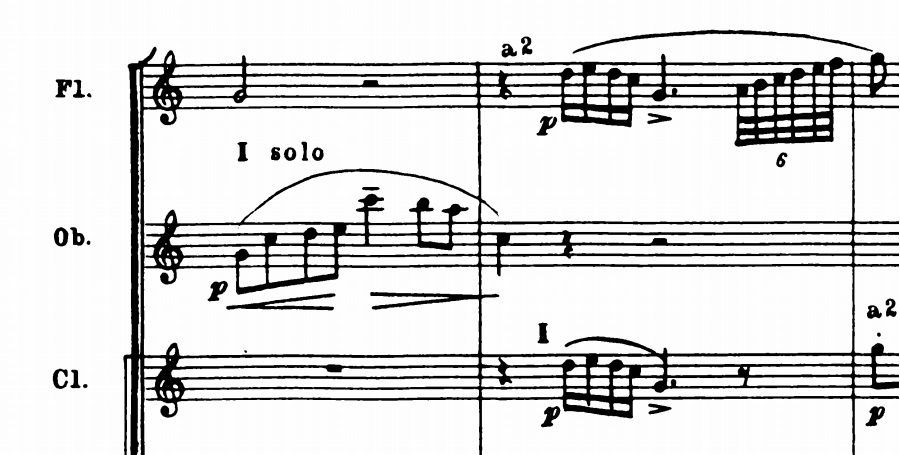
The third movement is Julie's. She is first introduced by a beautiful and light theme in flute from the first time we meet her as an adult in the ballet:

This theme is followed by a more serious one when she meets Friar Laurence - the friar who will marry her and Romeo in secret, this theme here arranged for solo violin. In the ballet, the entire string section plays this melancholic and uncertain theme:

The fourth movement is dedicated to the nurse who is Juliet's confidante. She is supportive, happy and excited to help unite Juliet with Romeo, so her theme is arranged for oboe, flute (Juliet) and clarinet (Romeo):
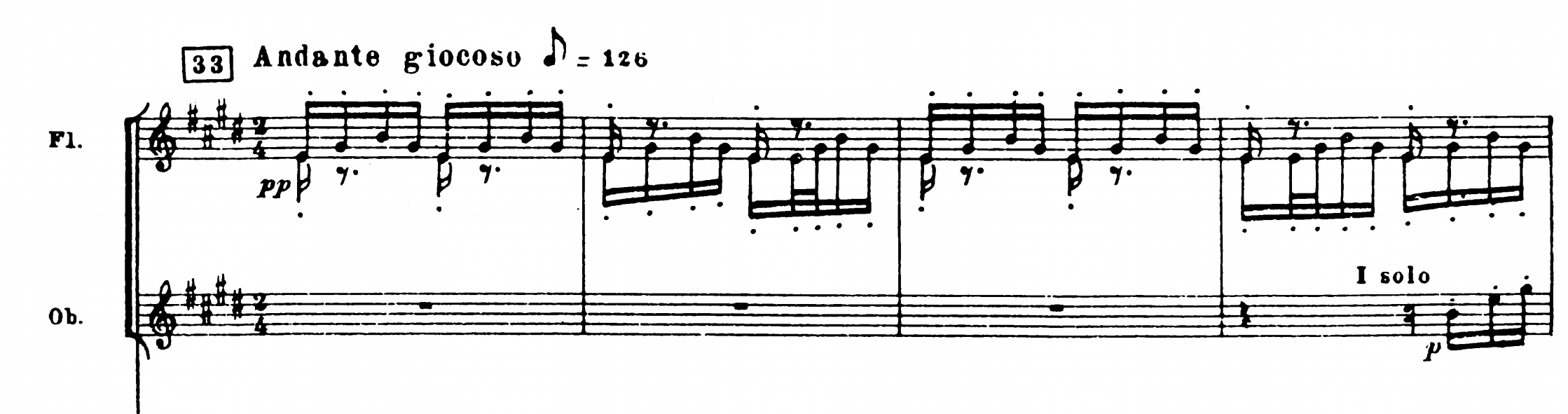
The fifth movement is in some ways the funniest. It's a serenade Romeo plays for Juliet on mandolin, here arranged for full string section and woodwinds, including the very constant and insistent character of the music:
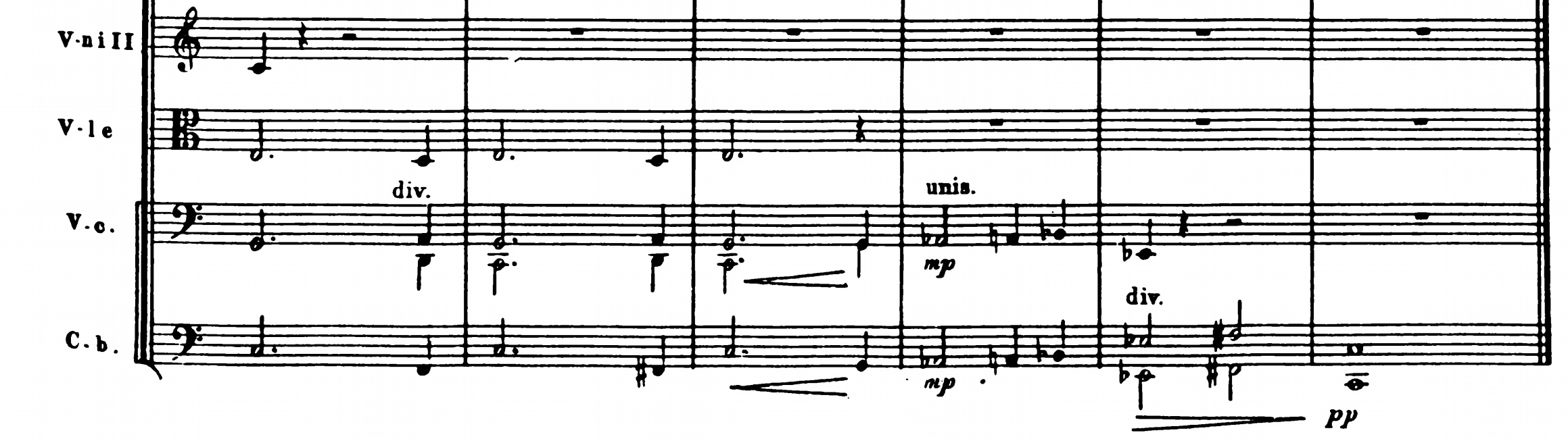
Sixth movement. Alas. The story cannot end happily, this is Julie's funeral. The movement is emptied of solo material to mourn Julie's passing, the last bars of the movement are a slow fade to death and nothingness: