Robert Schumann wrote his third symphony in 1850, after a visit to Cologne to see the then unfinished cathedral. Robert and his wife Clara travelled to the city on the Rhine and this is where he found his inspiration for the symphony.
In the following, I will take a closer look at the main motifs of the first movement. This movement is written in what is called a sonata form, which means that it typically has three sections: exposition where we are presented with the main melodic ideas, modulation/throughout where these ideas are mixed and distorted and the recapitulation where we return and the melodic material stabilises again.
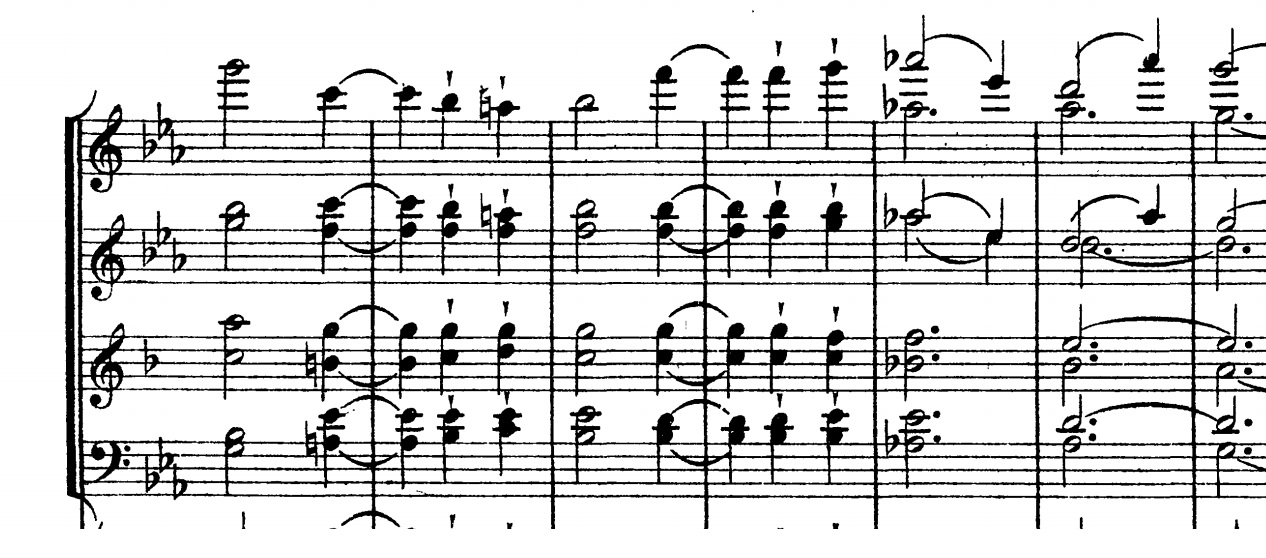
The symphony opens with a long melodic theme that is in 3/4 but due to the rhythmic structure is ambivalent about whether it is actually in 2/4:

At the end of this melody comes a small tail, consisting of first some upward segments, a hesitant motif and then some downward segments:
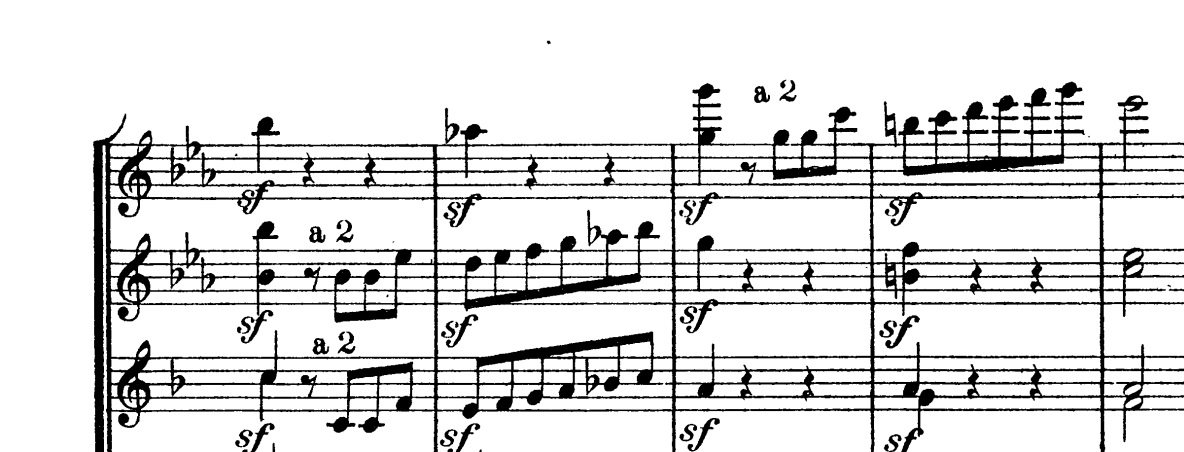
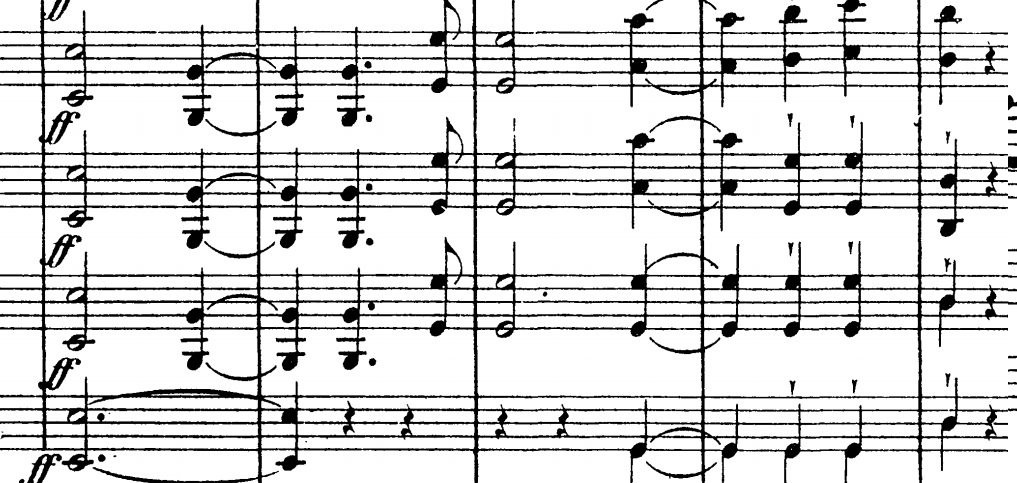
He then repeats the section, but this time adds the horns to give the movement additional power:
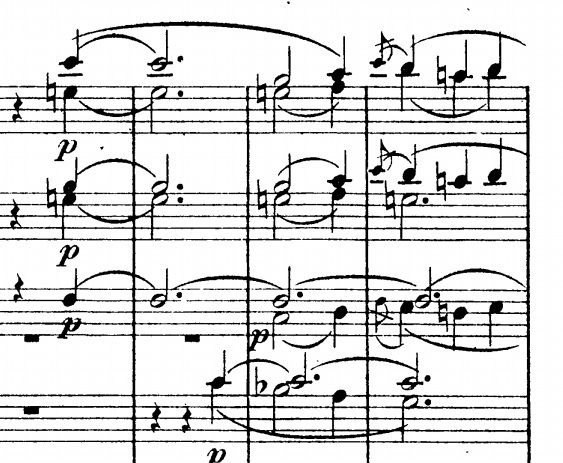
The second theme of the movement is much milder, played in the woodwinds and strings:

We have now finished the exposition and are now listening to the conclusion, where Schuman first deals with the second theme:
Then we return to the first theme, now played in double bass and bassoon, giving it a more sombre and dark character:

But out of the darkness, the horns save us again, with a theme that can only be described as heroic:
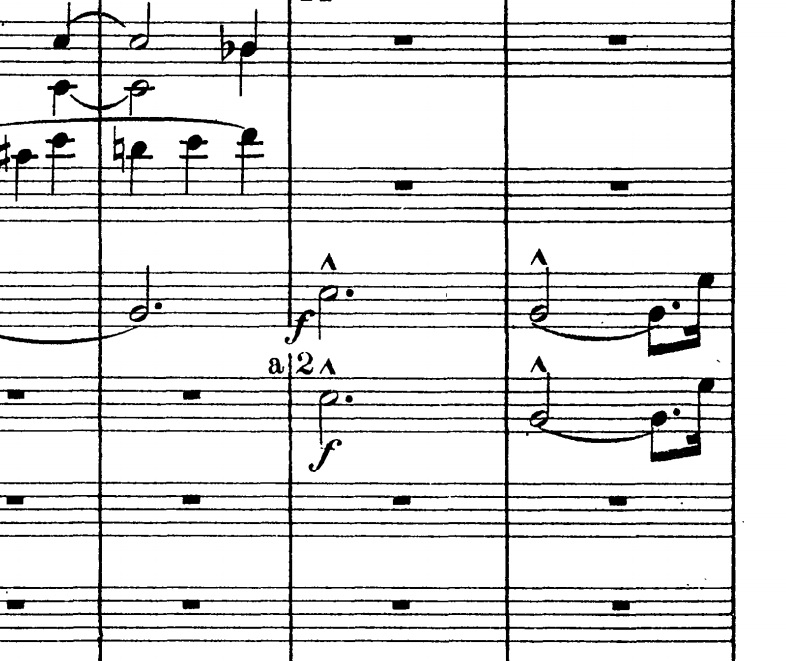
And out of this heroic theme we are led to the reprise, where we hear the familiar first theme and it sets the scene for the end of the movement: