Maurice Ravel (1875-1937) composed a suite of 8 waltzes in 1911, Noble and sentimental waltzes, first written for solo piano and then in an orchestrated version. The title was a tribute to Franz Schubert, who had published two waltz collections almost a century earlier, Noble waltzes and Sentimental waltzes. In the following I will go through the first of the waltzes in the suite.
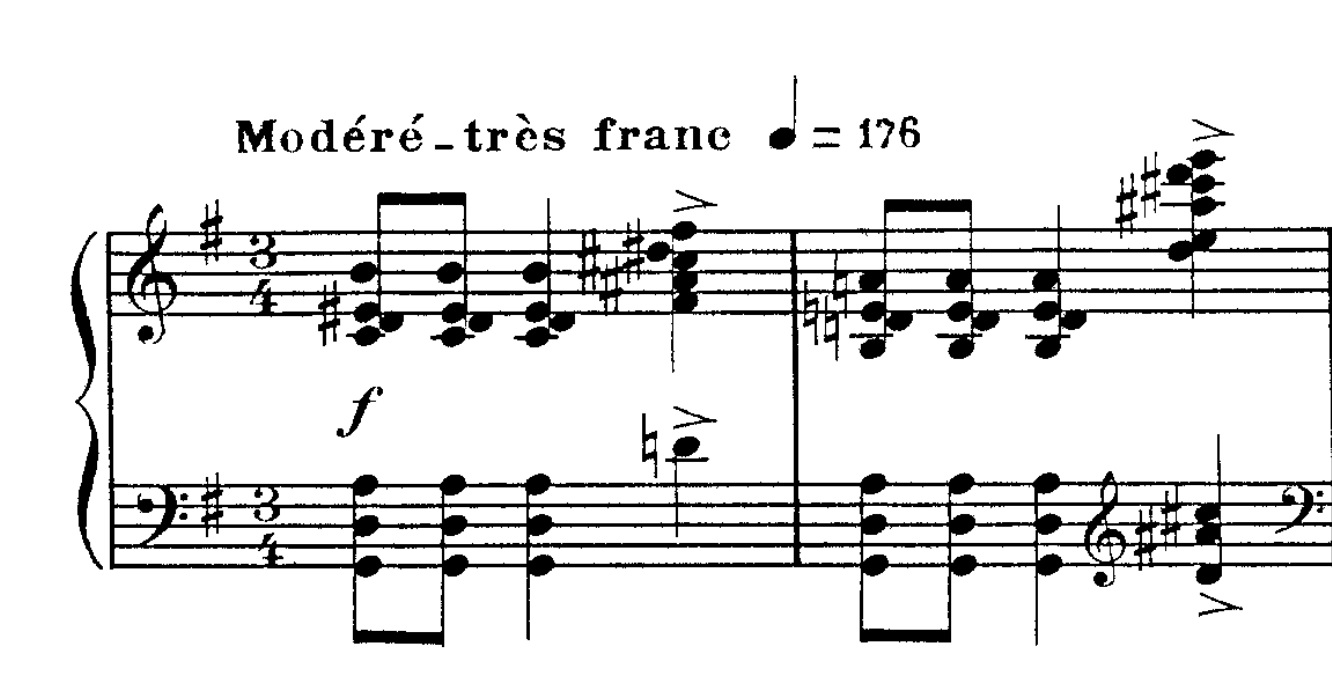
The first of the eight waltzes introduces us to the central motif, which rhythmically consists of two short and one long stresses of the same chord, then leads up:
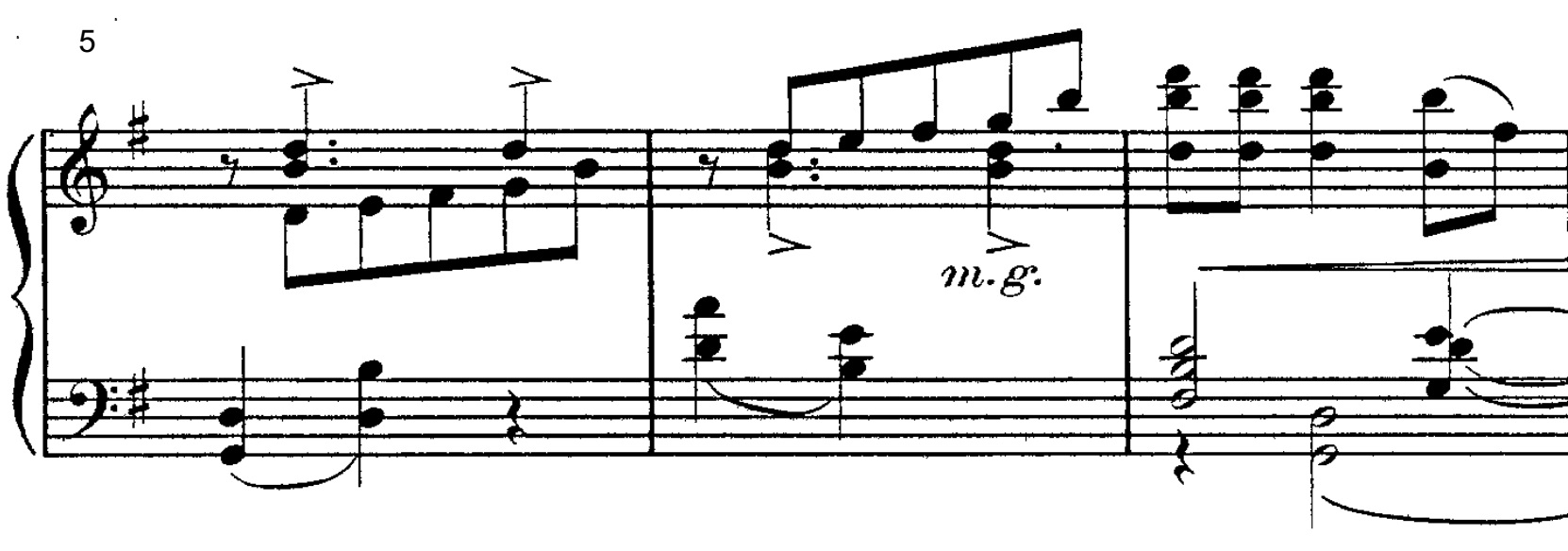
After this intro, we get a melodic passage that quickly incorporates the rhythmic motif, but gives it a different ending:
Towards the end of the melodic passage, we then hear three high-stacked chords that are then brought to a close:
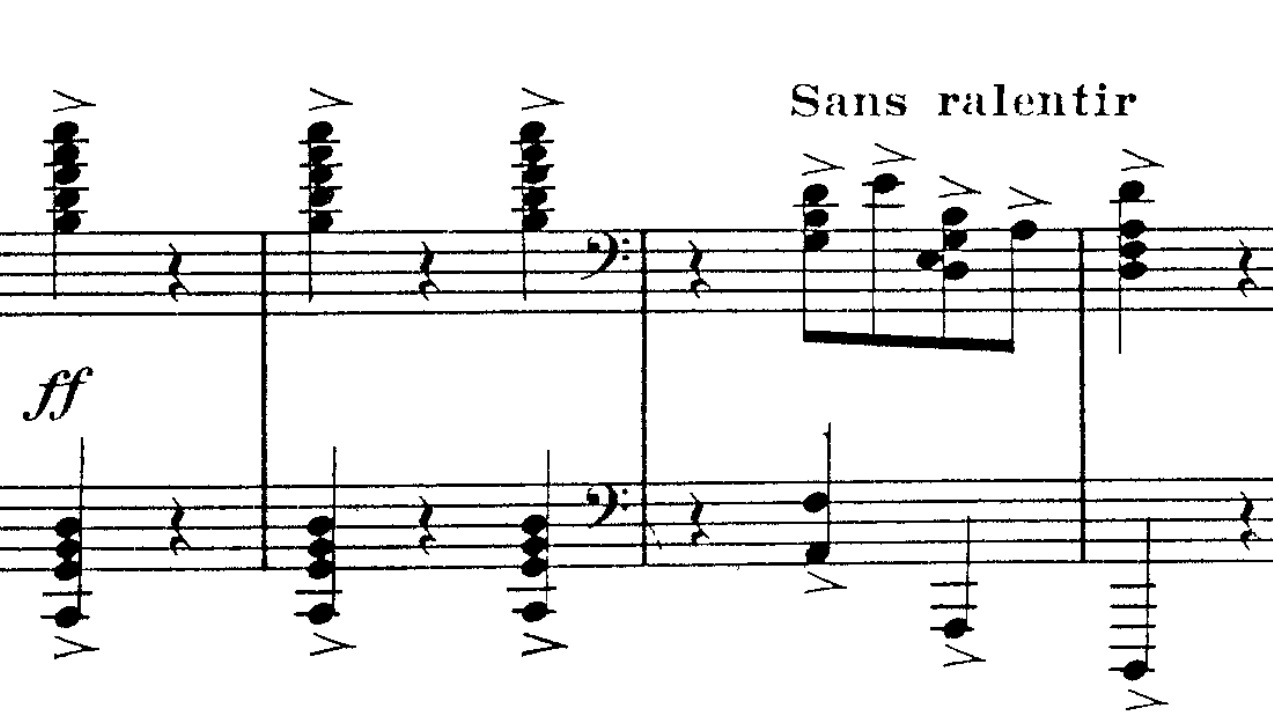
We now encounter the central motif again, this time leading into a melodic descending passage, a reversal of the one we heard shortly before:
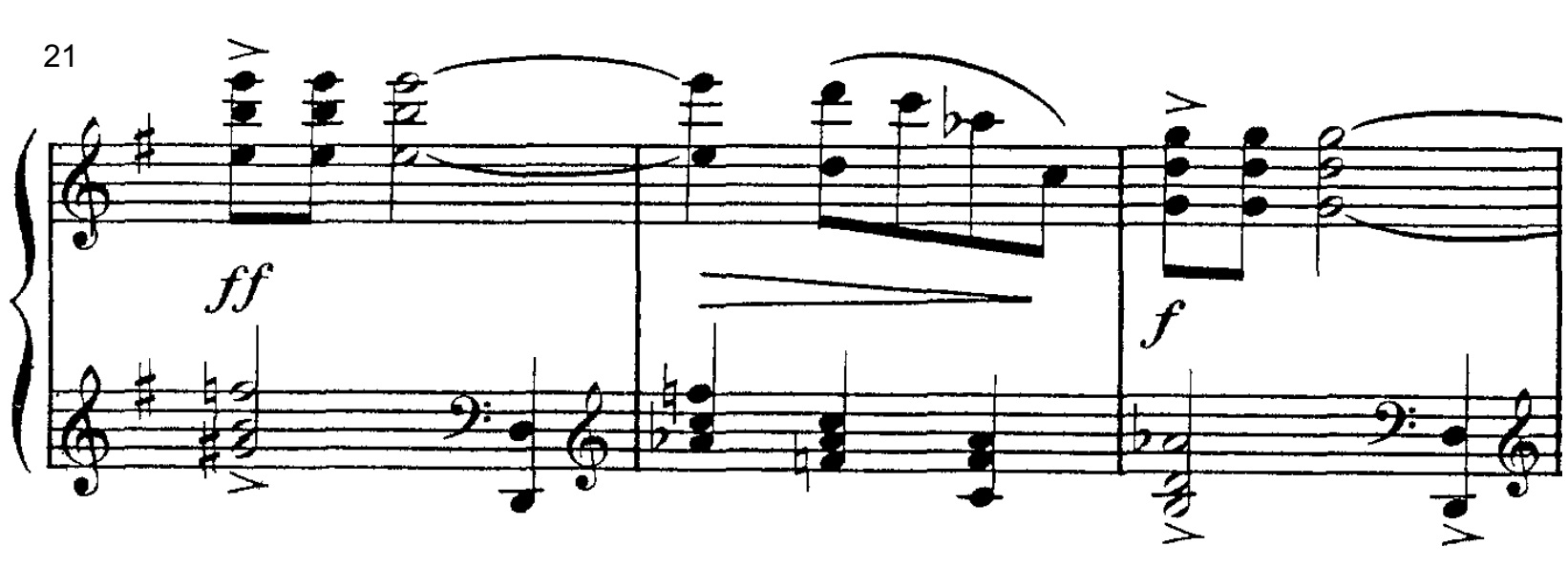
Ravel now takes one of the melodic ideas we've only heard a little of before and then spins an entire melodic passage out of it:
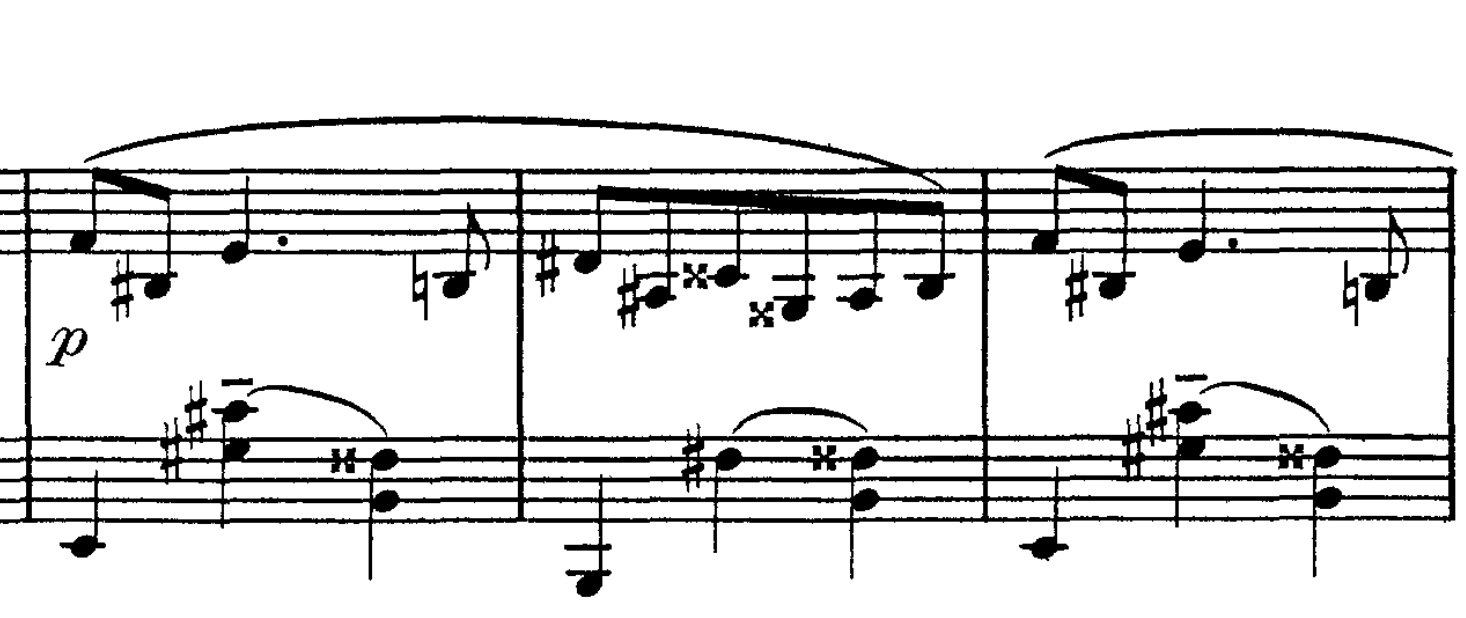
Soon, however, we return to the central motif, which this time jumps both down and up at the end and then leads directly into the melodic passage from the beginning:
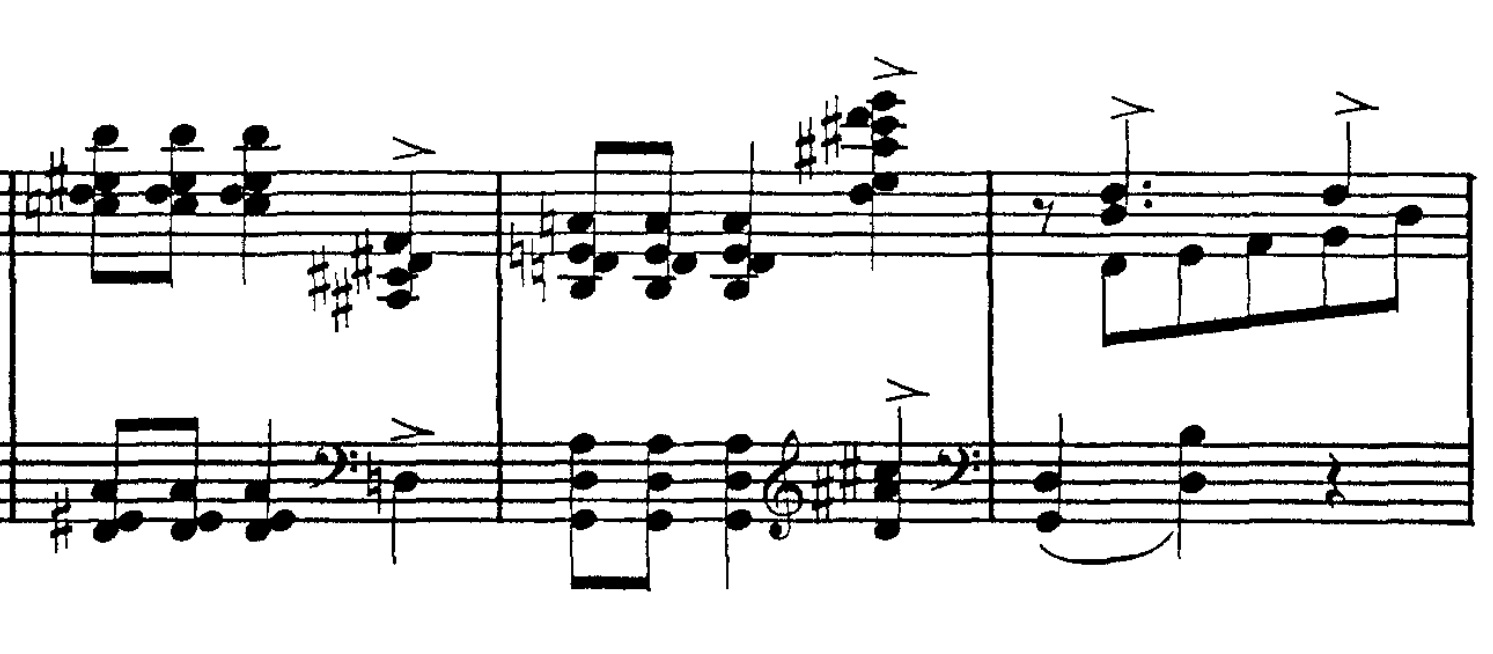
The first waltz ends with the three stacked chords and the same ending, but at a slightly slower tempo and with a stronger emphasis:
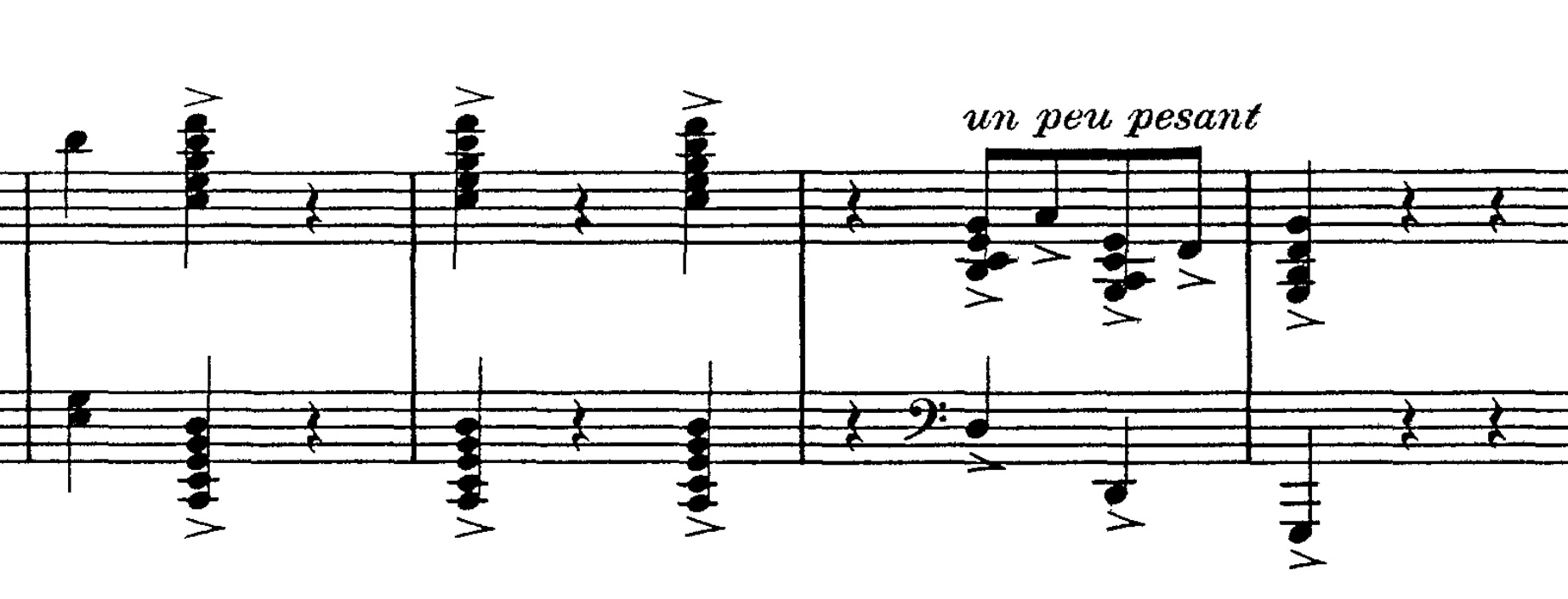
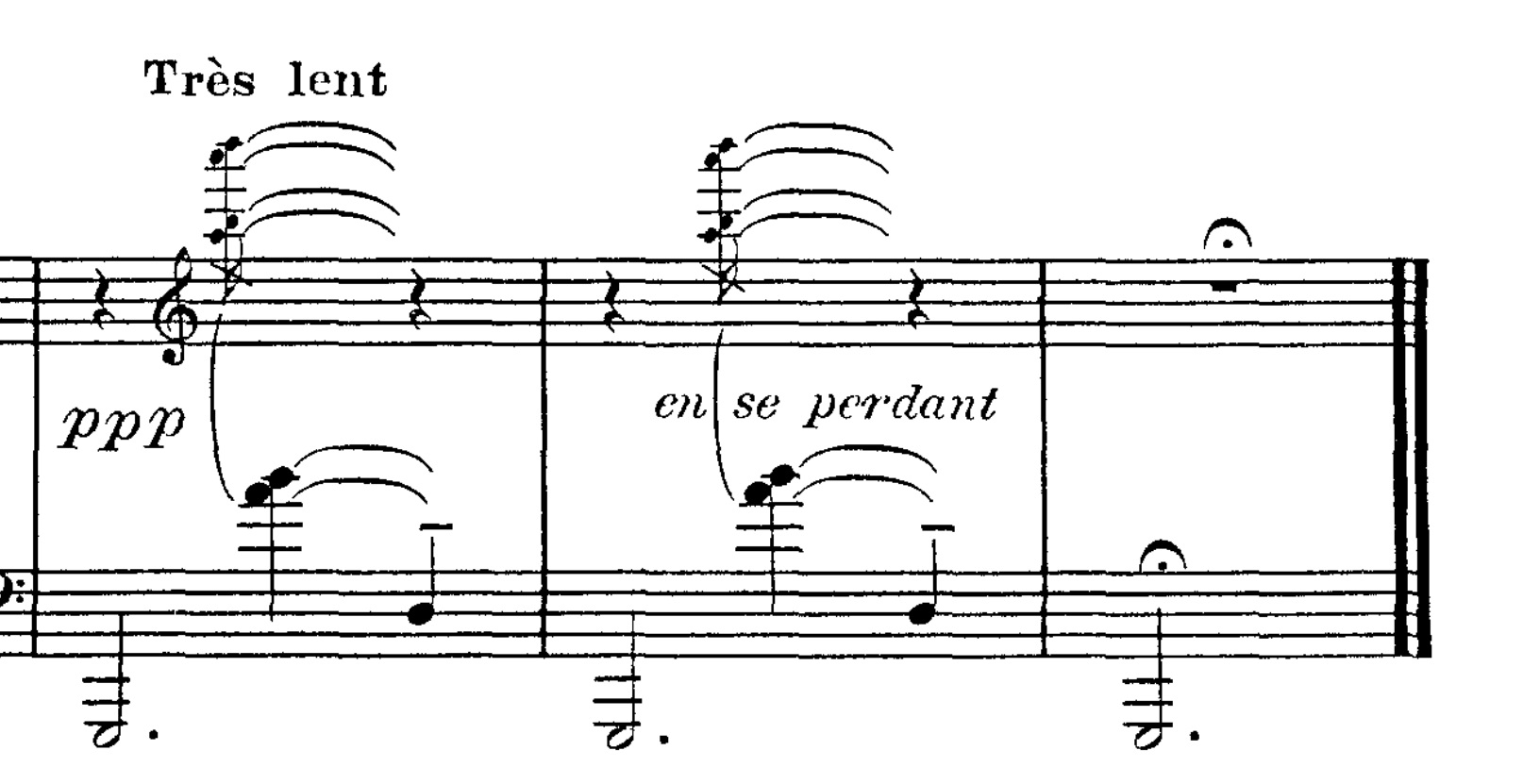
However, Ravel can't quite let go of the central motif he invented, and we hear it again at the end of the waltz cycle. However, in a completely different context when listening to the opening of the eighth waltz, which is also the longest and slowest:
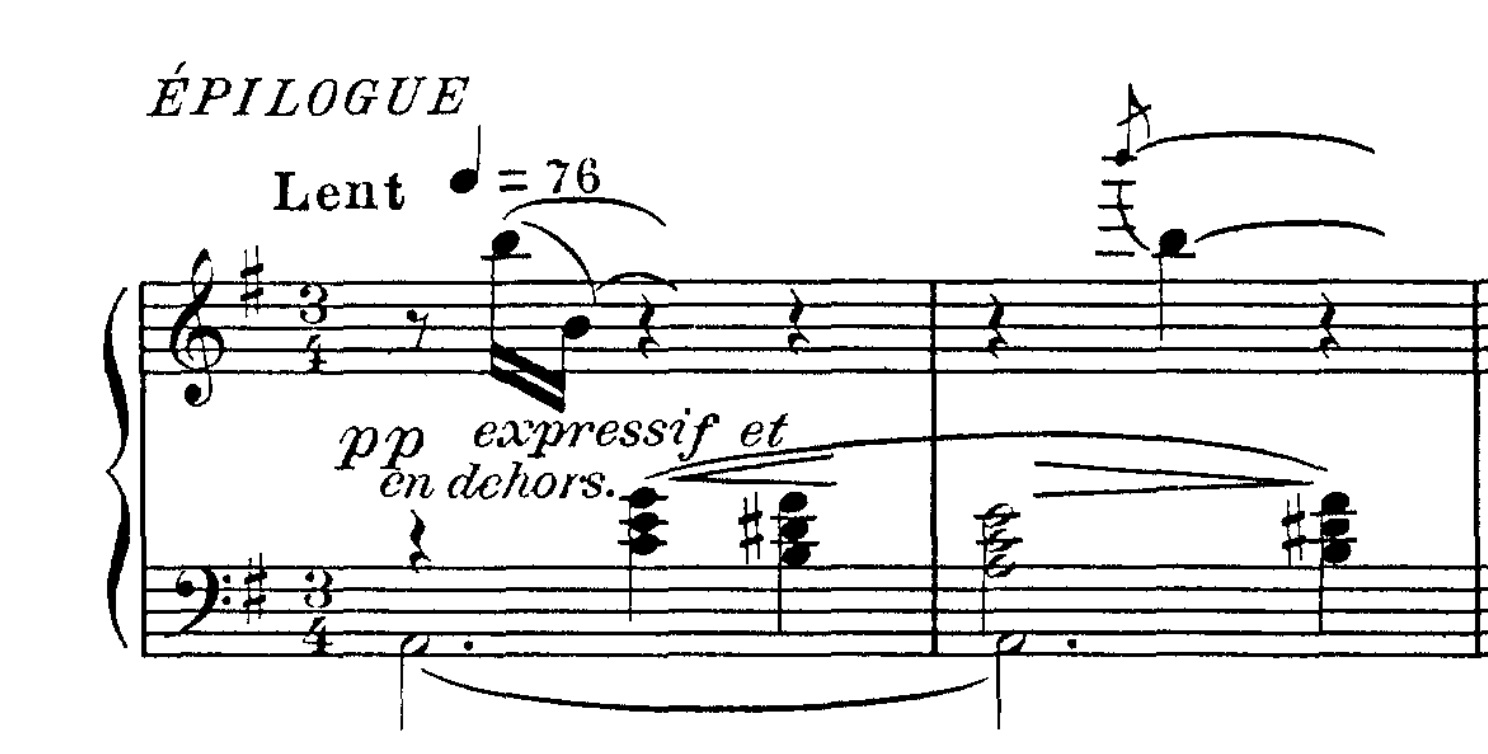
The idea here is a motif consisting of two notes that quickly jump from one to the other followed by melodic leading of the chords. This is how the long first passage of the eighth movement goes until we hear this:
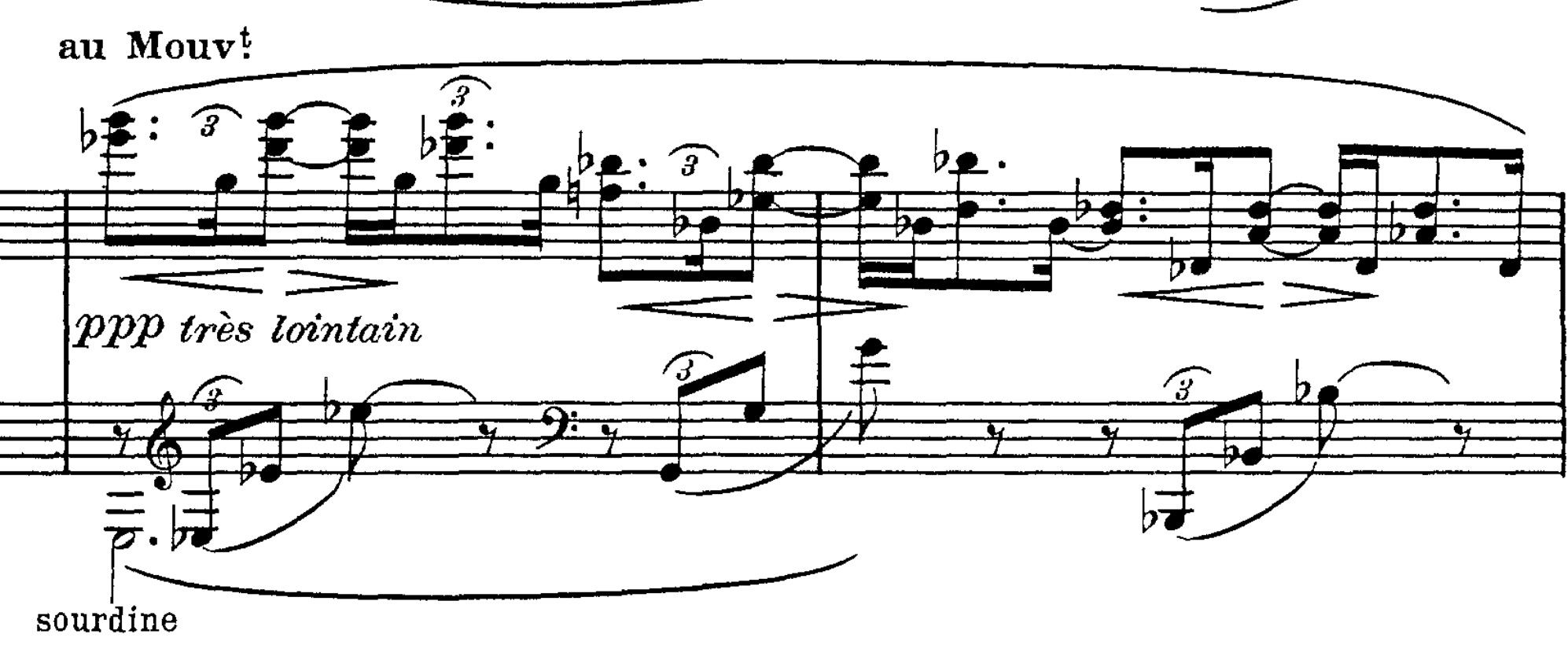
It was a melodic passage led directly into the central motif from before. Ravel repeats this trick once more in the eighth movement:
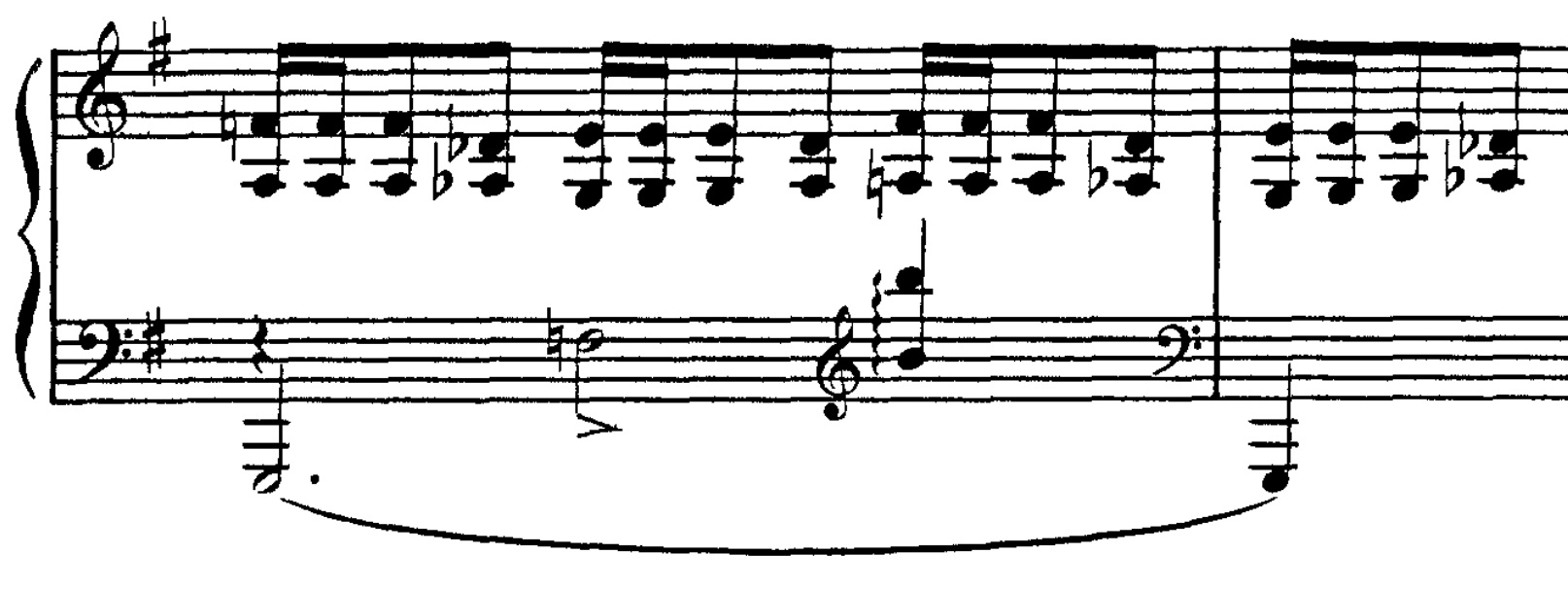
And then leads us to a very slow and easy ending.