Wolfgang Amadeus Mozart (1756-1791) began his Requiem in 1791, but did not complete it before his death in December of that year. It was commissioned by Count Franz von Walsegg to mark the anniversary of his wife's death, but is also seen by many as a requiem Mozart wrote for his own funeral. Today, it is one of the most famous requiems and the culmination of Mozart's compositional style. The first movement was finished by Mozart, and the interplay between choir and orchestra that he creates here is very fundamental to the whole work, so if you understand the first movement, you are well prepared for the whole work.
Mozart basically builds his first movement based on an alternation between canon, i.e. the same melody sung staggered, and common passages in the choir. The basic melody of the movement is presented in the bassoon at the very beginning, and the clarinet intones the first canon:
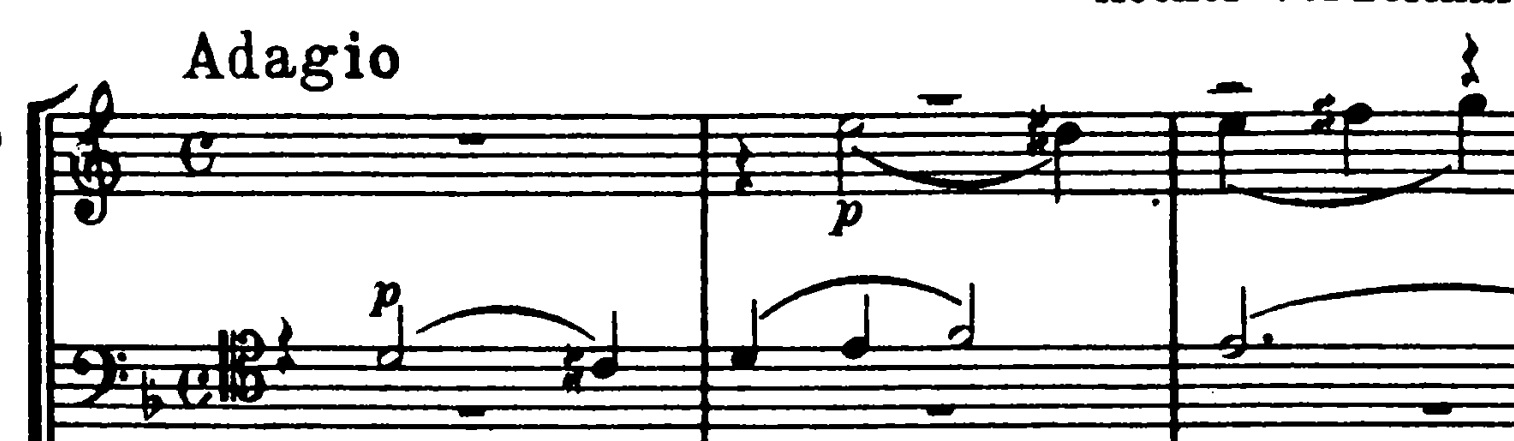
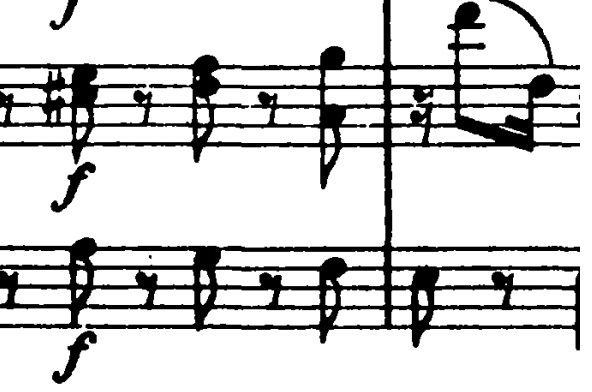
As the melody continues between clarinet and bassoon, the low and high strings take turns playing, creating a “dum-da-dum-dum-da” “down-up-down-up” seesaw-like motion. But towards the end of the melody, the strings pick up in strength with the help of the brass:
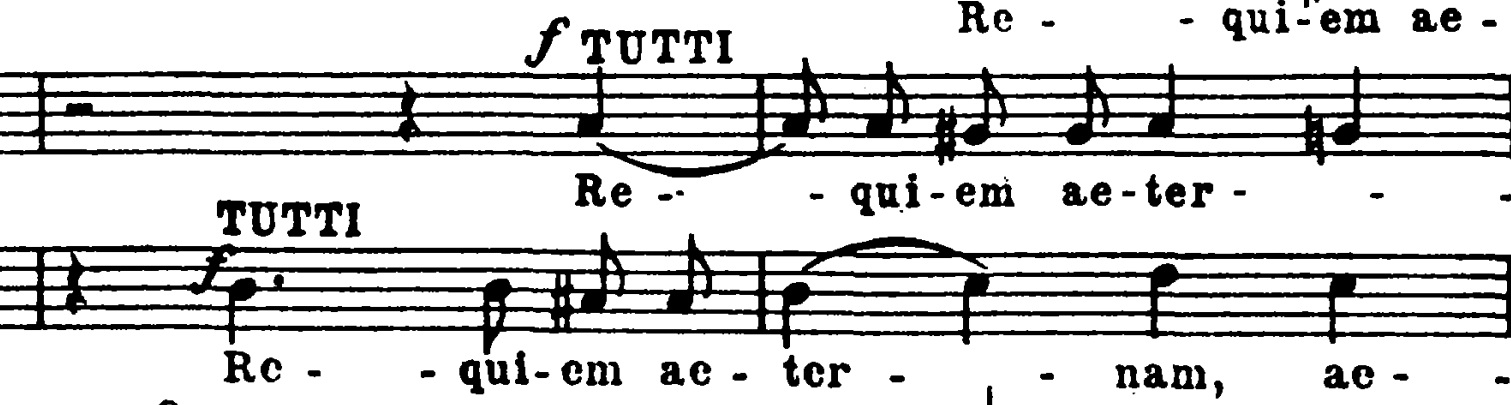
Now the choir comes on. Layer upon layer. First basses, then tenors, then altos and finally the sopranos. You sing the bassoon melody with the text: “Requiem aeternam dona eis, Domine” (Lord, grant them eternal rest):
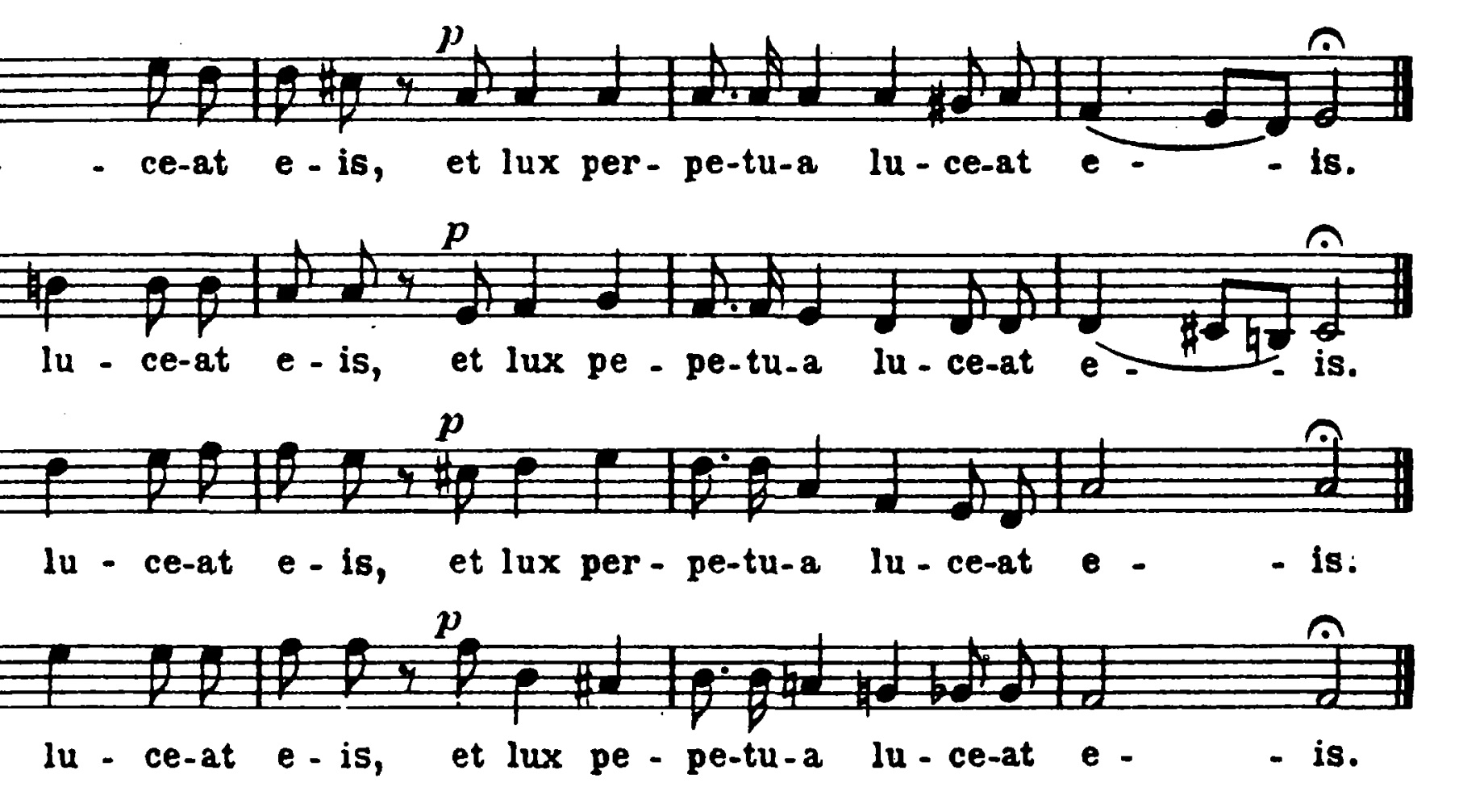
The voices and the text intermingle, but they end together on “Domine.” And they continue together in the next text passage: “et lux perpetua luceat eis” (and let the eternal light shine for them.):
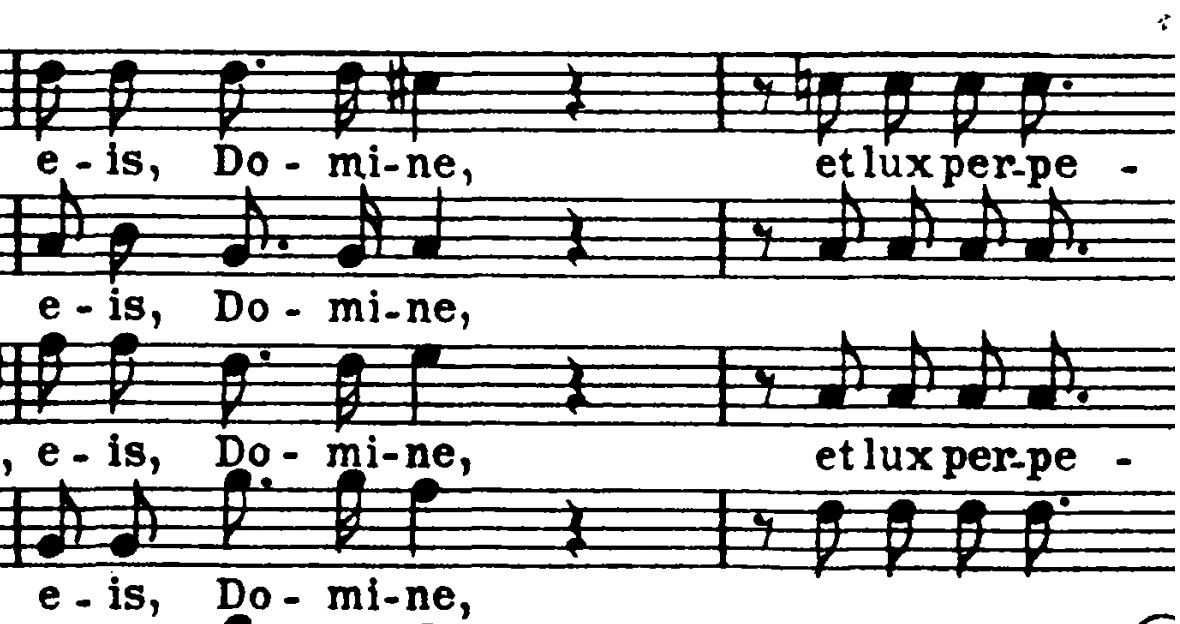
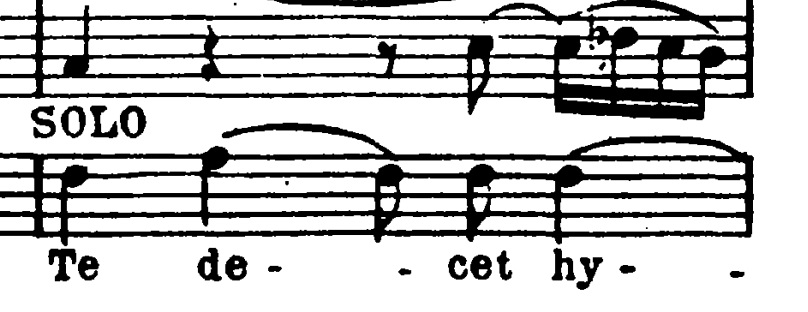
There is now a pause in the choir before a soprano soloist cuts through, lightly accompanied by the violas, with the words: “Te decet hymnus, Deus, in Sion, et tibi reddetur votum in Jerusalem.” (We will sing praise to you, O God, in Zion, we will worship you in Jerusalem):
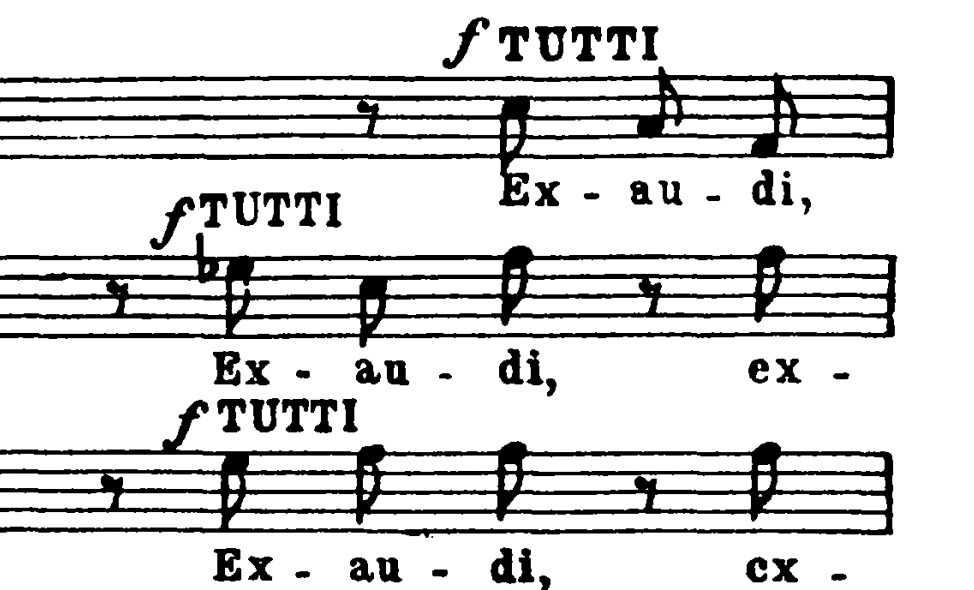
As the solo ends, the choir intones, again in canon, “Exaudi orationem meam, ad te omnis caro veniet.” (Hear my prayer; to you all flesh comes.):
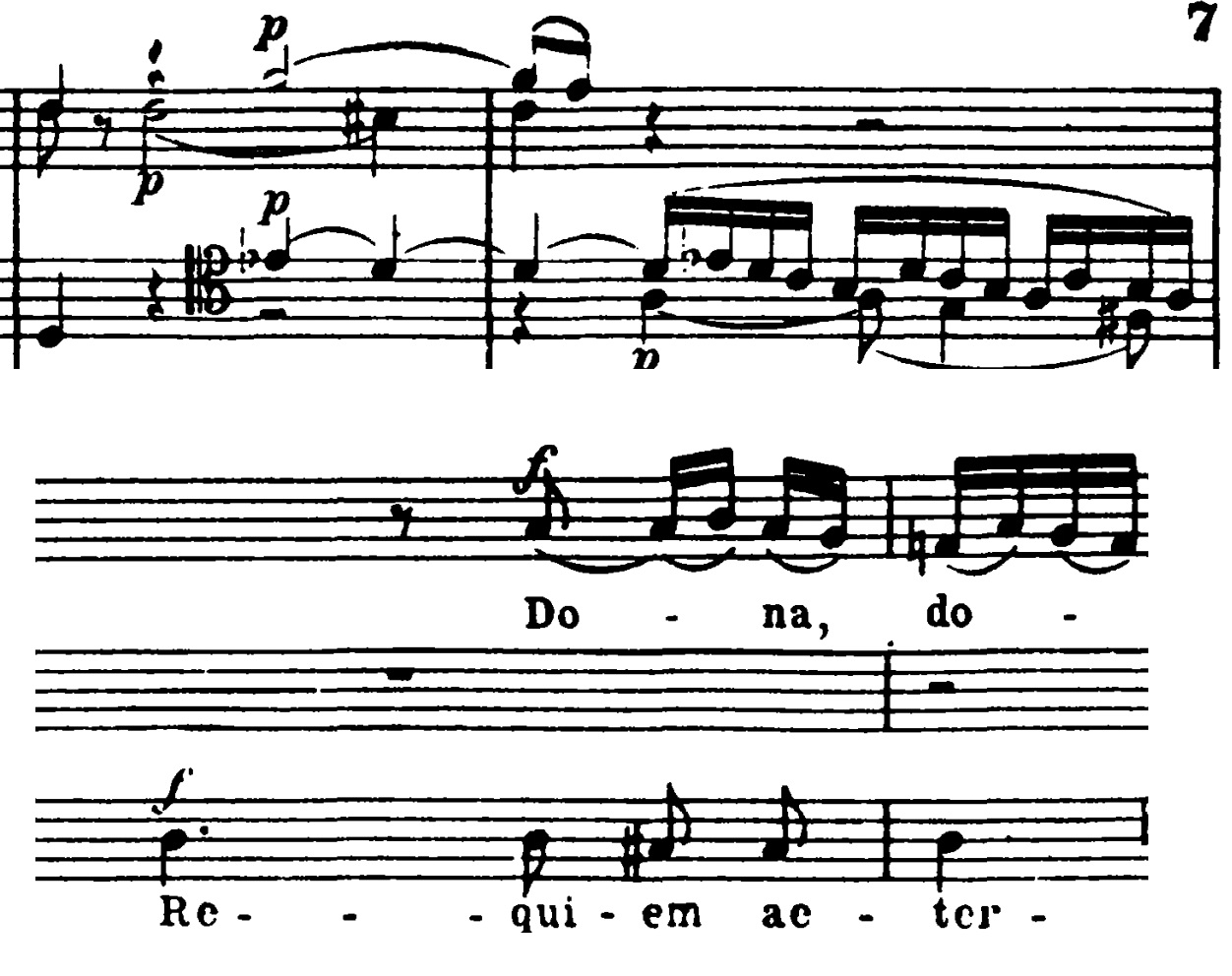
As the choir finishes, Mozart repeats some of the melody from the beginning, but varies it with some of the material we have heard before, and the choir imitates the same repetition shortly after, the basses with “Requiem eterna” and the altos with “Dona eis” - soon after, tenors and sopranos follow the same pattern:
The canon ends with the soprano singing “Et lux perpetua” and the choir follows in question and answer style:
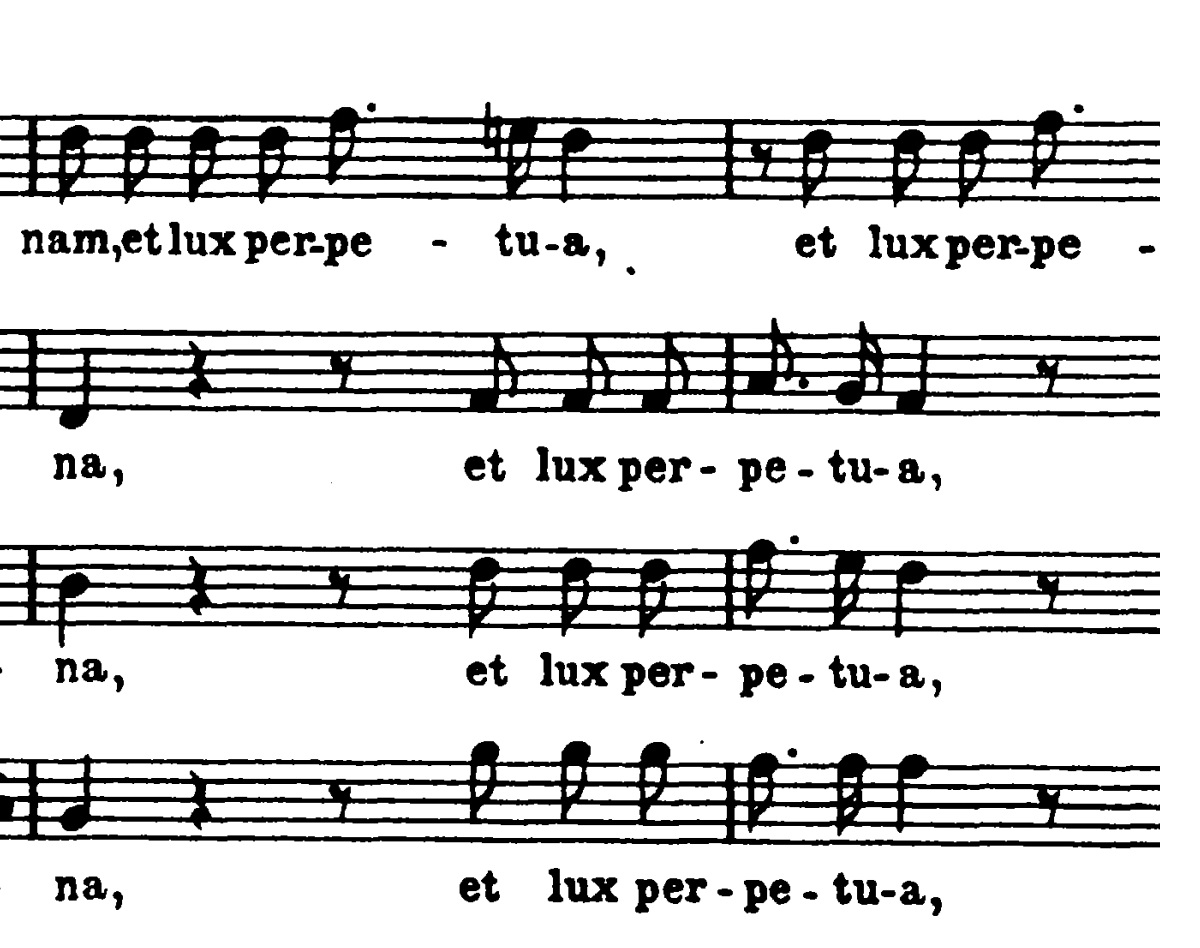
Finally, the common melody wins and the choir finishes with the same phrase, now common: “et lux perpetua luceat eis”: