When Carl Nielsen composed his fourth symphony in 1916, he was very clear about what he wanted to say with his music. He chose the subtitle ‘The Inextinguishable’ to emphasise what, in his view, it was only possible for music to express: “... the elementary Will to Life!” And just as life is a continuous flow, whether we like it or not, the symphony is also written to be played without a break between the four movements. In the following, I will take a closer look at the first part of the fourth movement, which is labelled ‘Allegro con anima’ - Quickly with Spirit.
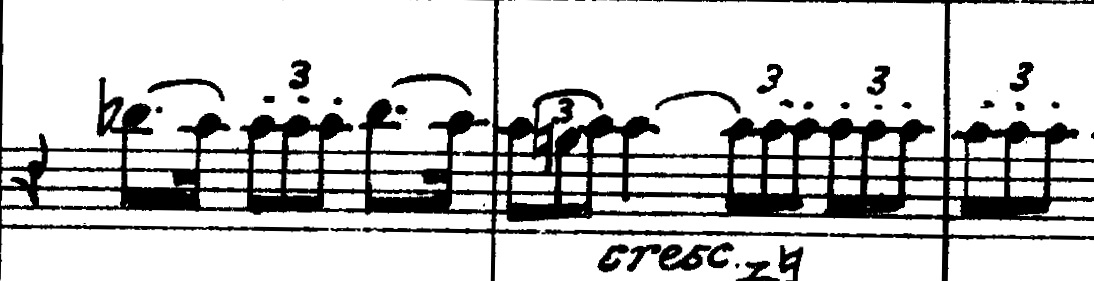
The movement is preceded by a quiet oboe solo that plays a short melodic phrase before insistently intoning the same note several times until the violins take over the soundscape:
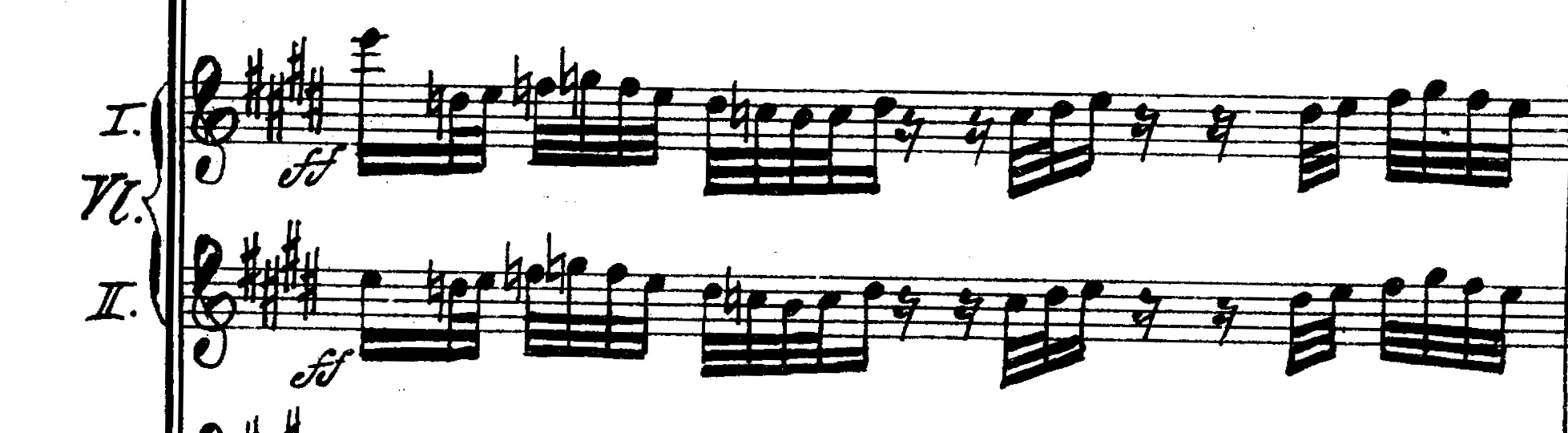
The calm and simple melody from the oboe disappears completely, now only the violins playing complex runs fill the space:
Soon the deep strings take over these complex runs, while the violins now begin to mimic the oboe's insistent single note, albeit spread over several octaves:
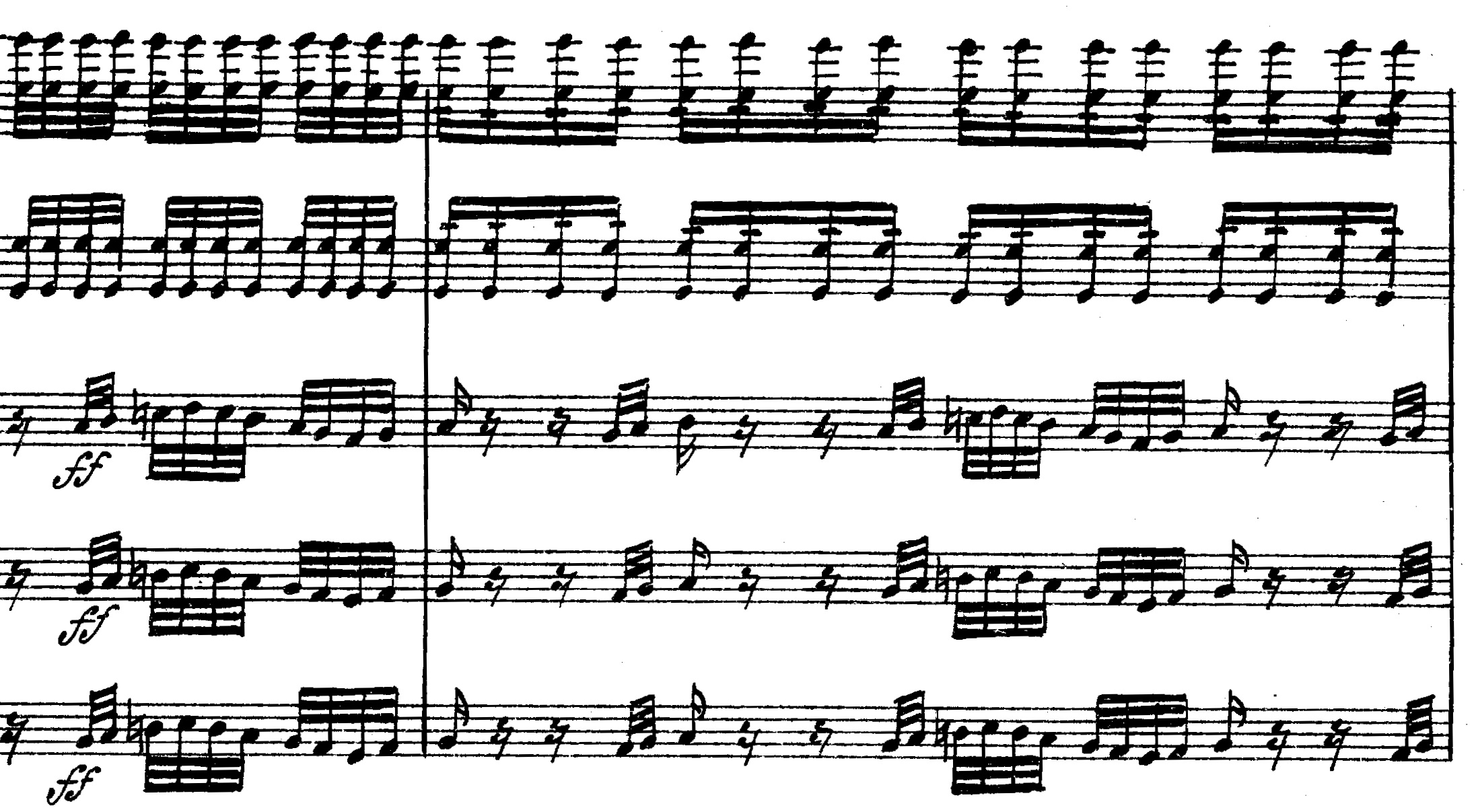
The intensity of the strings increases until it suddenly culminates with 4 beats on the timpani - also foreshadowing a role the timpani will play later - and the orchestra stops completely.

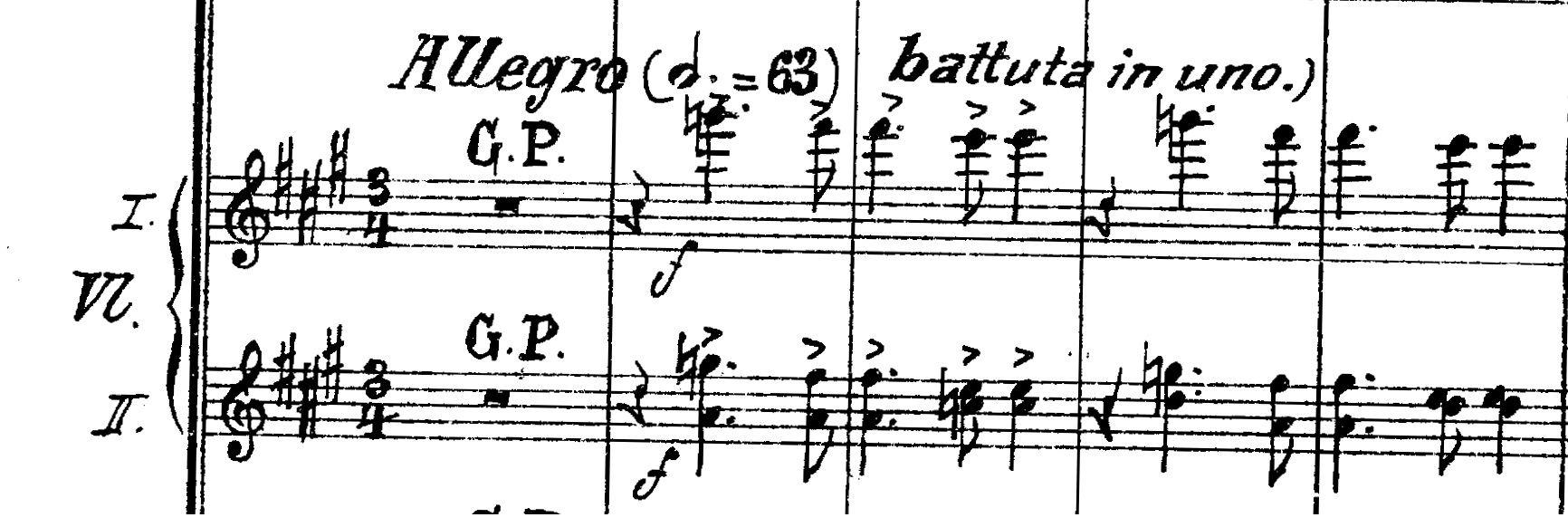
The orchestra quickly gathers, and now voices a more heroic theme, complemented by a counter-voice from horns and trumpets:
All is peace and idyll, the heroic theme plays on, and the timpani interruption from earlier is forgotten. But suddenly, just one little tap on the timpani, and caso occurs. The orchestra tries to play the previously heroic theme, but their ears are ringing, something is wrong:
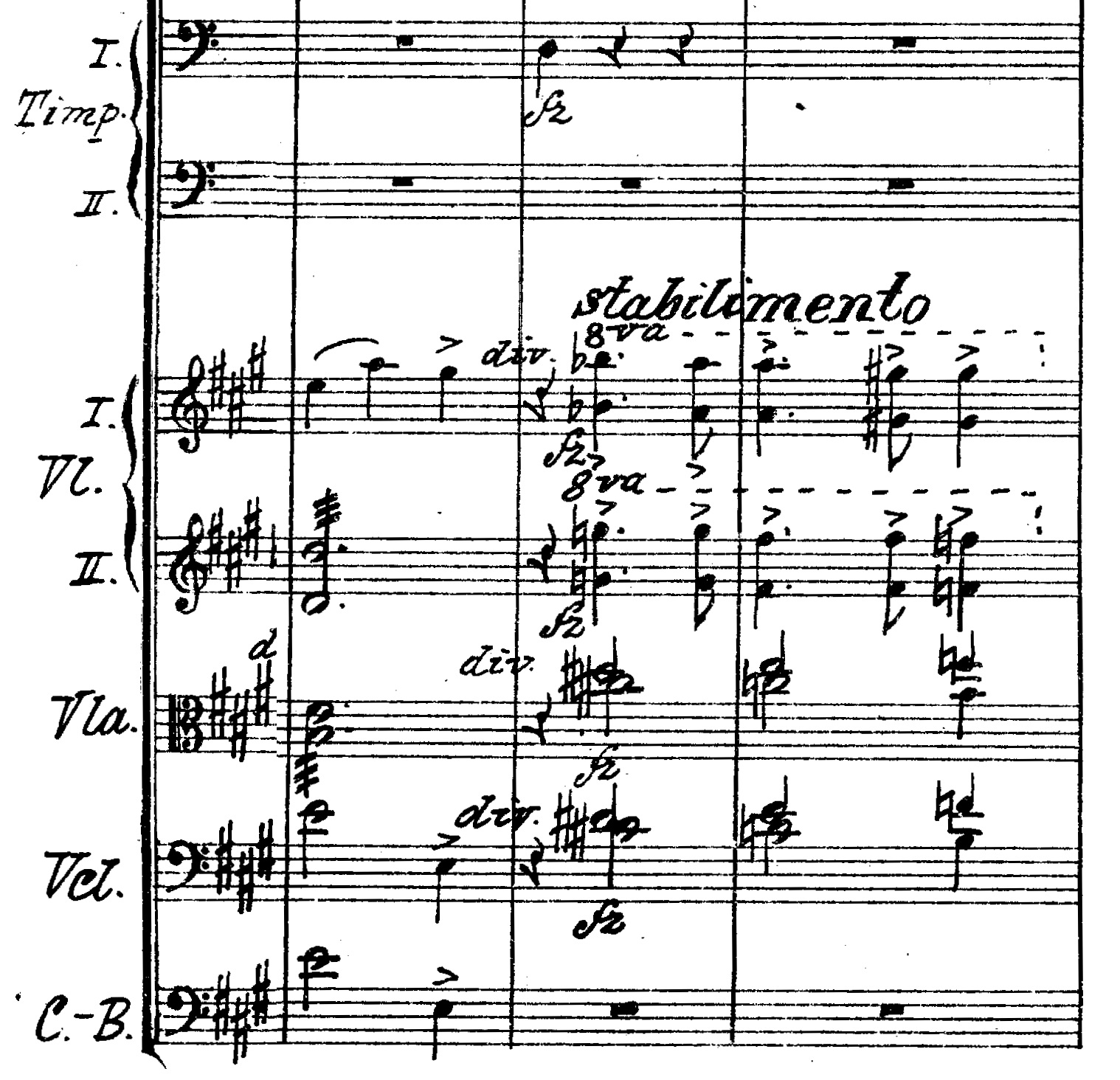
The orchestra tries to keep the peace and gets the music back on track. But it's no use, and suddenly the timpani are upon us like a regular bombardment:

Carl Nielsen has written the following instruction to the timpani in the score: “From now until the end, even if they play the piano, the timpani must retain a certain threatening character.” This threat is soon answered by the trumpets and horns, which almost imitate machine guns that respond to the timpani bombardment with volleys of sound:
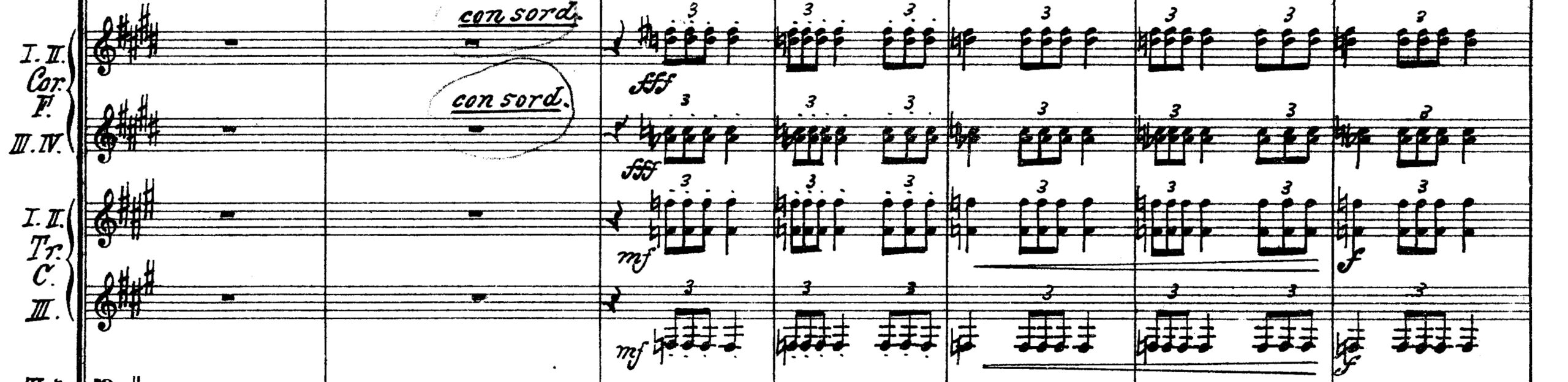
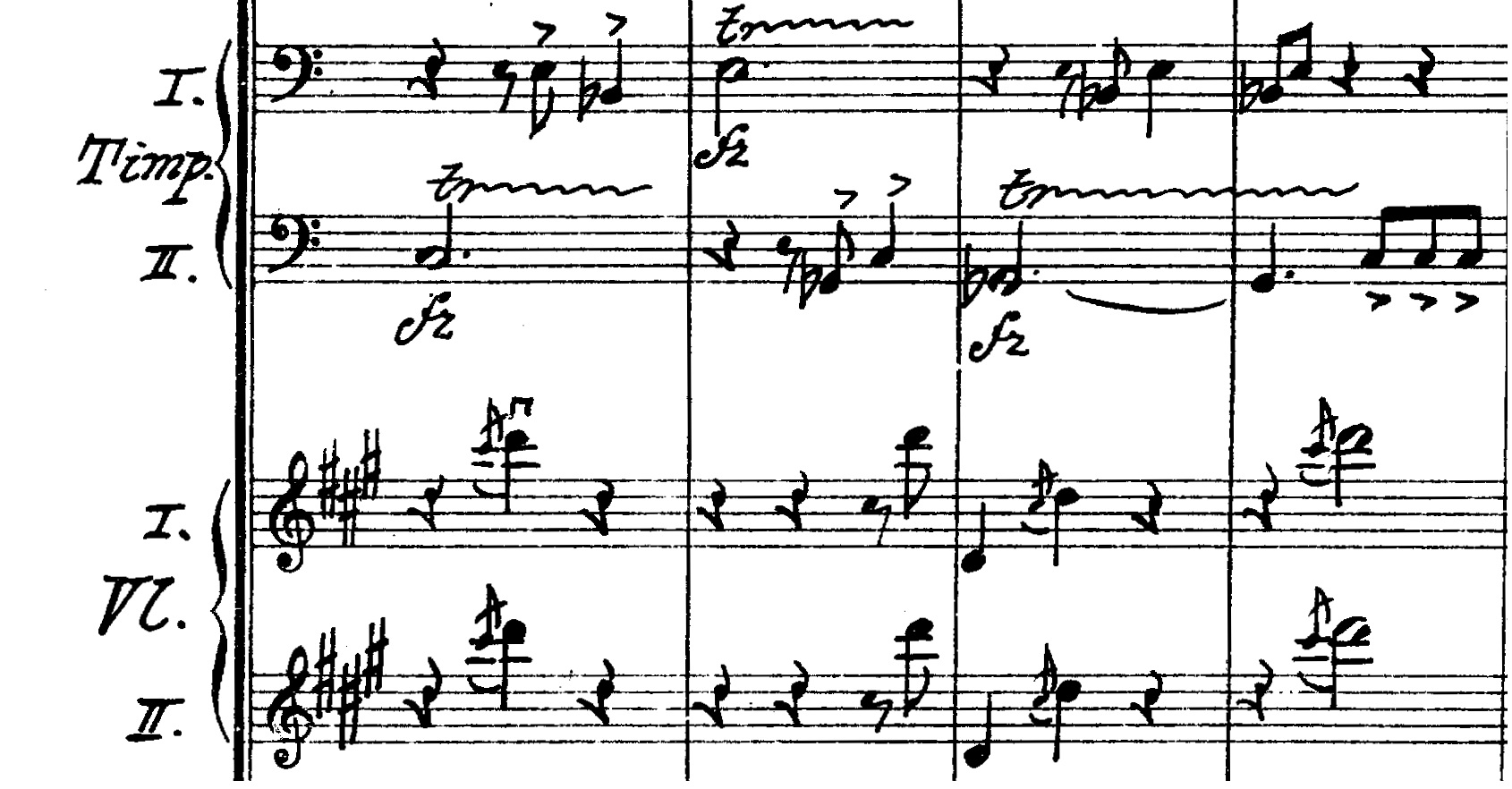
The orchestra battles the timpani and wins... for a while. Because even if you can't hear the timpani, they're always close by and can jump out of nowhere:
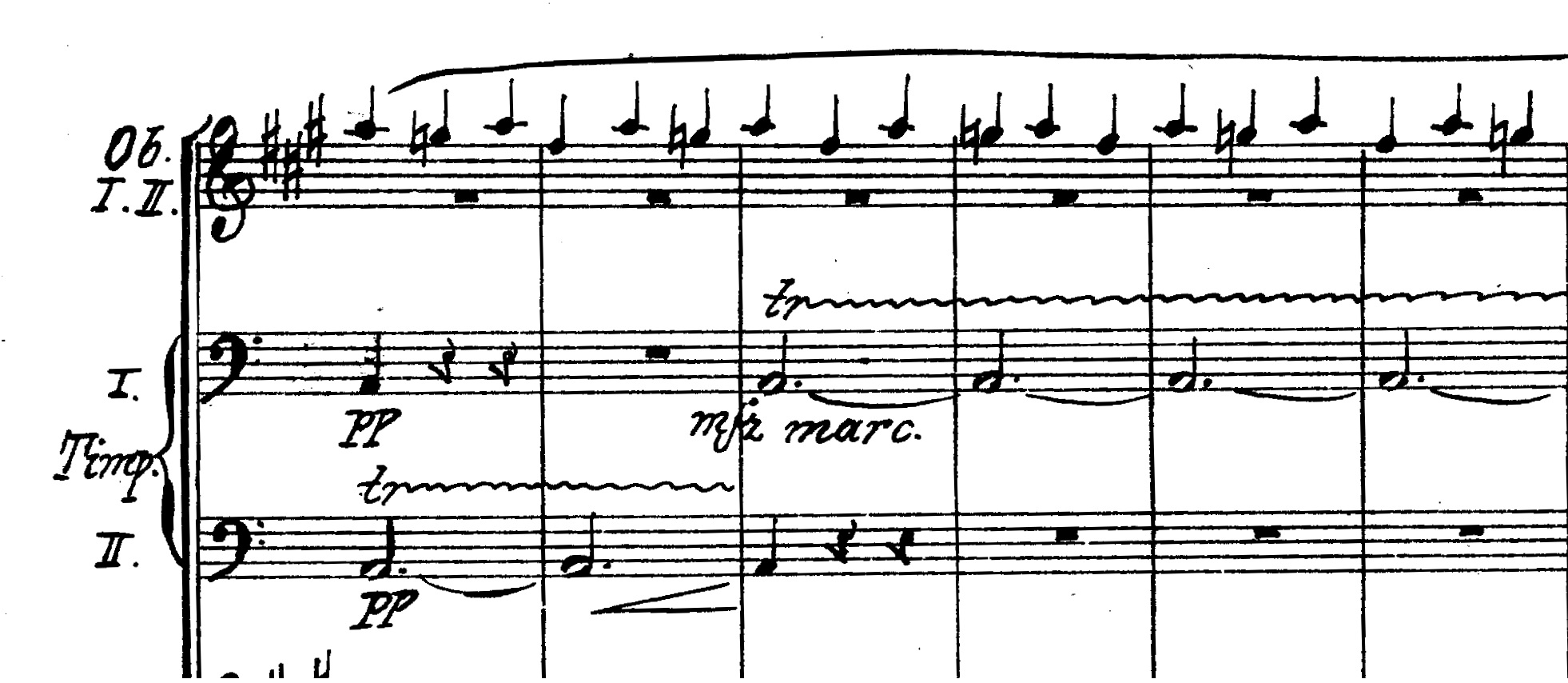
The orchestra continues the struggle for a longer time and soon starts a variation on the heroic theme that opened the movement. But the music gets weaker and weaker and the timpani are always lurking in the background. Even when the oboe echoes the melody that opened the movement, sliding into a beautiful oboe duet, the timpani constantly rumbles at the bottom of the music:
In what follows, the woodwinds and violins play with the melody the oboes have just introduced. But everything is quiet and weak, there's not much at stake, and the movement soon approaches the end of the first part. We finally hear a theme, first in trumpets and trombones, then in woodwinds, then in violins and finally leading to a resolution in the low winds. But always with the timpani constantly at the bottom, faint but present: Boom-boom-boom, boom-boom-boom.
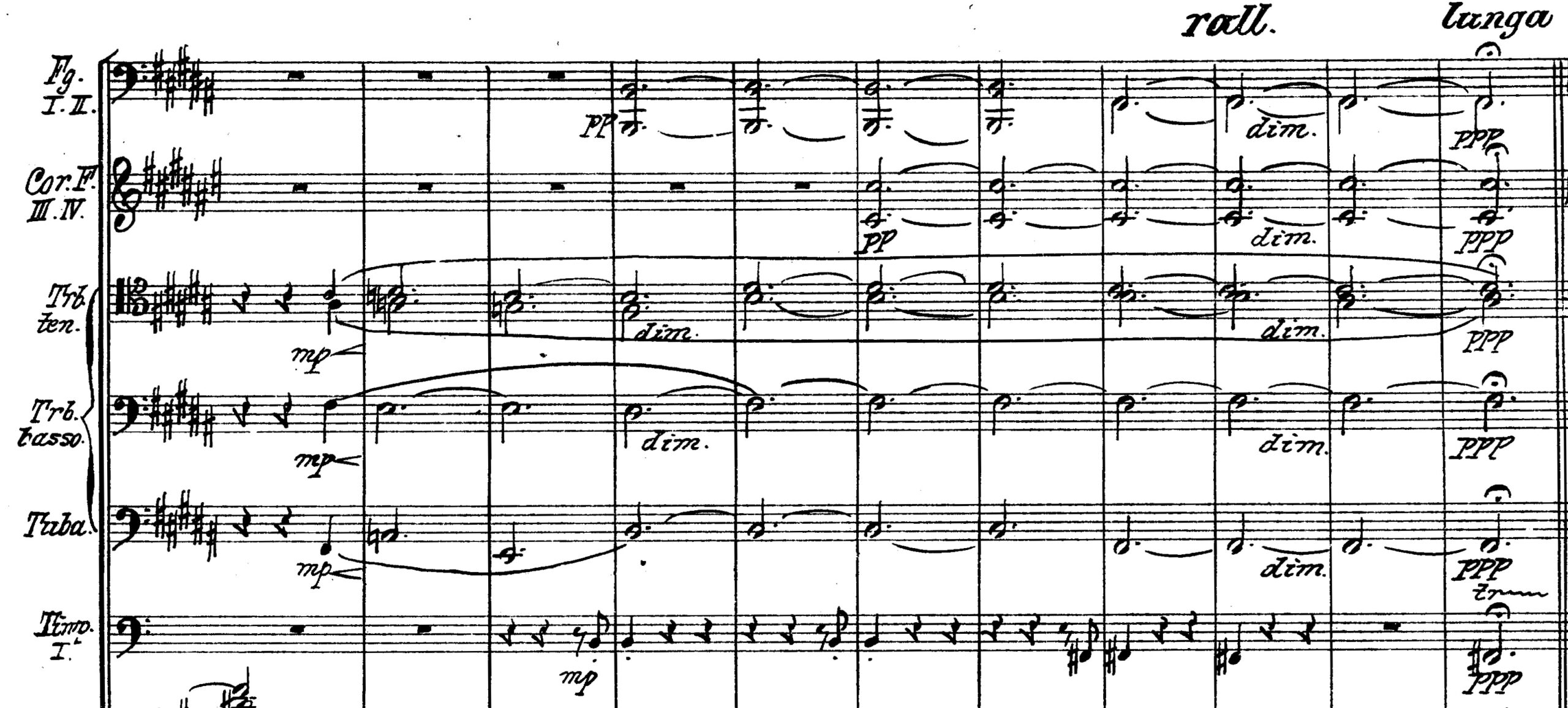
How should we interpret this movement? Carl Nielsen was clearly influenced by World War I, which was raging further south. Even though Denmark was not directly affected, Nielsen was very concerned about people killing each other, changing the world and thereby changing art. If we see the timpani as the art form that became really widespread during World War I and thus the conditions for warfare, it fits well with the fact that the music changes every time the timpani are played. Every time they are heard, something happens, whether the music tries to sound the same as it did before, the kettledrums respond, or capitulate completely and remember the time before the bombardment. The last notes can perhaps be interpreted to mean that the artillery is never far away, but people are slowly learning to live with it.