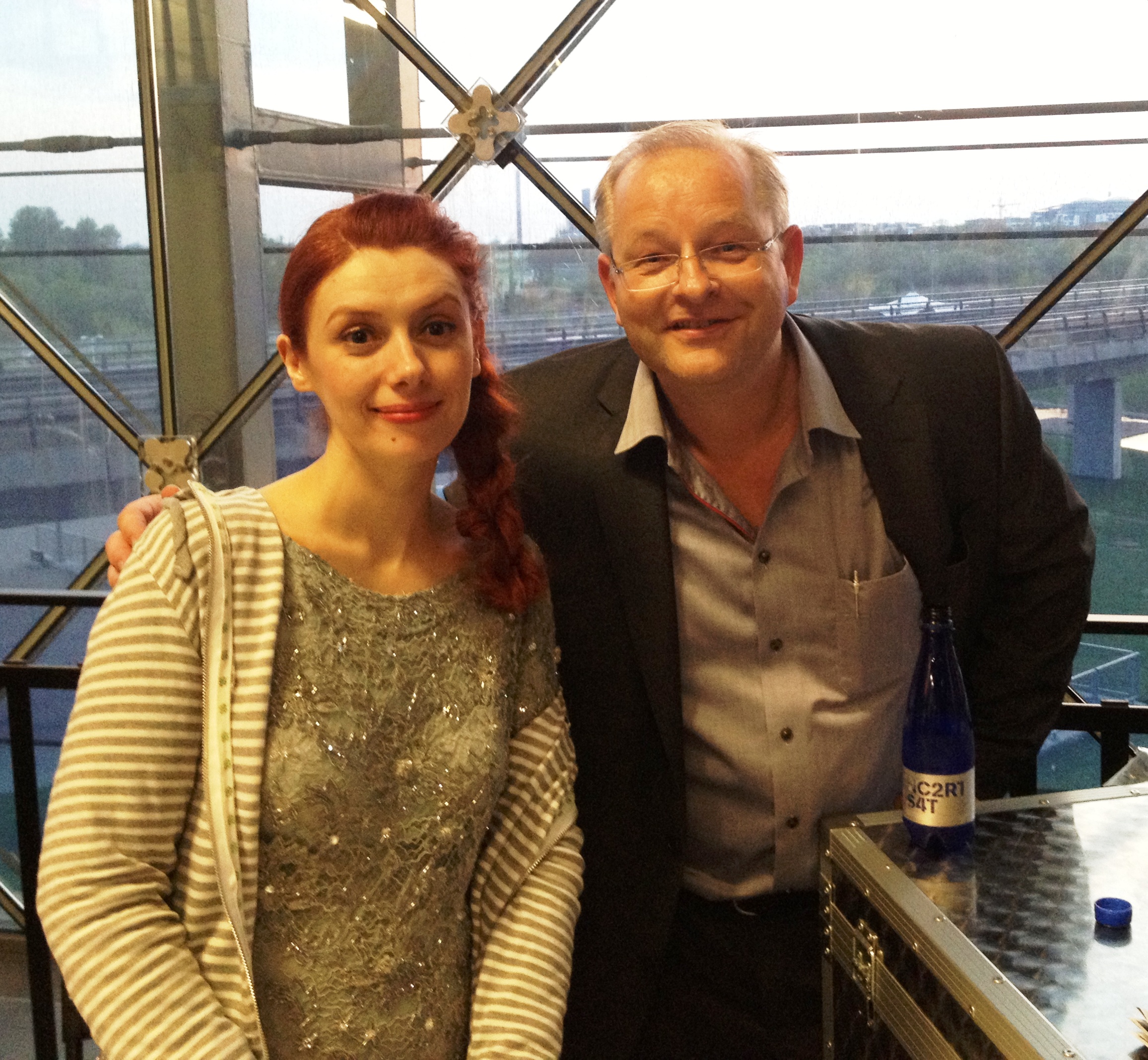
Curt Kollavik Jensen and Henrik Overgaard are two of the DR Symphony Orchestra's producers. During the concert, they sit in the auditorium and make sure everything is working as it should. Until then, their work is a mixed bag to ensure that the travelling artists can concentrate on preparing and performing the concerts in DR-Byen.
Among the more bizarre experiences is that of the soloist who told one of the musicians that he was on a plane the same evening as he had been the soloist at the Thursday concert. By chance, Henrik Overgaard heard it and had to say: No, that won't work. The soloist had forgotten that the concert was repeated on Friday and had to hastily rebook for a Friday departure. Or the pianist Rudolf Buchbinder, who on the way in the taxi from the airport asked the accompanying producer: Curt, it's Beethoven's 5th we're playing, right? Well, no. The composer was good enough, but the number was wrong. Well, it doesn't matter, I know them all, he replied. And he did.
The examples mentioned above are rare. Usually everything is agreed and ready when the conductor typically arrives in Kastrup on Sunday to rehearse and give a concert on Thursday. The soloists usually arrive on Wednesday and only have one rehearsal plus the dress rehearsal before the concert or concerts.
Many times, the preparations take place between DR's producers and the artists' agents. It's work between professionals, and most agents are straightforward, explains Henrik Overgaard. Some artists have had unpleasant experiences, stalkers chasing them for example, and in these cases, there may be a requirement that a different name is given on the hotel reservation, that there is no name on the wardrobe in DR-Byen, and that there are even guards outside the wardrobe door.
Here too, the vast, vast majority of artists are completely unruffled like Anna Netrebko, who travelled to DR-Byen from her sister's home in Jutland in a car that in no way suggested that the passenger was a world-famous diva on her way to work. And on top of that, she was able to get help on the spot to feed the baby she had brought with her backstage.
But it is often the first time that the requirements for security and other services are so extensive that it stops when the agent and artist see that there are no unauthorised persons ”backstage” in DR-Byen and that the conditions before, during and after the concert are safe.
Once the repertoire has been agreed between the orchestra management and the travellers, it's time to find sheet music. The right ones, mind you, because in a number of cases there are different versions of the same works. Then DR's sheet music archive has to get to work finding the right versions. Many conductors arrive with their own copy, while others are sent sheet music from DR's extensive sheet music archive.
Sometimes it's not possible to find matching copies, and it also happens - albeit rarely - that the conductor turns up with one version and the orchestra with another. The DR producers have had to cut and paste and even manually write in ”strokes”, i.e. the different strings' parts, for the orchestra members late in the process.
Even though it's often internationally renowned stars who come to Copenhagen, DR's accommodation rules are definitely not for suites in the best hotels. If travellers don't want to settle for the usual standard, they have to spend part of their fee on upgrades. The same applies if they bring agents, family or other guests.
Producers or department heads often pick up the artists at the airport and make sure they are well accommodated. Even before arriving in Denmark, a rehearsal schedule is drawn up in collaboration between producer and conductor - 4½ hours per day is the standard.
They have also been given an outline of the stage and orchestra set-up, which can be arranged in several ways and is usually agreed in advance with the agents. However, some ask to move the line-up around when they arrive for the first rehearsal. Again, it's up to the producers to orchestrate this.
It's a huge puzzle and always a compromise between the desirable and the possible. There is plenty of space on stage in DR Byen's concert hall, but there are a number of considerations to take into account, such as the musicians' hearing. In the hall, the audience can see a small stand with ear protection behind the woodwinds, for example. This is so that they don't get the most violent notes of the brass and percussion directly in their ears with the risk of hearing damage.
But when it comes to big works - Mahler's 8th could be an example - compromises have to be made. The producers also encourage conductors to go out into the hall during rehearsals and listen to the sound out there. Some conductors don't hear the same sound from the podium as the audience and this can make them want to draw energy from the double basses and timpani, which wouldn't necessarily happen if they heard the same as the audience.
All of this is also part of the producers' preparation for the concerts. So a good qualification for a producer is to know the whole process first-hand. And both Henrik Overgaard and Curt Kollavik are trained musicians on horn and classical guitar respectively. In addition, Curt Kollavik has been a programme staff member and host on P2's magazine programmes and evening shows. And as a music producer, he has recorded a large number of concerts for P2.
And then there are the listeners and viewers. They need the best too, which is why a lot of time is spent preparing with sound and image producers, technicians, lighting technicians, stage managers and P2's hosts.
The practical side of things also includes making sure there is a hall to play in. The concert hall is booked well in advance for the actual evenings, but the hall is so fully utilised that the booked time for DRSO has to be constantly checked and it is often necessary to remove everything from the stage after one of the rehearsal days to make sure that everything is in place for the rehearsal start the next morning.
Especially if the hall is used in the evening for large rhythmic concerts and events with resulting large changes in the hall's normal lighting and general settings, it can be a little too exciting to come to work during the day
- It's the kind of thing that can keep you awake at night," says Curt Kollavik.
And what do conductors and soloists do when they're not rehearsing? The producers know a lot about this, as they are basically available throughout the guests' stay in Copenhagen.
Very often the upcoming concerts rehearse in the Concert Hall after rehearsals or rehearse at the hotel. Part of the picture is that we are in an industry where the task is so demanding on the guest's entire life, including the nervous system, that there isn't much profit for tourism and the like
However, it is very much in demand from guests to be directed to a good place to eat. So it's up to the producers to match the individual conductor or soloist's taste. If there is time for other activities, Tivoli Gardens during the season, Louisiana and the Glyptotek are sure hits. A frequent guest, chief conductor Fabio Luisi loves to play golf. The producers make sure that the golf bag (a gift from the orchestra's association) is pulled out before the trip to the Royal Golf Club, which is located quite close to the Concert Hall.
Italian-born Luisis braves both high winds and Danish December cold to play.
It also happens that a soloist falls ill. Many times this has been remedied by the producer turning to a friend of music - a consultant in ear, nose and throat diseases at a Copenhagen hospital, who repairs the damage here and now. But if it's really bad, there's the added challenge of finding a new soloist.
Curt Kollavik and Henrik Overgaard are both deeply impressed by how often an international artist can fly in at ultra short notice, rehearse almost on the plane, turn up for rehearsals and perform at the concert.
They both really enjoy working with the artists.
-"I like to be of service to them," says Curt Kollavik. We have to achieve the best artistic result, but there is no set list on how to get there, while Henrik Overgard also emphasises the psychology that has to be put into the work to achieve the best in an interaction between conductor, soloist and orchestra. They can both feel the difference between when the chemistry is right and when it's not.
Musicians don't like conductors who just play through rehearsals, but enjoy conductors who know what they want and offer positive criticism and good ideas to learn from - again and again until ”it's right”
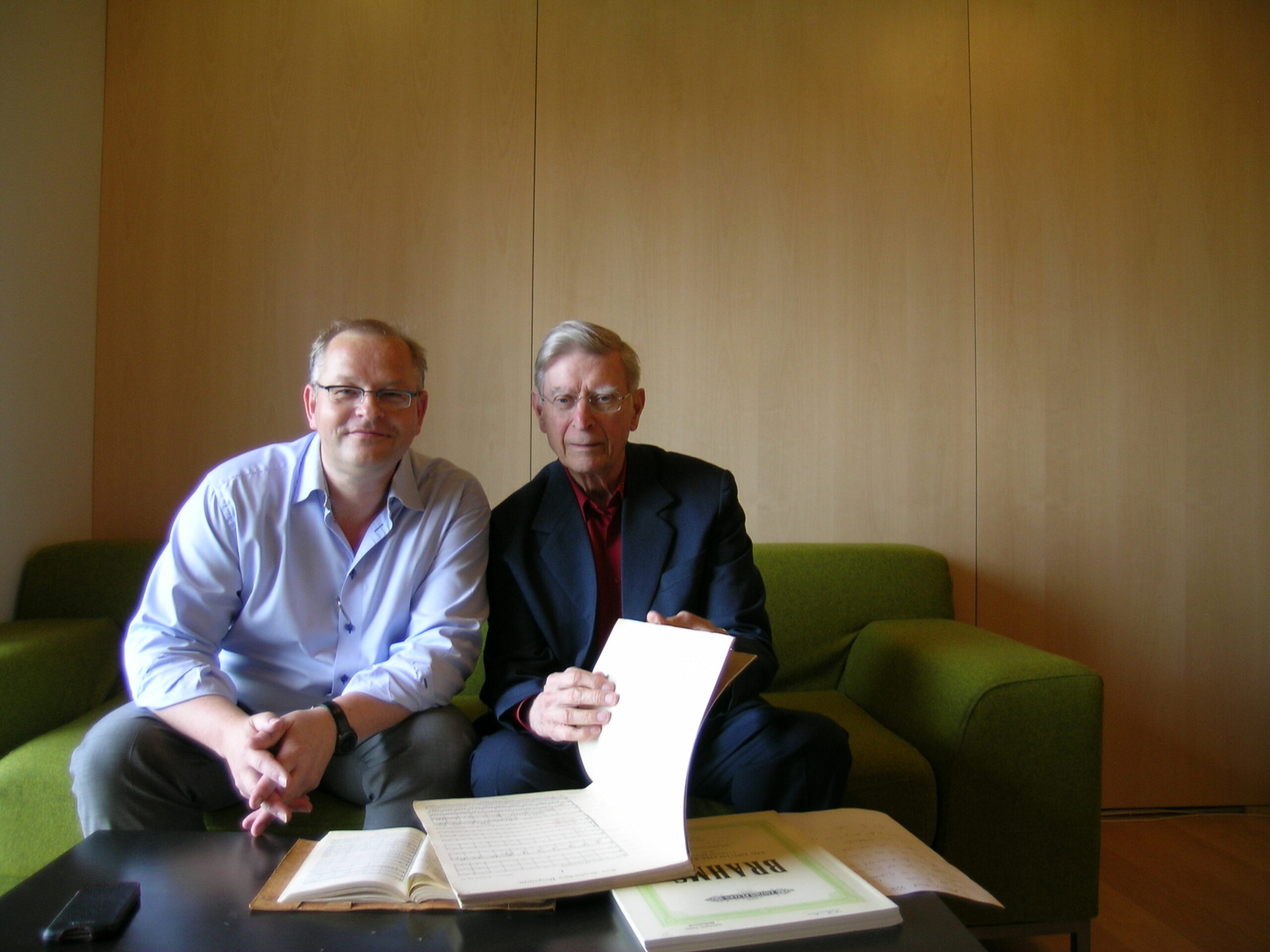
A special mention must go to the greatest of them all, 90-year-old former chief conductor of the Symphony Orchestra, Herbert Blomstedt. He is self-sufficient, always in a good mood and absolutely undemanding
Lunch consists of a glass of milk, a piece of bread and a slice of cheese. And sometimes after the concert, a glass of grape juice or - if the going gets tough - a non-alcoholic beer. On the other hand, he is responsible for one of the two concerts in recent times that the two producers call world-class, where everything came together. It was the Mendelsohn concert last autumn with the Hebrides and his 3rd and 4th symphonies on the programme.
The second example was Luisi's version of Mahler's 8th, the Giant Symphony, also from autumn 2017.
Have there ever been conductors or soloists who behaved inappropriately? Yes, there are a few examples that could have made the #meetoo list. None mentioned, none forgotten. Not even when we talk about the temptations that Copenhagen can offer, which can make it exciting for a producer to think about how things will go the next day. But as mentioned, it's definitely the exception that proves the rule of hard work from morning to night.