When you sit in the concert hall and, as a matter of course, see and hear close to a hundred musicians performing a long and complex programme, you may find yourself wondering in the midst of all the glory how it can be done at all. Imagine getting it all to fit together! - And that's just the tip of the iceberg. Because before the concert, there is a huge and complicated preparation that includes programme planning, production, agreements, contract writing etc etc - and then the very basic and perhaps most important thing: the sheet music!
Every concert with DR's ensembles and choirs has sheet music. In fact, they're what it's all about - the basis for it all. And they come from somewhere in the centre of the great DR city - from the Sheet Music Archive.
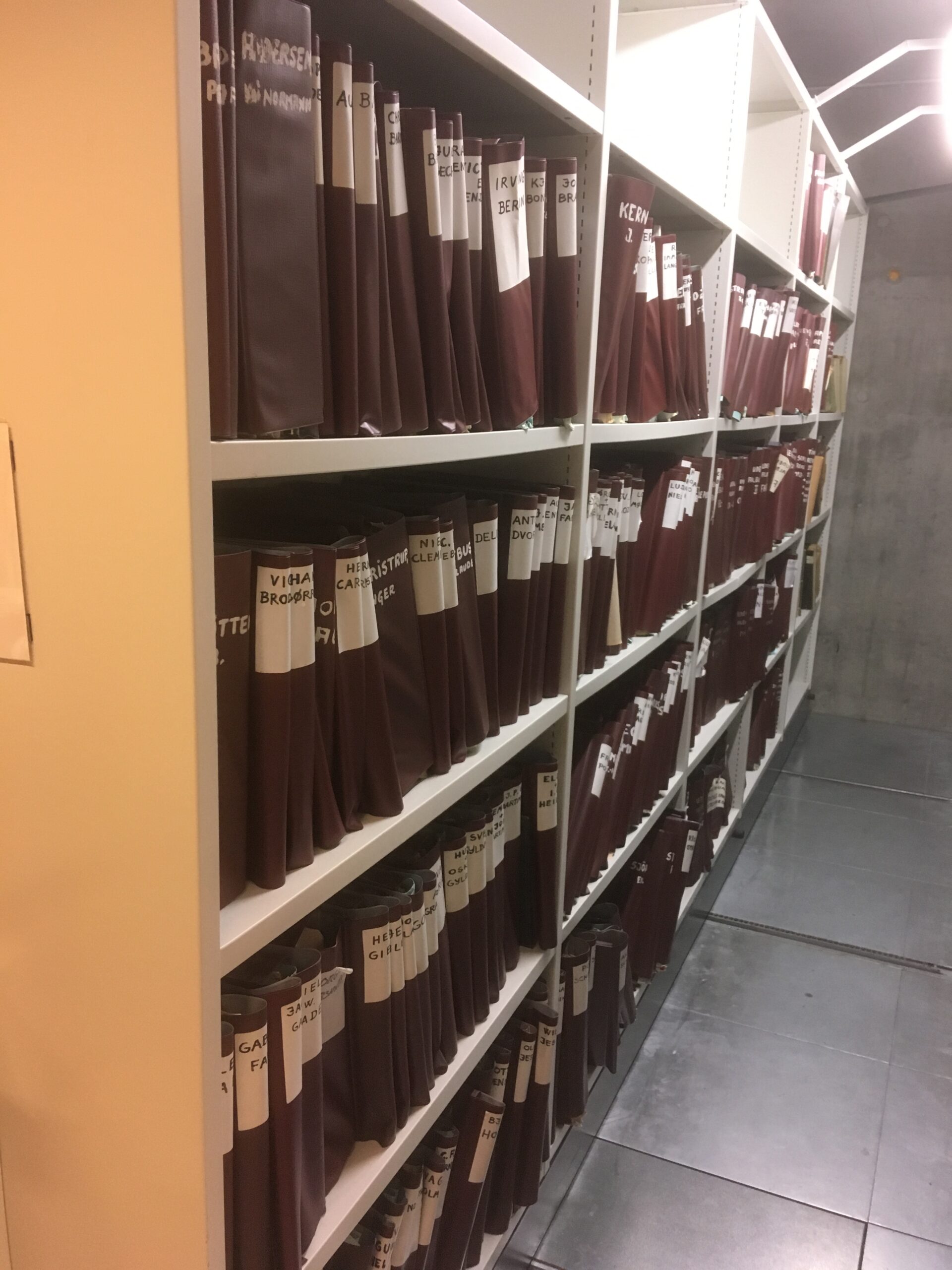
In a way, you can compare the sheet music archive in the Concert Hall to the petrol tank of a car: it contains the energy that drives it all - the sheet music. Without petrol, no propulsion - without notes, no music. The petrol - this highly refined propellant must be sourced and converted into propulsion. The sheet music must be bought or produced, laid out and moulded into a shape so that musicians can put it on the music stand and play. It can be a long and complicated process that is hidden from us concert-goers and that we just take for granted.
In a conversation with the Node Archive's oldest employee Peter Langebæk, he reveals this exciting place.
The sheet music archive is as old as Danmarks Radio. You can find out for sure by asking the staff at the Sheet Music Archive for the sheet music for ’Statsradiofonien's’ very first concert in ’Stærekassen’ in 1925. ’You're welcome’ - and the sheet music for the entire old concert is pulled from the shelves. Ready to play along. Almost as easy as asking for the sheet music to ’Little Peter Spider'. For almost a hundred years, the employees of the Sheet Music Archive have registered, produced, organised, archived and maintained this great treasure of sheet music, which is actually quite unique. -
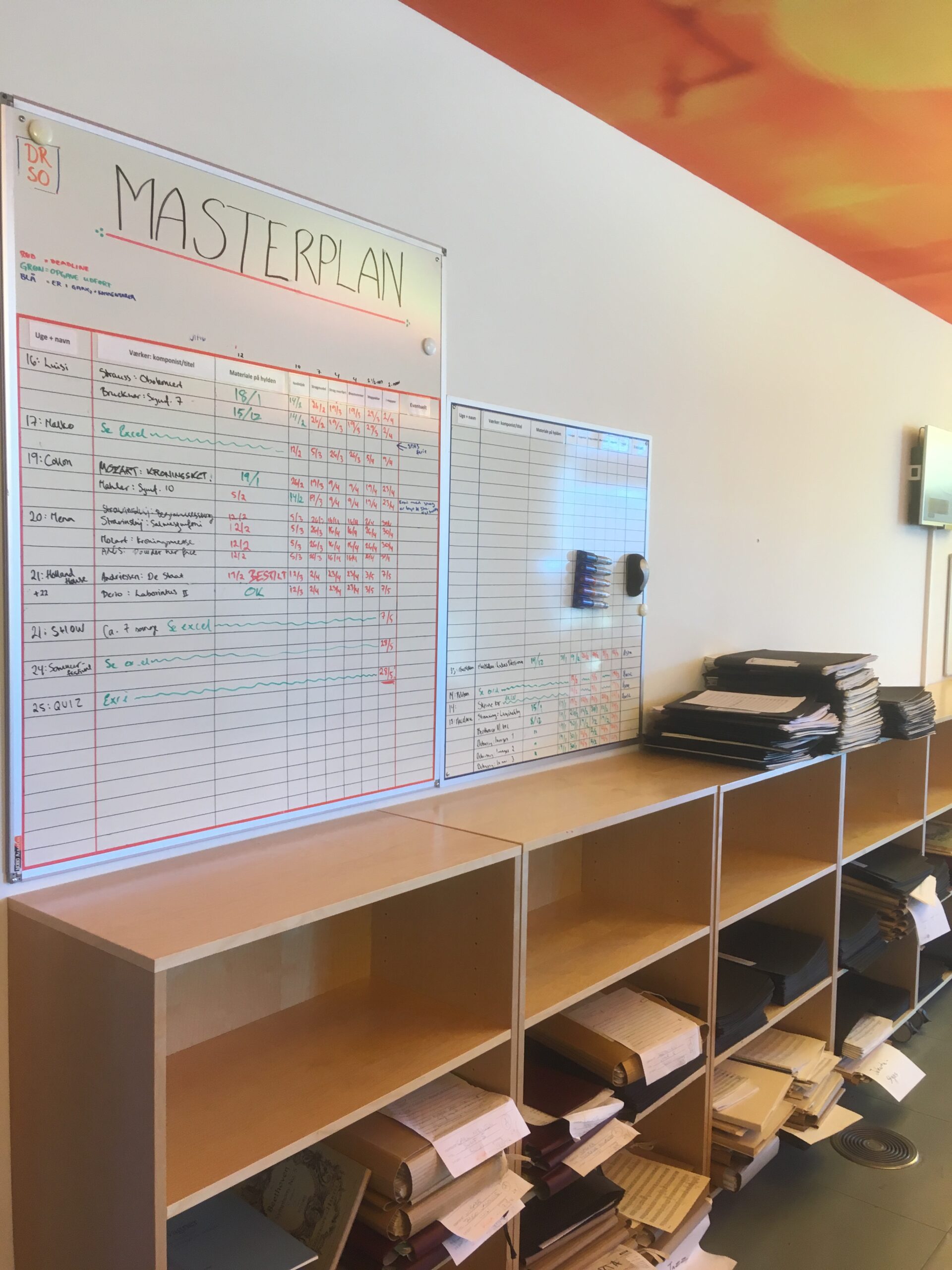
But it's the day-to-day work that really impresses when you follow the work of the Nodearkivet. The season plans are usually finalised several years before the concert, so the Nodearkivet can start with the rough planning. All sheet music must then be in the Sheet Music Archive no later than three months before a concert. There are then 8-10 work processes in the Sheet Music Archive before the material is ready for the concert. And in order for the musicians to have time to practice, the sheet music must be ready for them 14 days before the first rehearsal for the concert. The five employees plus a student assistant know exactly what to do and when. It runs like clockwork - and mistakes hardly ever happen. As Peter says - ’The entertainment programmes are the hardest - the classical concerts always go like clockwork.’
When asked about the savings that are ravaging cultural life everywhere, Peter is pleased to note that the Nodearkivet has so far been spared, and this is of course because the place is geared for the very tight function we have described. No more and no less.
For many years, the Sheet Music Archive was housed in a featureless concrete building on Islands Brygge, next door to Post Danmark's mailbag washing department! That location was just far from everything - Radiohuset with its choir rehearsal hall, concert hall and studios and TV City all the way out in Søborg..., and delivery of sheet music took place via several times daily transport services to DR's many departments in the city. So it was a huge step forward when the whole thing moved to the new DR City in 2006 as one of the first moves. 2900 boxes of sheet music were transported to the basement of the new building at a time when the concert hall was just a hole in the ground. They stood there with their numbered contents in neat rows and in three layers. In reality, it was completely confusing, but - not without a certain pride - Peter says that everyday life continued, ensembles and choirs received their sheet music on time, and just over a year later all the boxes had been emptied and the Sheet Music Archive had settled into its new premises.
The Node Archive's two permanent employees Jørgen Henriksen and Peter Langebæk had achieved the impossible! ’No one in the Radio House had any idea what miserable conditions we had’ Peter states with a shrug.
But now there they are, side by side - the mobile shelves that hold the heart of Danish Radio's musical life - the sheet music. There are symphonic scores with parts, arrangements for orchestras and big bands, choral scores galore and all kinds of collections of sheet music, songbooks, melody collections, anthologies etc etc etc - and what the Sheet Music Archive doesn't have is brought in from near and far. The sheet music used is a mixture of music owned by the Nodearkivet and rented material from all over the world.
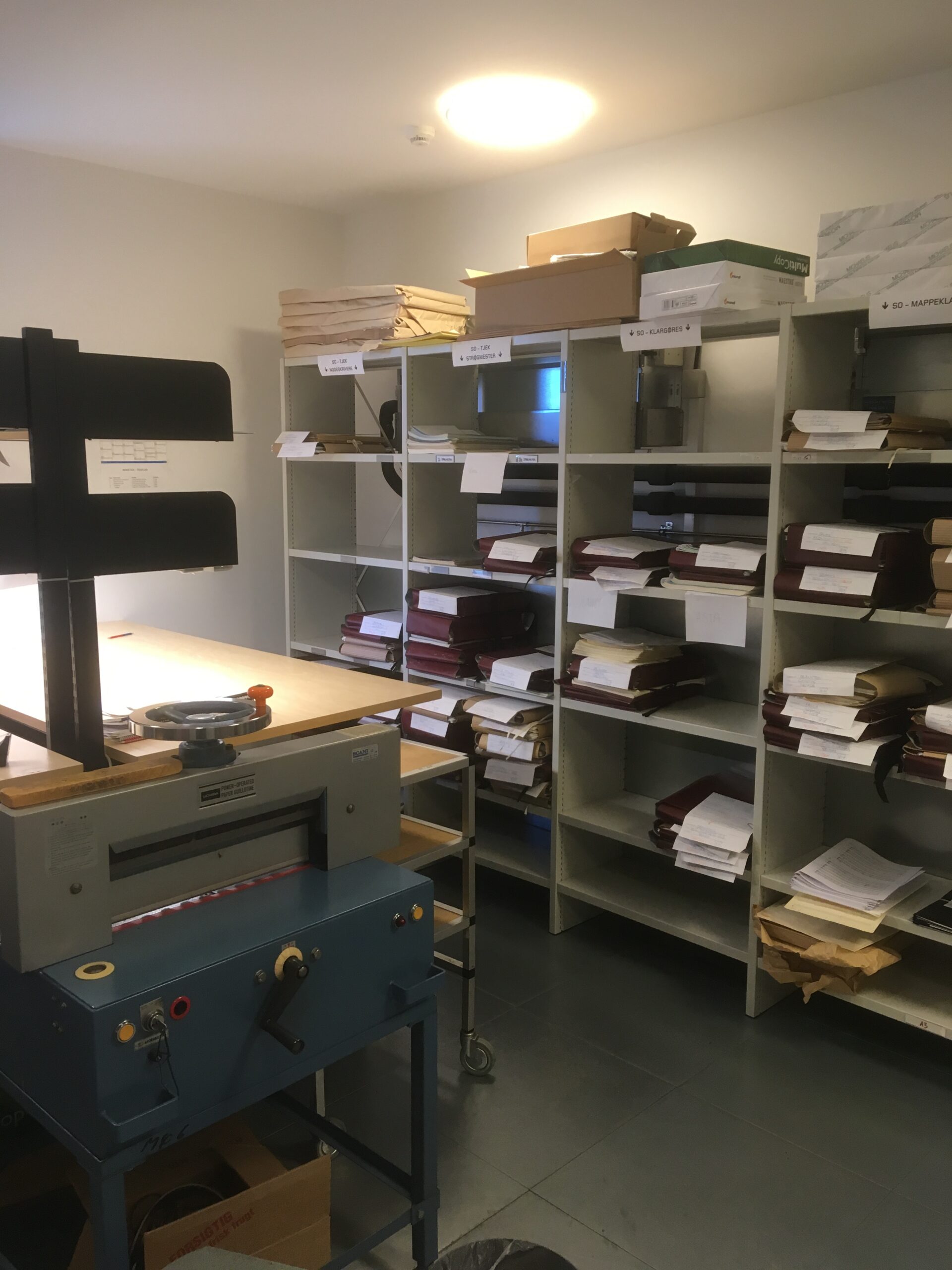
The sheet music archive not only works with already printed sheet music, scores and parts. It employs two so-called ’sheet music printers’ or, in these digital times, ’sheet music producers’, who create original sheet music material by hand or on a computer. And next to the Sheet Music Archive office is a workshop where sheet music is printed, bound and repaired worn and broken sheet music. In the old days, in a special house on Rosenørns Allé, there was a whole army of dedicated sheet music printers who wrote music by hand all day long, but digitalisation has made this work much easier and faster, so today the Nodearkivet has two sheet music producers who do the same work.
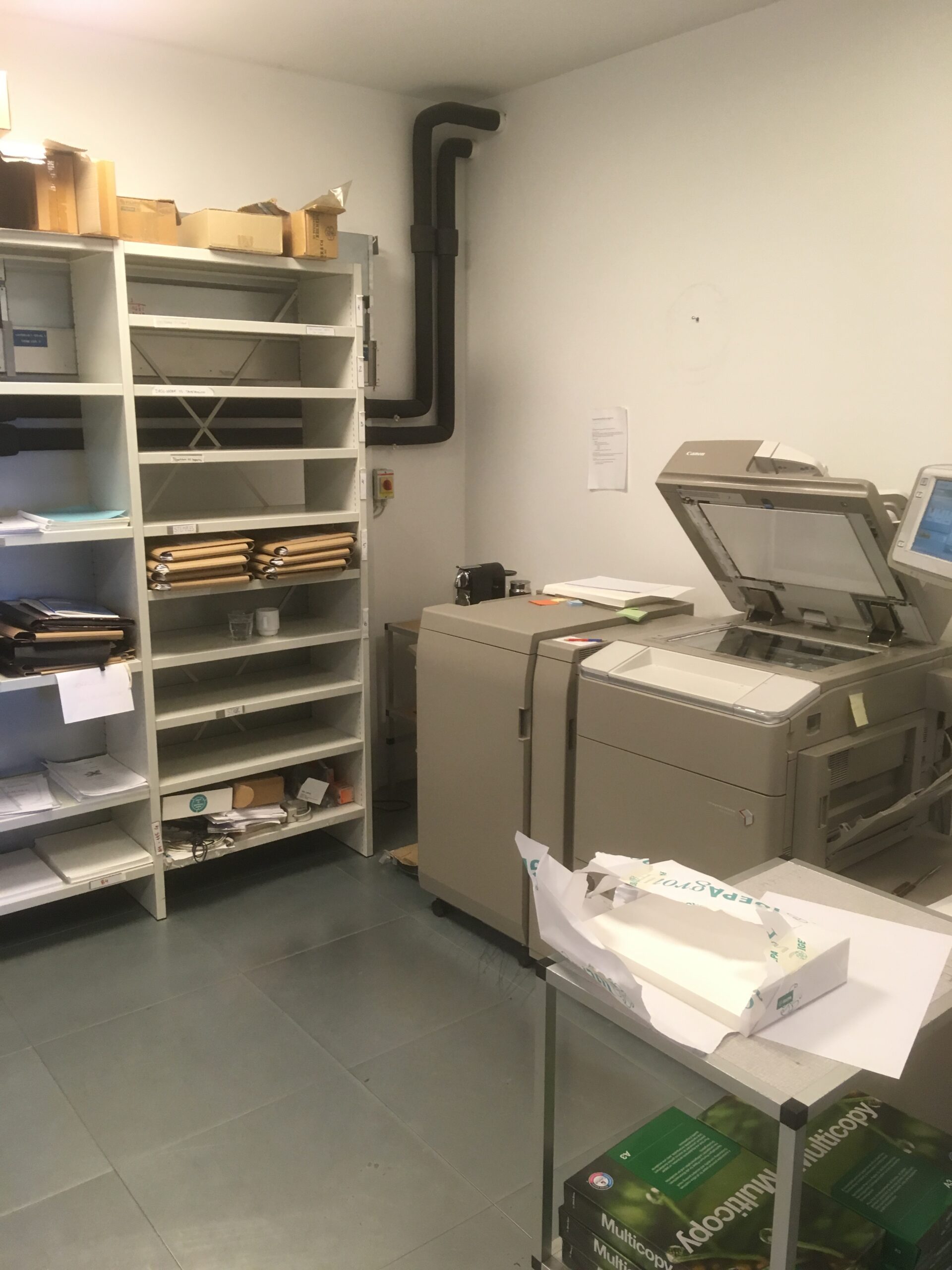
In the old days, a composer or arranger would hand in a handwritten score, and then the Sheet Music Archive would start copying the parts by hand in all the copies that a four-piece symphony orchestra would need. Today, the same composer or arranger delivers a so-called ’pdf file’, a digital document from which you can extract all the parts on a computer and print them on a large printer. "It has become incredibly easier, but also a little less personal," says Peter, who emphasises handwritten scores for ’a beauty so you could actually hang them on the wall for decoration.’
Everyone is talking about and in favour of digitalisation, and as described, all new music production has long since been digitised, but Peter Langebæk also talks about the perspectives of going even further with digitalisation. In several places abroad, musicians' music stands have been replaced with computer screens on which the sheet music is displayed. You scroll with a foot pedal and corrections to the sheet music can be made centrally. When you need to write instructions, such as bowing indications for the strings, it's done in one voice, and voila, all the voices have it! Peter believes that this is where the future lies, ’but it probably won't be in my time!’ –
The seasoned sheet music archivist still gets a kick out of the idea that the entire digitised sheet music archive will eventually be stored on one computer!
However: The entire old (analogue) sheet music archive with all the history built in will certainly be preserved in its current state, no matter how digital everyday life becomes! We'll always be able to dive into history and see and hear what it was like when great-grandfather rolled barrel bands and the family gathered around the radio to listen to the Thursday Concert or old dances with Teddy Petersen.
The sheet music archive is a completely modern part of Danish Radio's musical production apparatus and at the same time a unique working museum for Danish Radio's live music for almost 100 years.