Anyone who has visited the Concert Hall in Dr-Byen has undoubtedly noticed the green lights above the doors to the stage on both the right and left sides. The lights change to red shortly before the conductor and soloist come on stage.
Fewer people will have noticed the thin microphones hanging from the ceiling above the stage, not to mention the microphones on a stand placed next to some, but by no means all, of the musicians.
What the red/green lamp and microphones have in common is that the wires end up in buttons in the sound control desk. It is a room raised above the floor on the Ladies' side (opposite the Queen's Box) with a window to the hall, but otherwise discreetly camouflaged by wooden slats in front of the window. It is from the sound control that what goes on in the Concert Hall is communicated to approximately half a million listeners to the Thursday concerts on P2 and occasionally also to viewers on DR K.
It may come as a surprise to most people that the sound we hear through our speakers at home is not the same sound we hear at rehearsals or concerts in the concert hall. Explanation follows.
Well before the concert, sound producer Bernhard Güttler and music technician Mikkel Nymand are ready at the huge console with countless buttons, where the 50-128 channels are connected to microphones in the hall, depending on the task. All to create the right sound in living rooms across the country. If you just put a couple of microphones in front of the orchestra, the experience for the listeners would be less intense, and if you didn't use the electronic aids offered by the sound control, we would have to constantly turn the sound up and down at home.
When the Thursday concert is broadcast live, many hours of preparation have gone into the control room. The final check is done by clicking a toy frog in front of each microphone to ensure that there is a ”hole through”, as they say in the trade, when the microphone is working. Apart from being able to remove a soloist microphone during intermission after the soloist has sung or played, everything must be in place before the audience arrives. No ladders on stage and no raising or lowering the microphones in the hall during the concert.
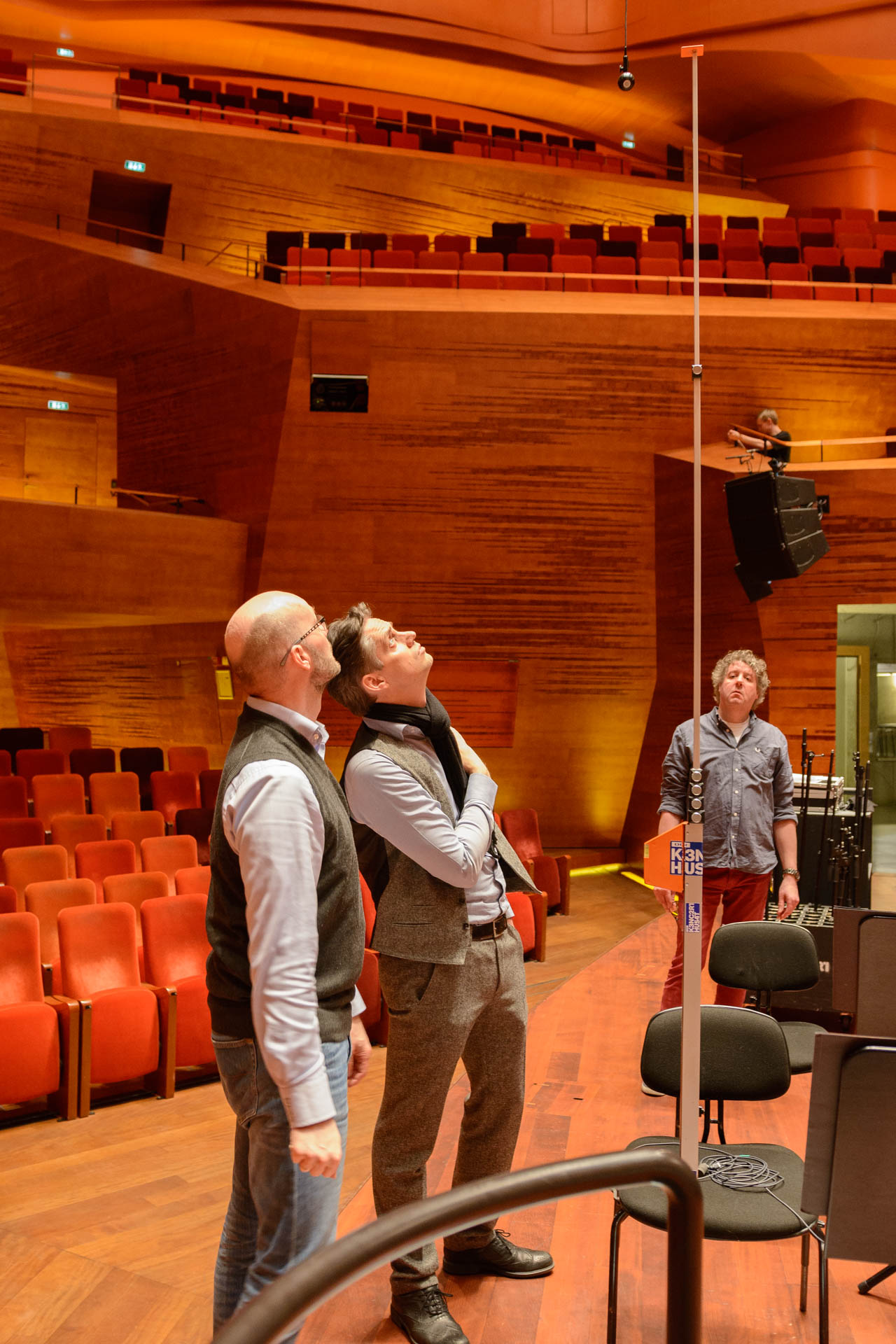
It starts with the concert producer sending a graphic image of the set-up to the sound crew. Here you can see the placement of the different instrument groups on the screen. The conductors and the individual works require very different setups on stage. Based on the set-up, the sound producer and music engineer create a very detailed plan for where to place the many microphones.
The microphones hanging from the ceiling are the fixed positions, but still require individual setups each time. In addition, a large number of auxiliary microphones come out for some of the musicians. For example: When you're sitting in the hall, you can see that the harp is playing. But it doesn't work on the radio without the technical support of a microphone next to the harp that opens when the harp is playing and closes again when it's not.
Then there's the technical challenge of microphones ”getting in each other's way” - also known as interference or comb filter. The electronics in the sound control desk can eliminate this.
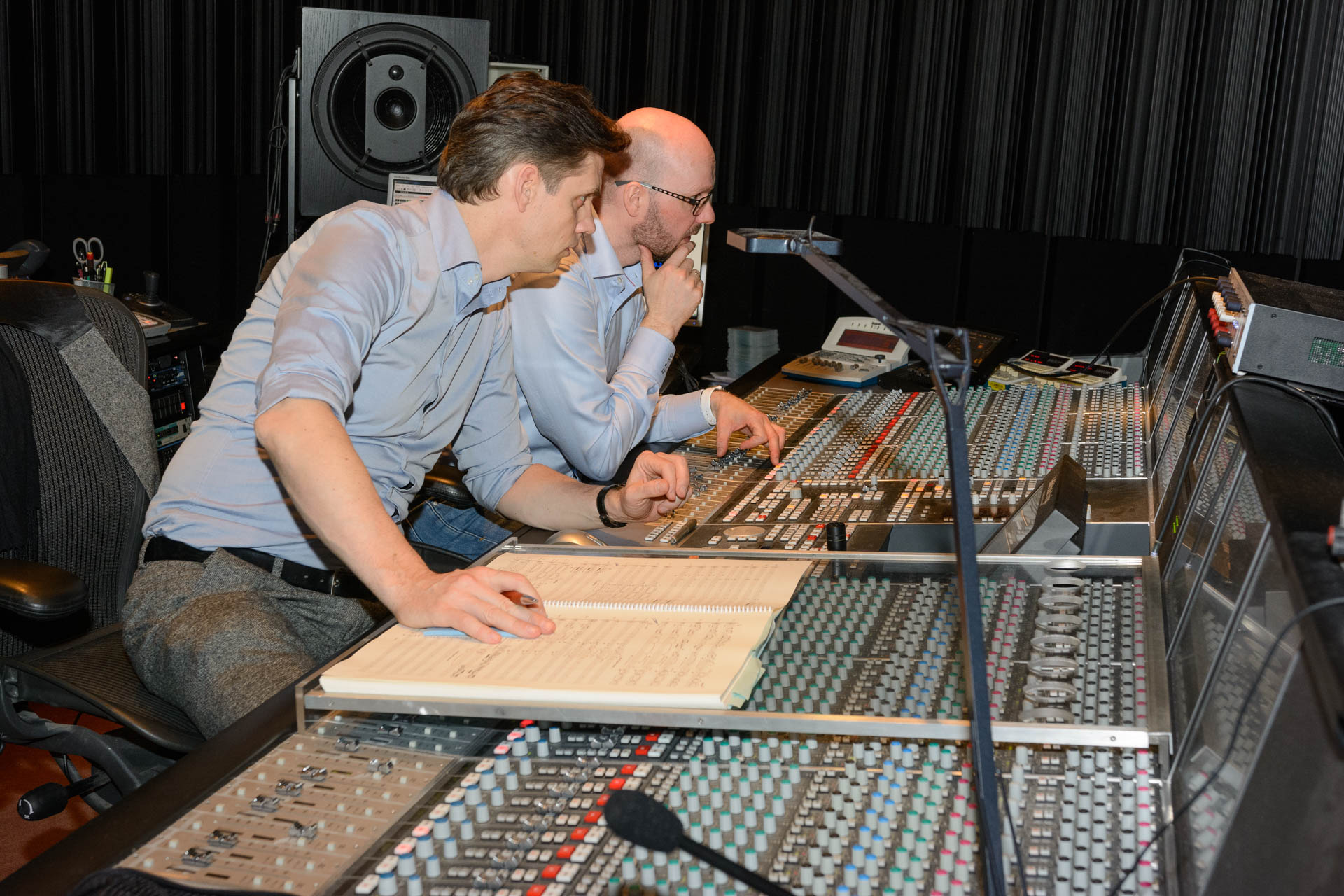
Of course, this requires that the two people in the sound control room know when which instruments are playing. And both are conservatoire graduates. The sound producer sits with a score similar to the conductor in front of him and gives commands to the music technician who controls the buttons
-"With all these electronics, you can override the conductor here in the control room by turning up a group of music that the conductor wants to mute," we ask music technician Mikkel Nymand. .
In principle, yes, but we always endeavour to follow the chairman's wishes when communicating," he says,
In the control room, both the dress rehearsal and the concert or concerts - often two nights in a row - are recorded on ”tape”, which today is an electronic file. We listen to the radio in stereo, with a right and left channel, but the recording is done separately for each microphone.
This makes it possible to repair the final product. It happens - albeit rarely - that one of the musicians comes up to the control room and is sorry for having made a mistake. This doesn't help with the live transmission of the Thursday concert, but during the rebroadcast on Sunday, you can go in and repair the archived version so that everything is in perfect order for later use.
Furthermore, you can choose to edit the entire concert from the two or three recorded playthroughs so that the best possible version is placed in the DR archives for later use
The two sound engineers are not permanent employees at DR. Bernhard Güttler travels to concert halls all over the world and creates just the right microphone setup to give radio listeners a sound experience that matches what concertgoers hear in the hall. He is also a professor at a German music conservatory where he teaches artistic recording management.
Photo: Kim Kruse Petersen