Anton Bruckner (1824-1896) is one of the composers who helped perfect Romanticism, the period after Viennese Classicism. His 2nd Symphony from 1872 is one of the clearest examples of this, as it is of considerable length and contains strong shifts in melody and tonality, while paying homage to old forms in its structure.
Traditionally, the first movement of a symphony is in what is called ‘sonata form’, which has three parts: First the exposition, where the themes of the movement are presented, then the development section where they are developed, and finally the reprise where everything that has been played is picked up again. In this review, I will look at the exposition of the first movement of this symphony.
The symphony begins with tremolo in the bright strings. Tremolo is when the same note is repeated, so we get a ‘de-de-de-de-de-de-de-de-de-de’ sound from violins and violas. Underneath this, the celli add a melodic phrase, which is answered with a decline in the horn.
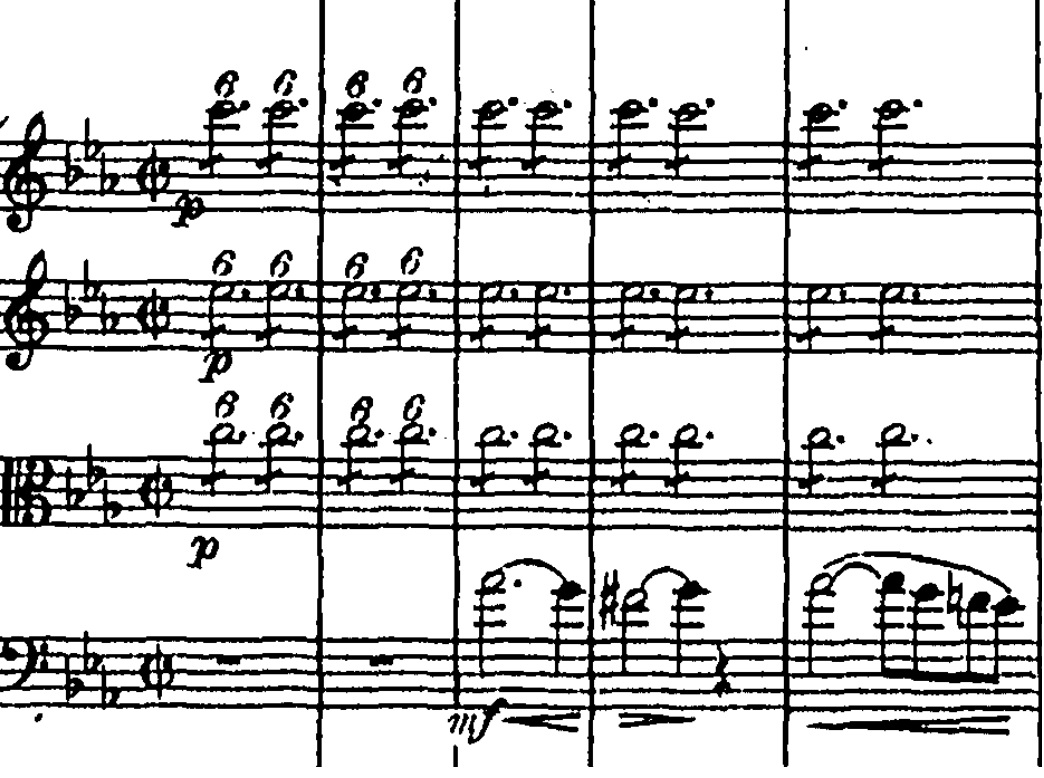
Violins and violas continue their tremolo, and horns and celli continue their play between melodic phrase and descending response. But suddenly the celli change the character of their melody, it becomes less fluid and a little more broken up, and now the response comes in the flutes, which play an ascending phrase.
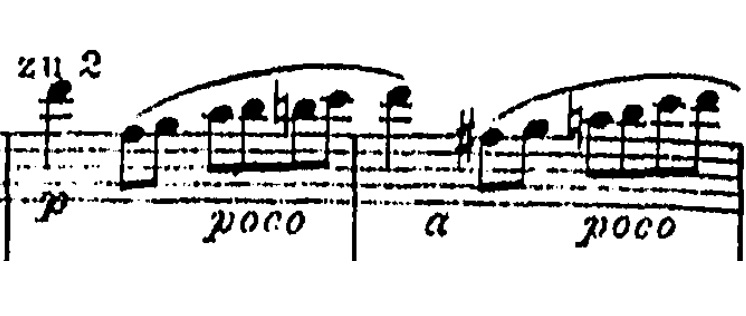
The interplay between flute and celli continues, increasing in intensity until the violins have finished accompanying and now take over with an abrupt melodic descending phrase:

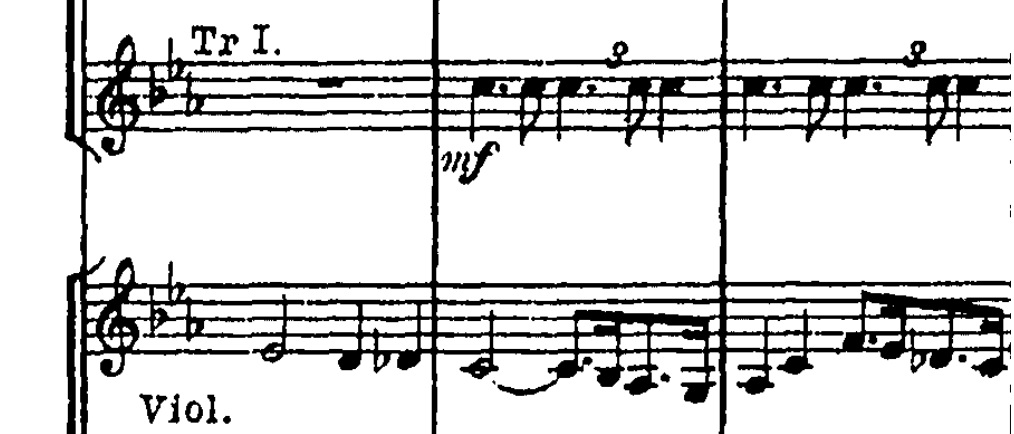
The violins don't get their moment alone, however, as the trumpets interject a fanfare. This fanfare is worth remembering as it appears several times in the movement:
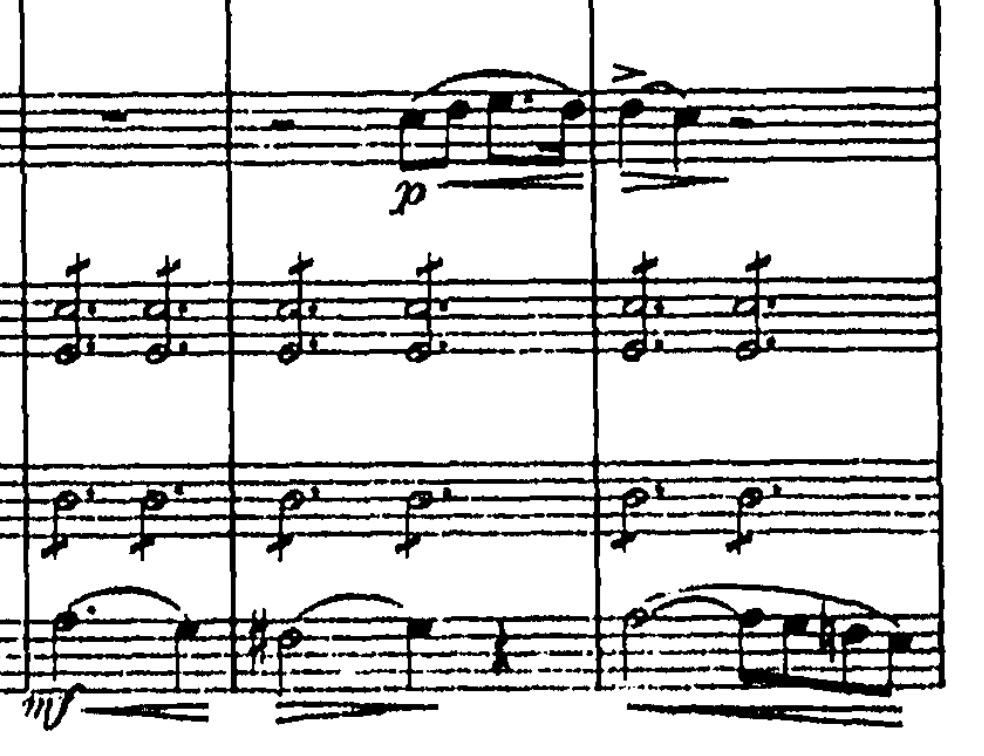
The intensity increases until the symphony almost restarts with tremolo in the bright strings. But this time the melody unfolds as a battle between the celli, first violin and woodwinds:
This interplay continues for the next while until the flute cuts through with a descending figure that is taken over by the clarinet. At the same time, the tempo and intensity drop and we eventually hear only three beats on the timpani:
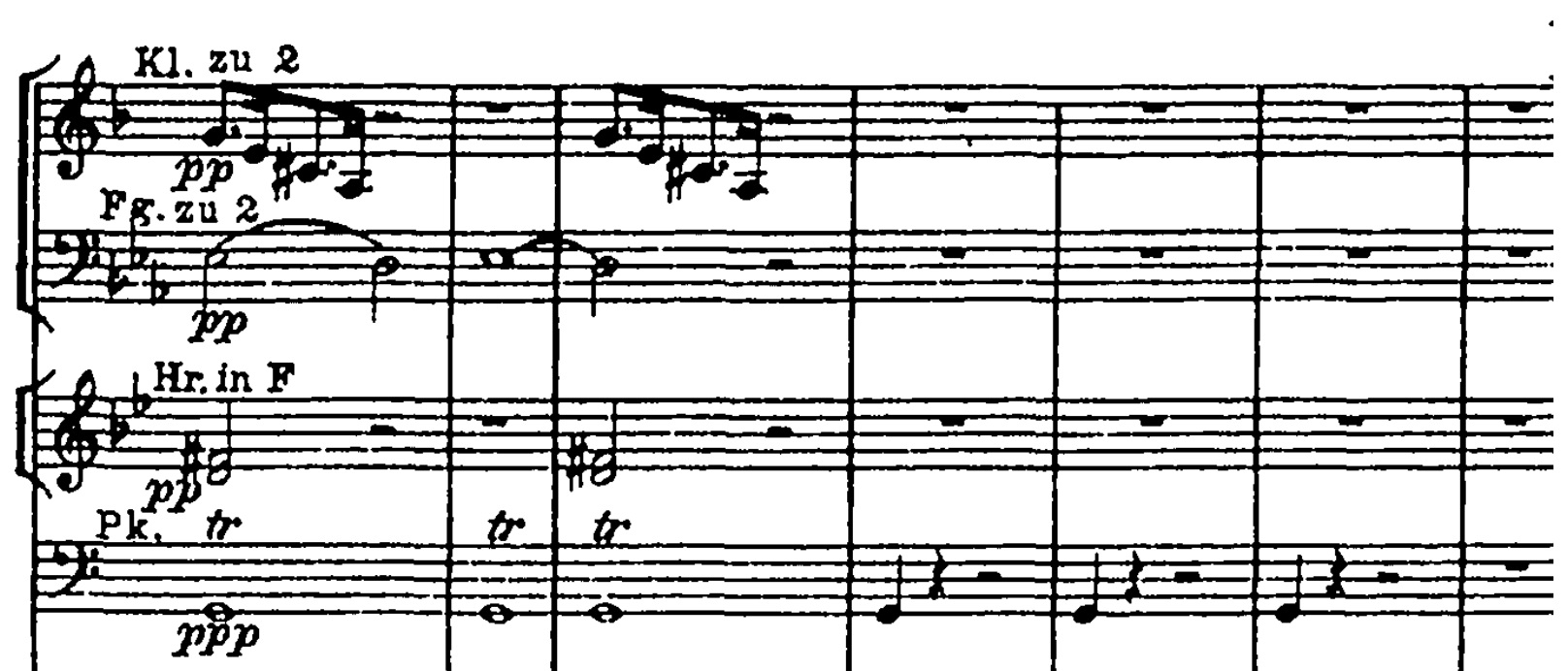
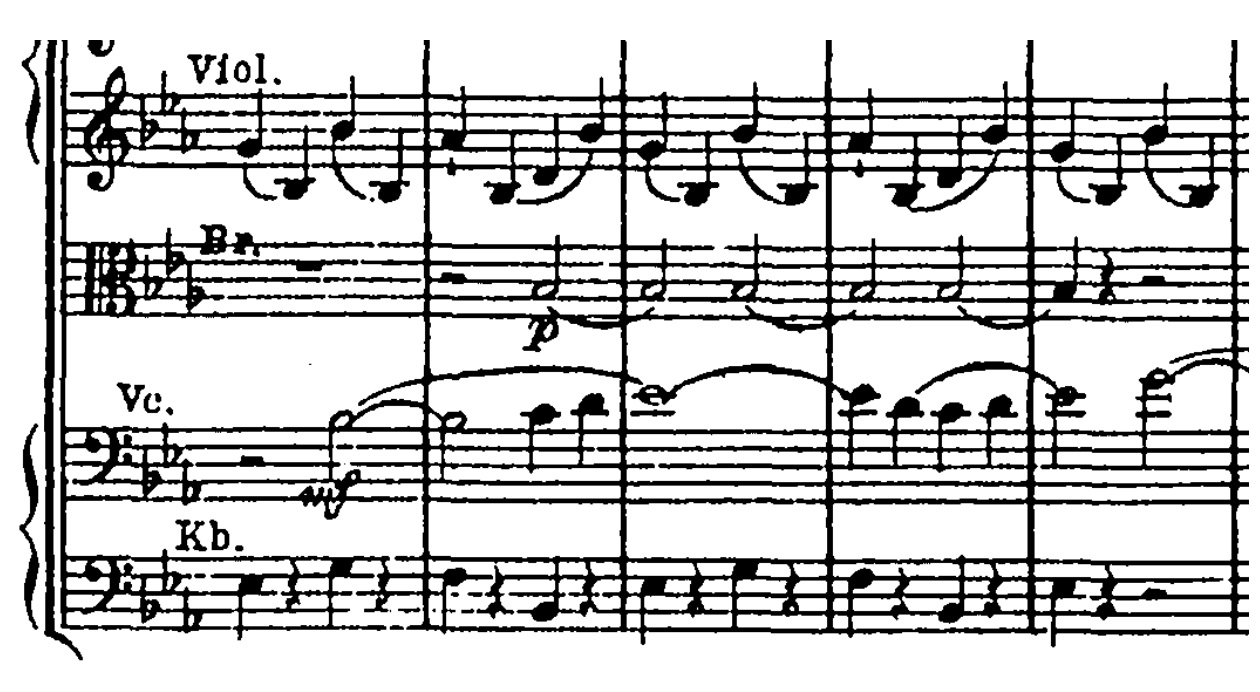
Here we hit the first pause in the movement. The pauses are scattered throughout the symphony like little breathing holes to catch your breath and always signal a characteristic break. And when the music begins again, the style is completely different, as the violins play a cheerful phrase, almost like a waltz in interaction with the basses. However, the cellos also intrude with a counter-voice:
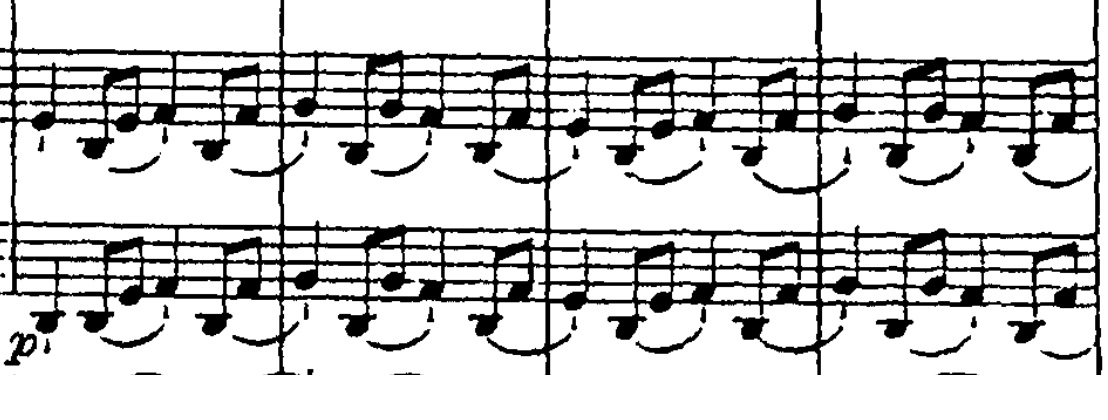
This cheerful section continues for a while without any significant changes. But abruptly it changes character, gone are the soft passages, and we now get a figure in the strings saying ‘dam-da-da-da-dam-da-da-da-da’ while the flutes begin a melody on top:
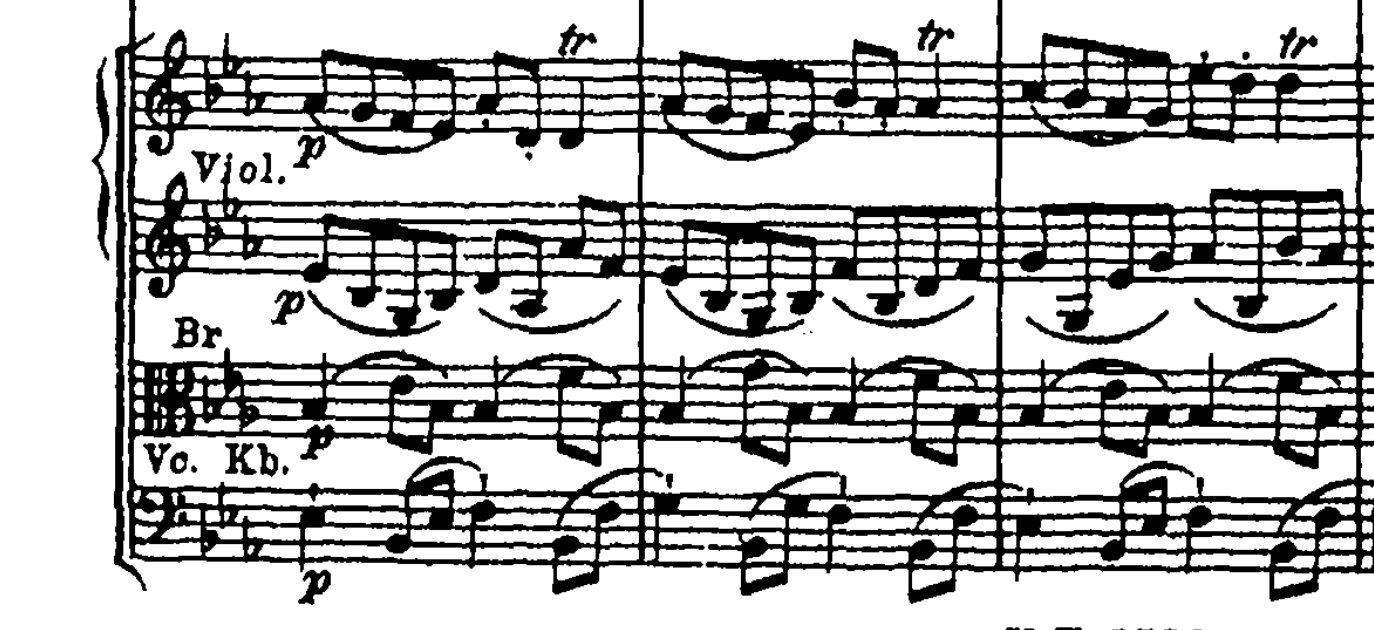
Again, there is little variation in the following piece, but it takes the form of a trio between the oboe, flute and clarinets. But the piece ends up starting all over again, but this time with a different feel, the violins are given a much more melodic accompaniment, while the low strings continue the ‘dam-da-da-dam’ motif and the woodwinds play on:
The piece rises and rises in intensity and complexity, and soon the trumpets join in with their fanfare under the music. It all culminates with the timpani striking a swirl, but the climax fails to materialise and the power disappears. And out of the silence, the strings begin again, ‘dam-da-da-da.dam’:

Bruckner repeats much of the previous section, but instead of letting the intensity rise, he lets it drop towards the end, and we are now presented with a theme that moves between the woodwinds:
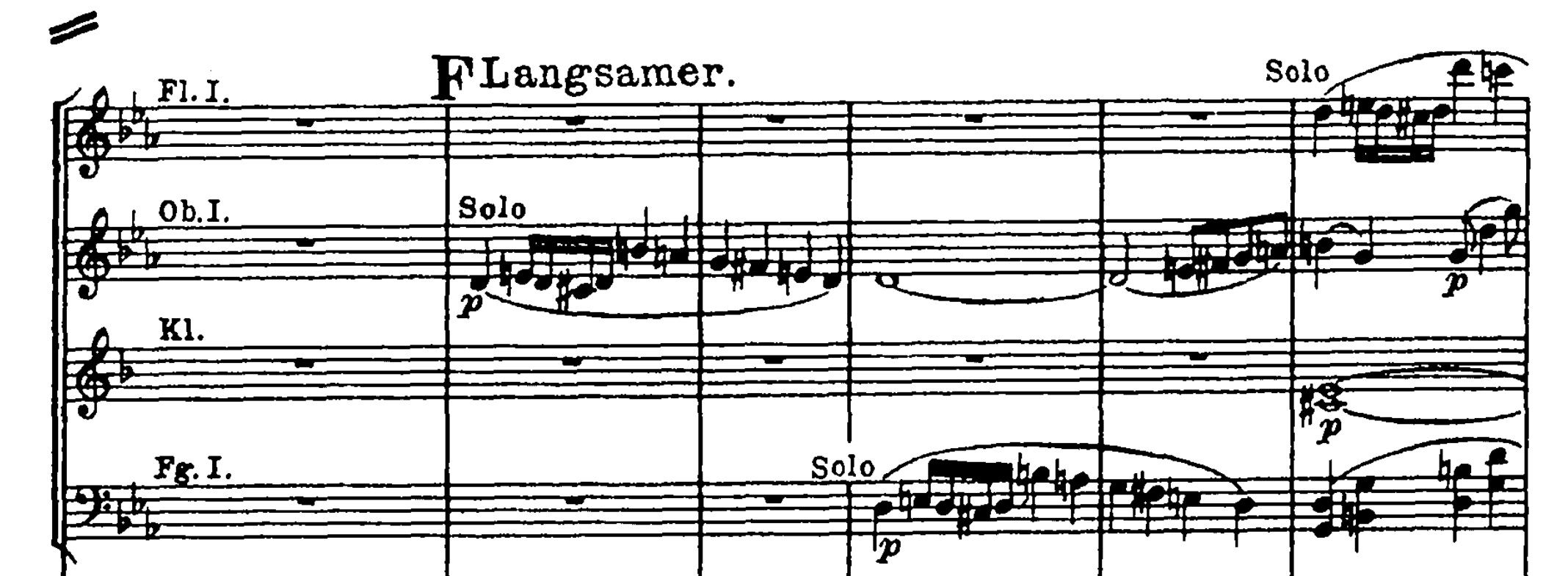
These solos slowly lead us towards another pause. And out of it jumps the horn with a chord break that ends as quickly as it begins... and is now repeated with variation:
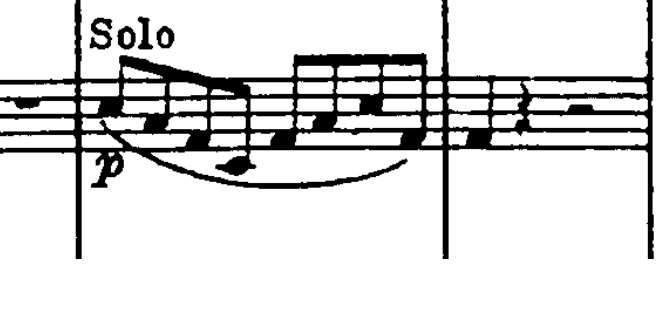
This is the end of the exposition, and the following section covers the material that has been played so far. We are thus better equipped to follow the rest of the first movement.