Today's schedule for the VocalEnsemble is a very good example of the raw endurance and hard work that touring can sometimes require:
06.00: check out (with a small bag containing our breakfast as it was a bit too early to eat at our hotel)
06.15: departure by bus to Beijing West train station
07:30: arrival at the train station, passing through security, check-in and boarding the train
08.16: train journey, Beijing to Xi'an (6 hours)
14.18: arrival Xi'an walk to our bus
14.40: bus from the station to the hotel
16.00: check-in at the hotel, quick shower and change of clothes
17.15: bus from hotel to concert hall
17.45: rehearsal
18.15: Dinner in the concert hall canteen
19.30: concert
21.15: bus back to the hotel
21.45: a cold beer and head to bed
Arriving at Beijing West train station very early in the morning, the city had an almost romantic foggy look - but of course this wasn't the summer fog of an August morning, the smoke came from Beijing's notorious air pollution.

But China is a signatory to the Paris Agreement on climate change - and it's clear that they have started making efforts to improve air quality in their cities: new electric cars and scooters have become a common sight on the streets here alongside the smartest European car models.
And this is part of the adjustments China is increasingly making towards global brands and Western capitalism. You'll find BMW, VW and all the other well-known car brands, as well as Pizza Hut, KFC, McDonalds and IKEA everywhere!
Here's Vocal Ensemble conductor Marcus Creed and Production Manager Peter Tönshoff, just before we boarded the Xi'an train, enjoying their morning coffee, purchased from another well-known Western brand...

The long train journey to Xi'an took us 1000 kilometres south of Beijing and gave us the opportunity to see something other than big cities as our high-speed train sped along at 300 km/h through the fields, meadows and agriculture of rural China - stretching as far as the eye can see.
But steadily, as the journey progressed, the landscape began to change. Slowly we left behind the endless flat plains: high, small hills and eventually - as we got closer to Xi'an - real mountains began to appear.
The city of Xi'an is the oldest of China's four great ancient capitals and was the capital of Imperial China for 13 dynasties during the 1100 years after it was founded in 221 BC. Later, it played an important role as the end point of the famous Silk Road, the trade route through China. For this reason, the city is often called the birthplace of Chinese civilisation - but it is best known today as the site of the famous Terracotta Army, discovered at a tomb outside the city in 1974.
And in the cultural district of modern Xi'an, both the theatre and concert hall pay homage to the architecture and design that was prominent in the city's mighty imperial past.
Outside the newly built theatre, for example, there is a statue of one of the great emperors of the past leading his men from horseback. At his feet is a group of fearsome mounted warriors and - in front of them, on the left side of the image - an entourage of trumpet-playing foot soldiers.

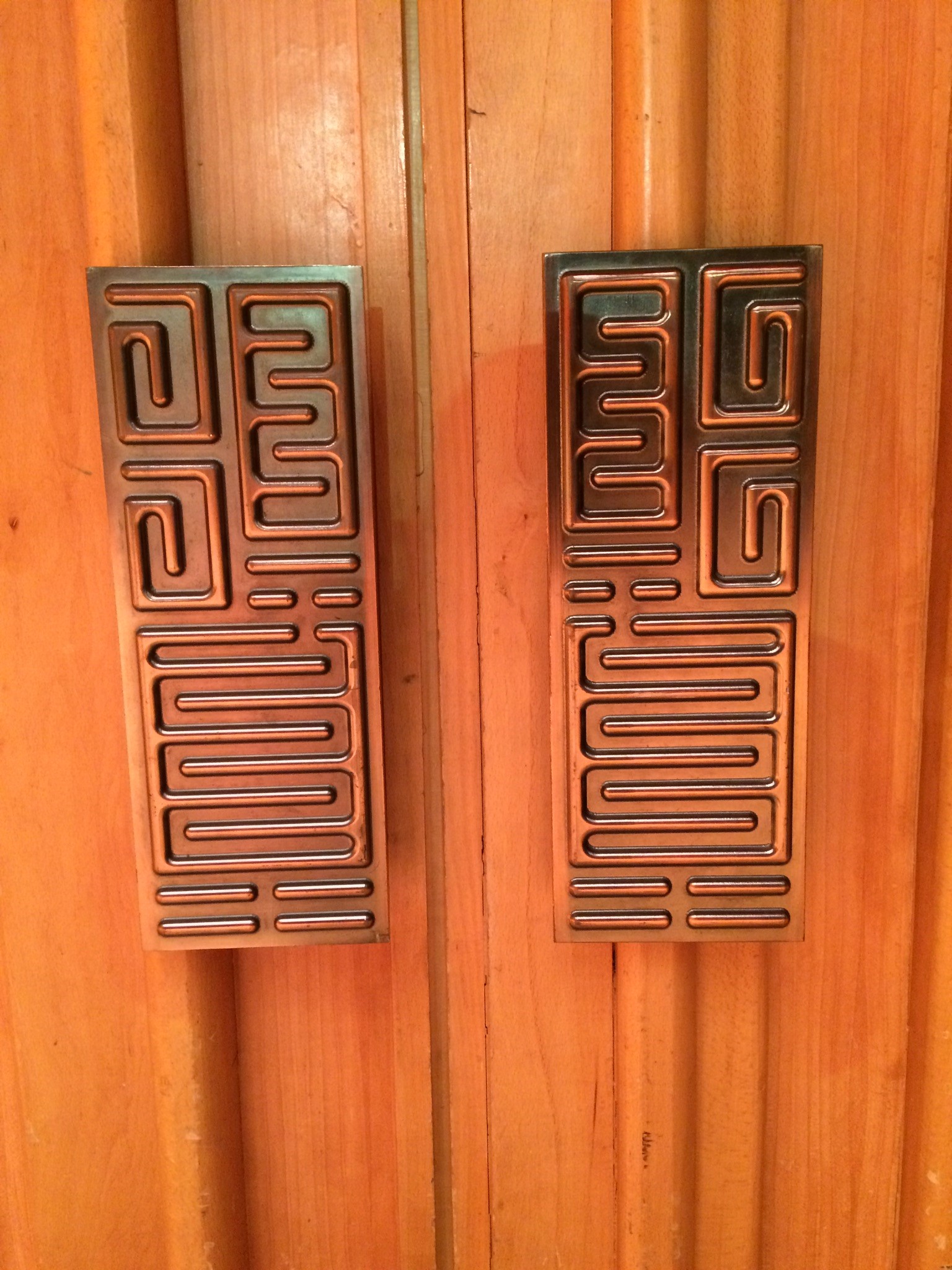
Inside the concert hall, many of the decorative details - such as the wooden panelling and door handles - were also based on the antique design.
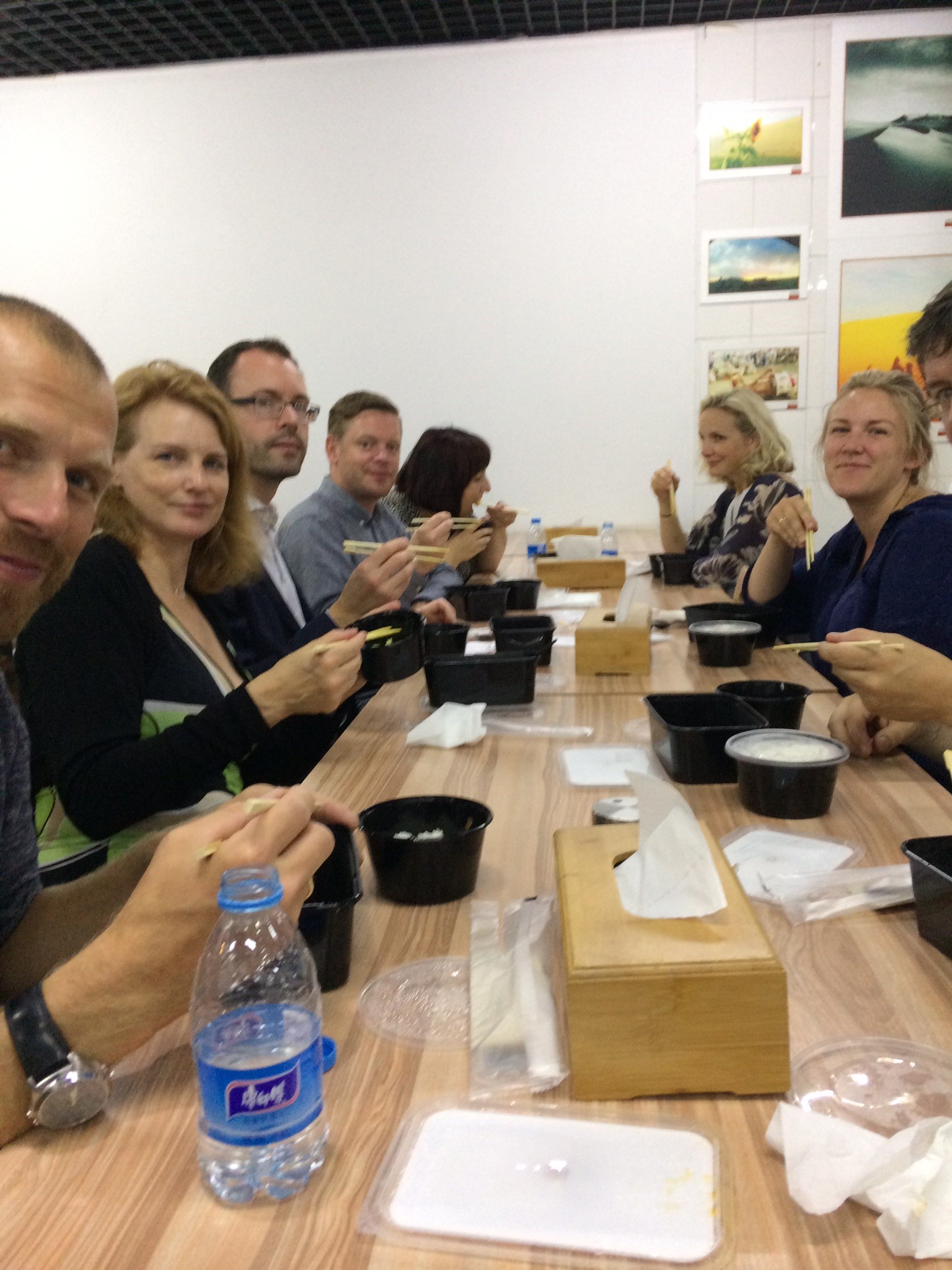
After a quick rehearsal in the concert hall, it was time for a communal meal in the staff canteen. We're all getting pretty good at eating with chopsticks!
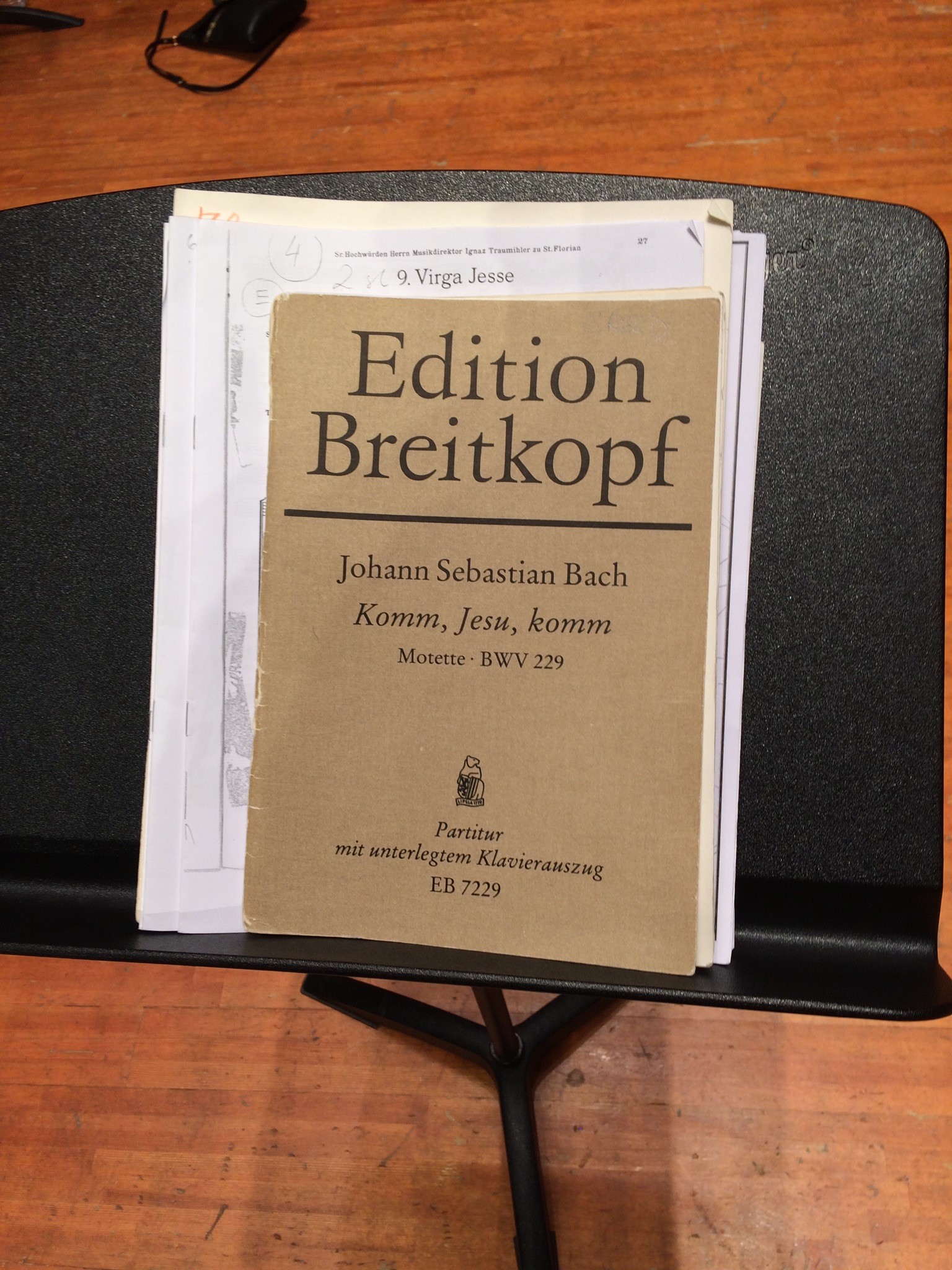
And outside in the foyer, as the audience began to arrive, huge banners advertising the concert and the choir hung, while - inside the concert hall - conductor Marcus Creed's sheet music was already ready on the music stands, waiting for the concert to begin.
Tomorrow we head to Zhuhai - and the fourth concert of our tour.