Claude Debussy composed the composition between 1903-05 La Mer, three symphonic sketches for orchestra which can be translated as, The Sea, three symphonic sketches for orchestra. Although the work was not well received at its premiere, it slowly crept into the concert repertoire around the world.
The Sea is not a work structured according to conventional rules, but there are some recurring phrases and rhythmic figures that are worth listening for. The first movement can be roughly divided into four parts: an introduction, a first part, a second part and a conclusion.
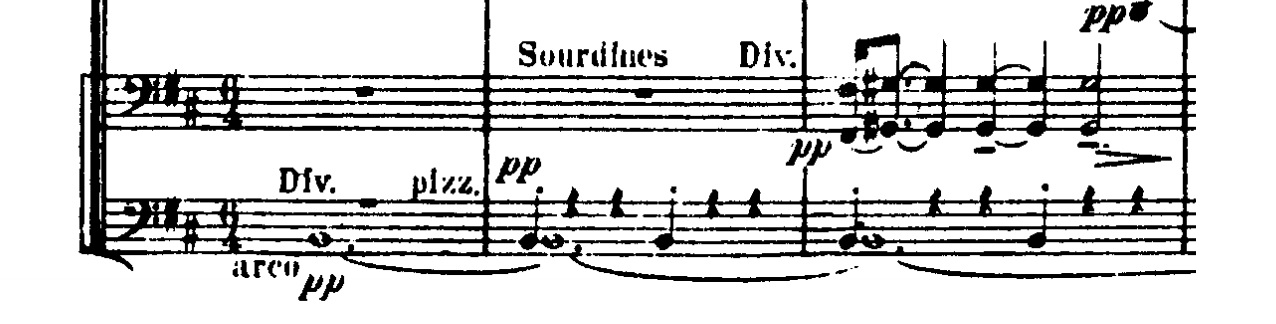
The introduction opens with a slow build-up in the low strings and the first motif is played in cello: a simple melodic figure with a quick note change:
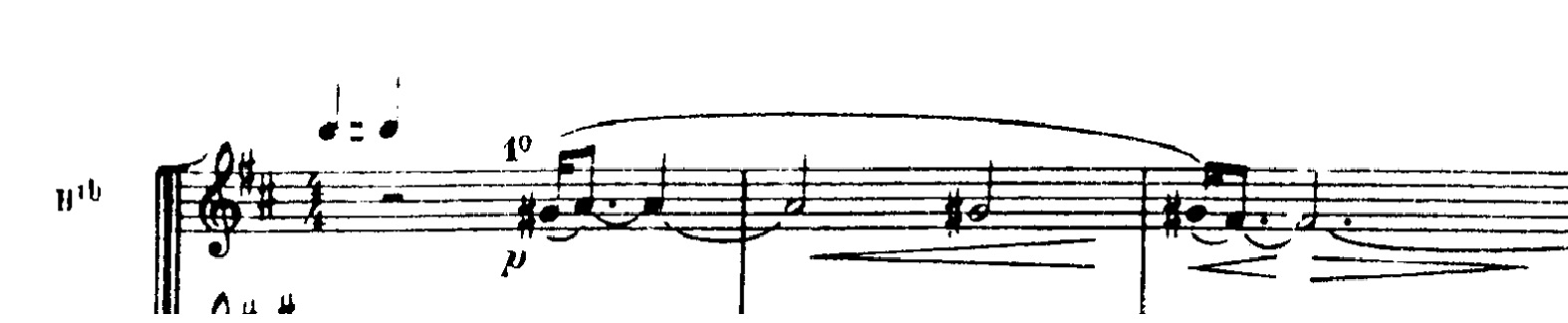
The motif is repeated shortly after, this time in the brighter instruments, led by the oboes:
To round off the introduction, Debussy adds a new figure, this time a melodic ascending phrase. He first plays the idea slowly:
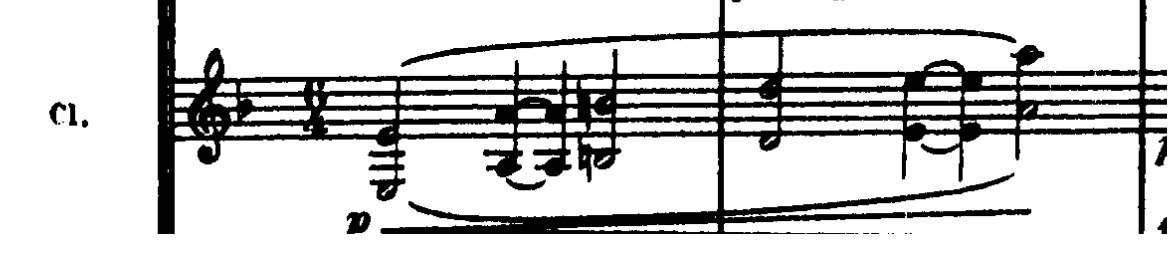
And then very quickly. Notice the first motif played underneath and how the build-up doesn't resolve, but simply leads to the first part:
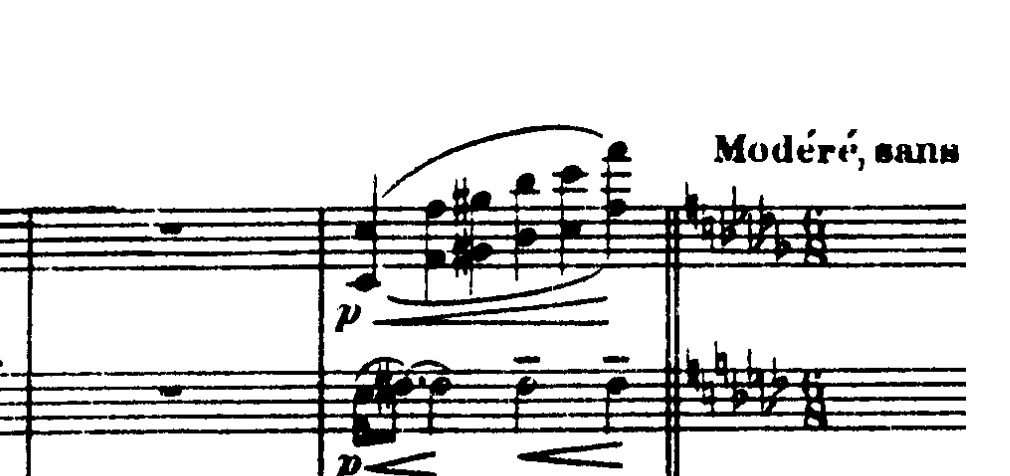
Debussy opens the first part with a figure that constantly returns. It's a figure that almost turns round by itself: first it goes down and then up again:
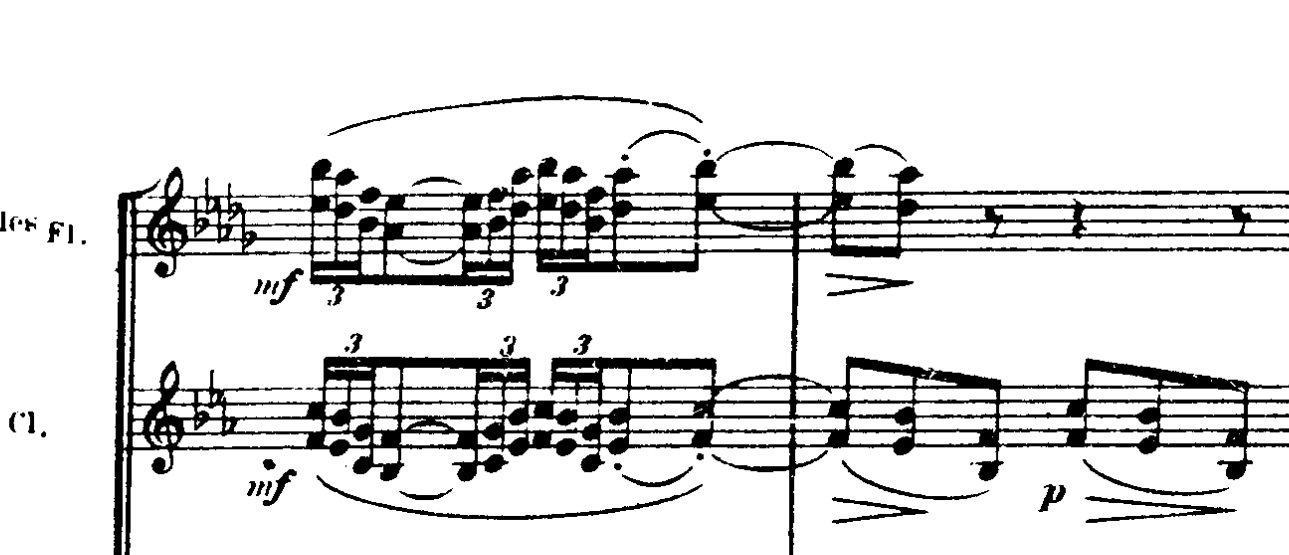
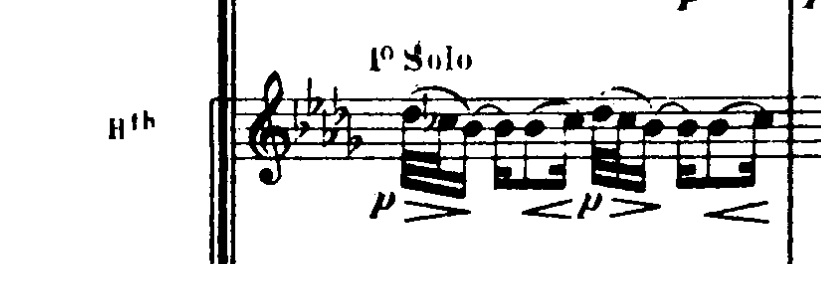
The rhythm of the figure forms the basis of the first part and can be heard in several places. It jumps out of an oboe particularly clearly:
And towards the end of the part, it comes from a trumpet that only plays the descending part, cheating us of the ending:
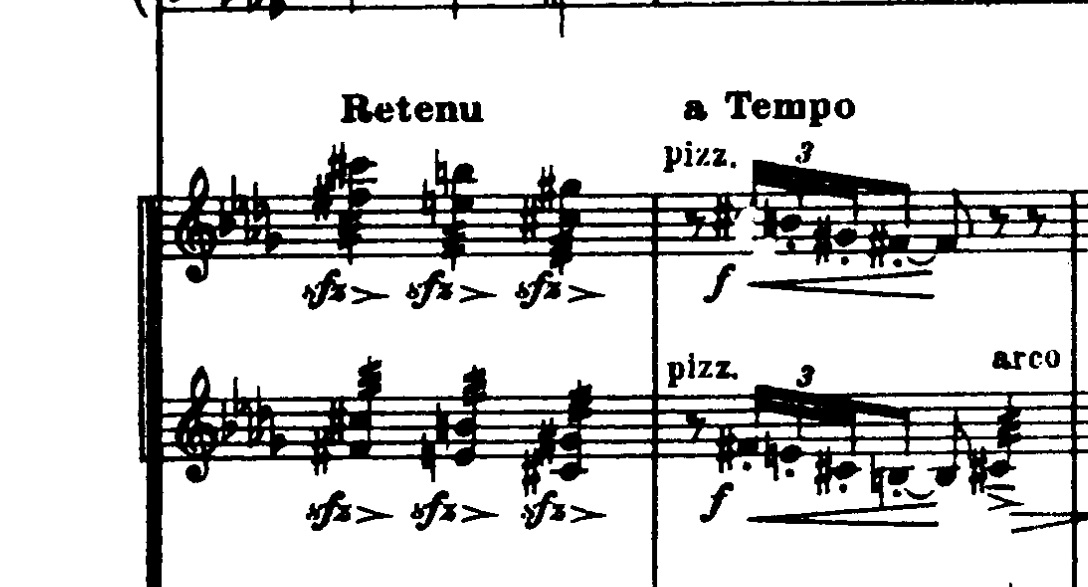
The trumpet leads us to the second part, which opens with the same motif we hear in the introduction. However, the second part's own idea only becomes clear when the flute comes in. It's a quick, alternating play between a few different notes:
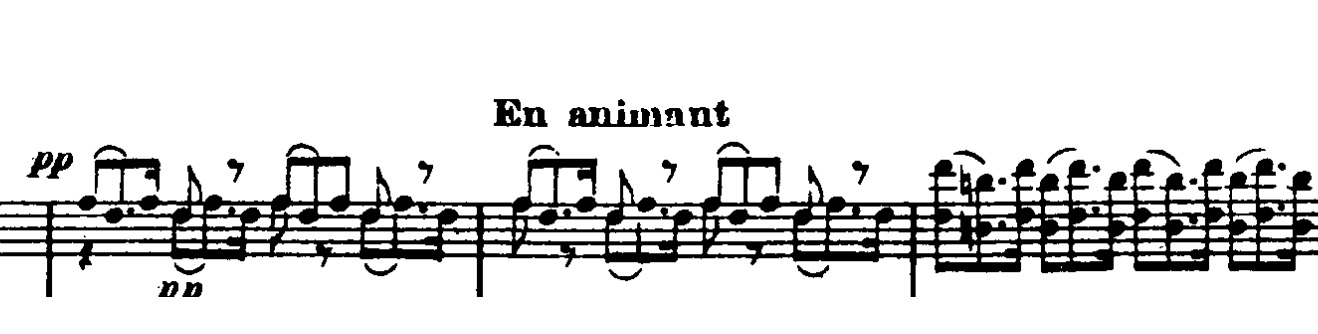
The second part mainly plays with ideas from the intro and first part, but we get a radical shift with the finale. The English horn and violins play a descending melody:

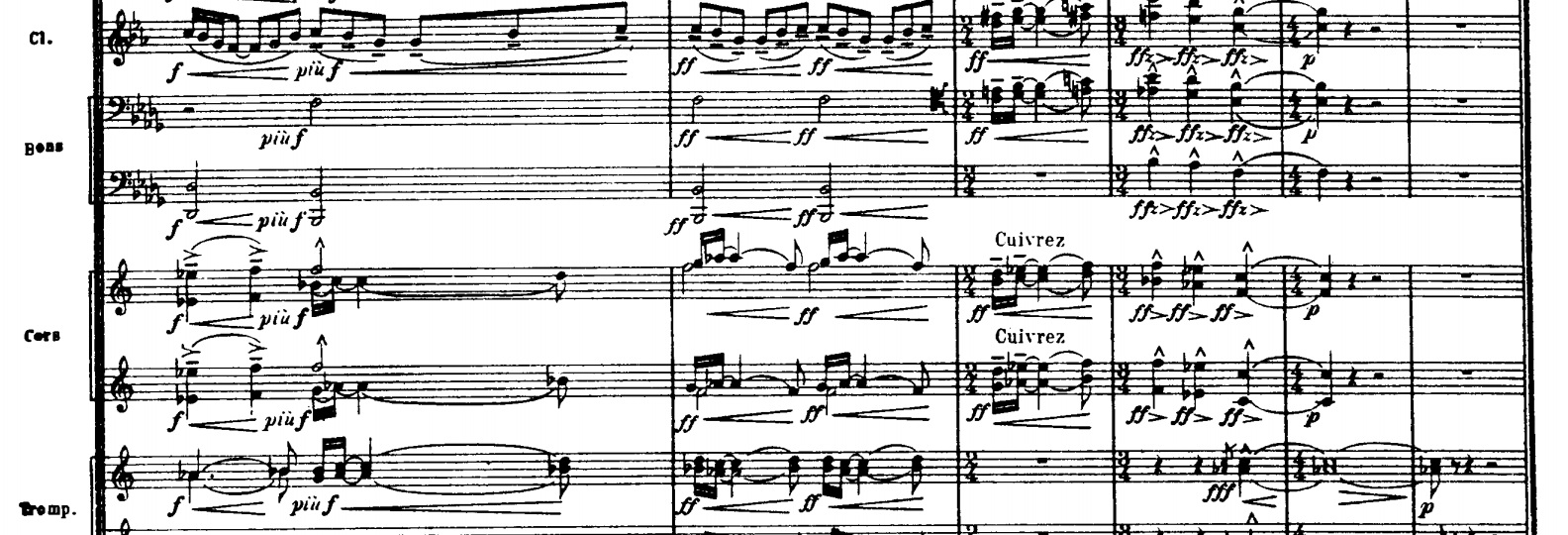
The long melodic lines take up a lot of space in this movement and the tempo drops. But slowly underneath the melodic lines, trombones and brass slowly build up a sound:

The build-up leads to some of the most massive and beautiful sounds ever written for orchestra. Because of this ending alone, one can consider The Sea as an incomparable piece.