Carl Nielsen wrote his third symphony in 1910-11, which was performed in 1912 by the Royal Danish Orchestra, of which Nielsen was conductor at the time. The symphony is considered one of his best and the symphony that brought him to the attention of the rest of Europe. In the following, I will look at the first movement.
The movement begins with an A - repeated no less than 36 times, in most of the orchestra!
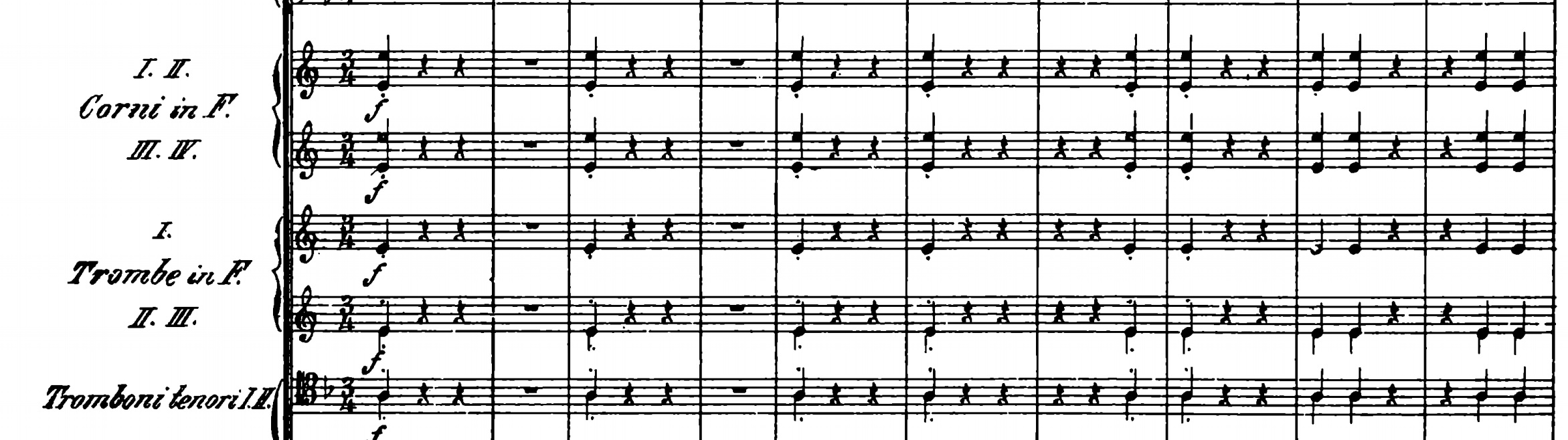
This is immediately followed by Theme 1, the centrepiece of this symphony, played in the woodwind section:
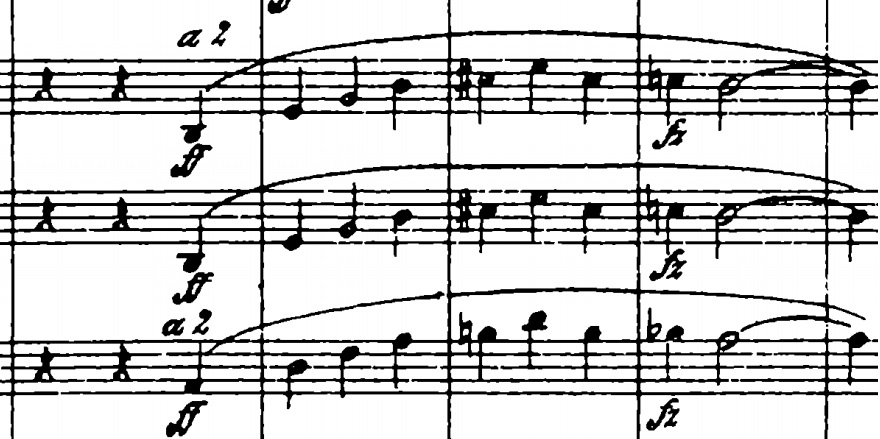
After a period of further development of this theme, it returns, now in the full orchestra and played by the strings:
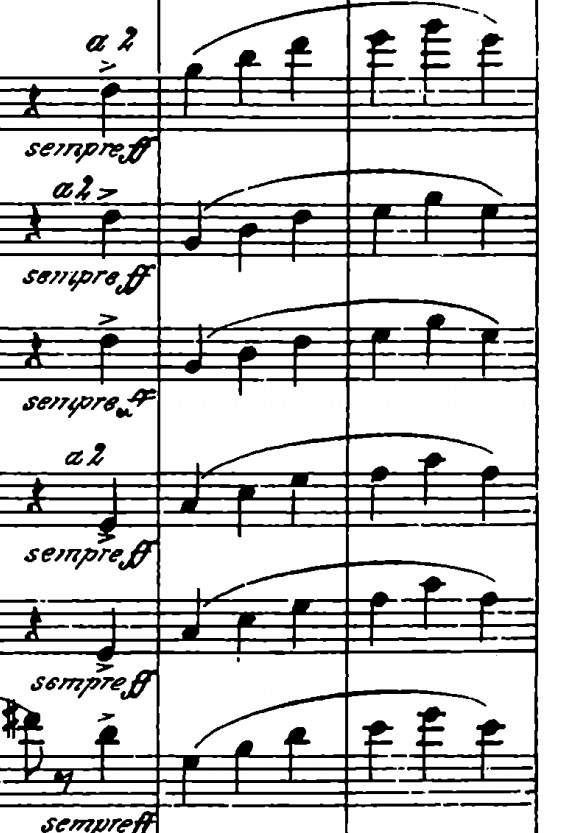
Soon you can hear the violins playing a rhythmised A underneath the music - similar to what we heard in the opening symphony:
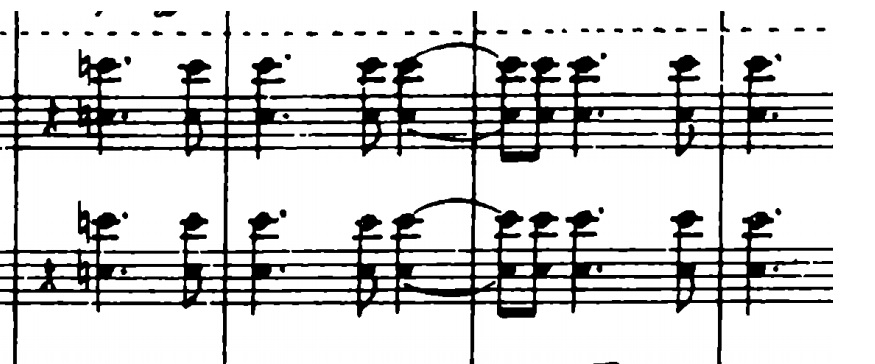
The music gets louder and louder until Nielsen gives them a huge chord that they have to slowly mute until it almost disappears:

Out of this almost nothing, we now hear theme 2, which is a reworking of theme 1, played first in flute followed by the other woodwinds:
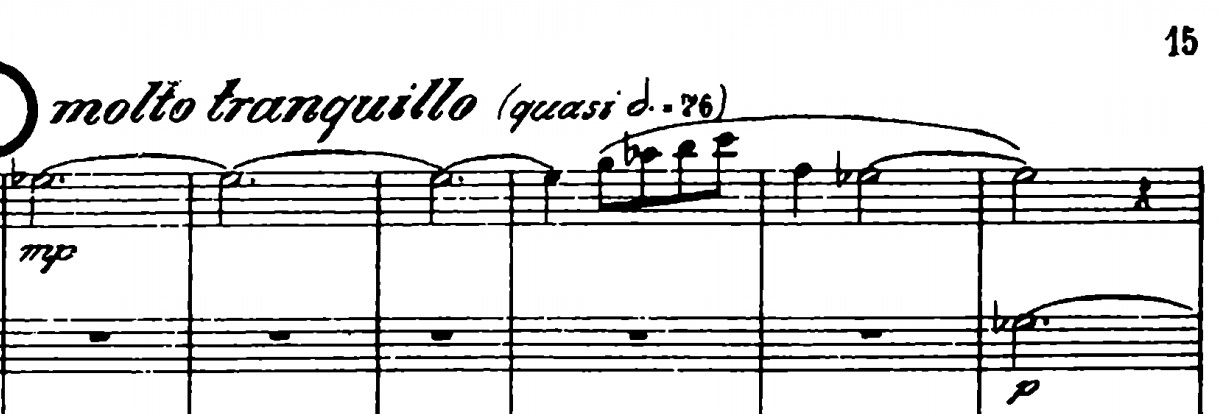
Shortly after this, Nielsen introduces us to a new idea: a theme played in the strings, like a fugue, where the melody is moved between the instruments and accompanies itself:
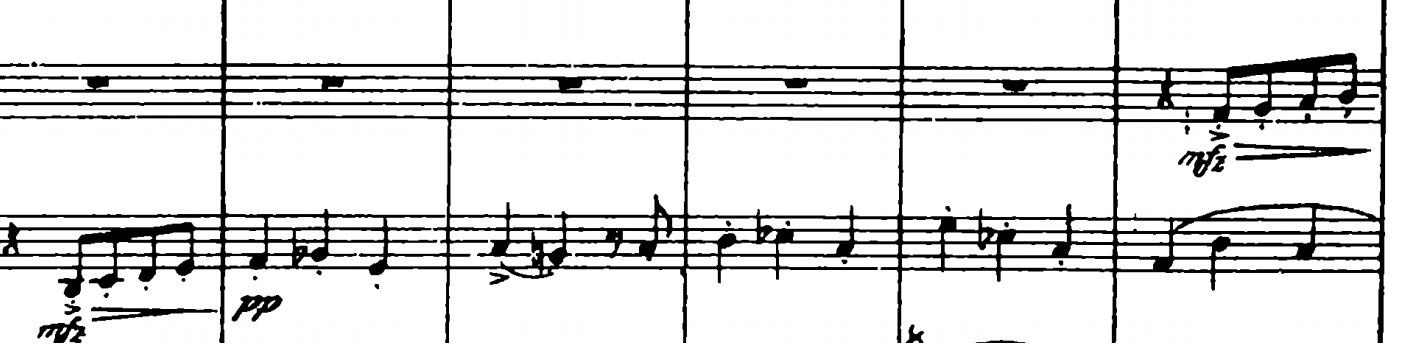
Out of this fugue suddenly emerges theme 2, now exposed to the full orchestra:

As the music increases in intensity, we now sense the original Theme 1 as an underlay, played in the cellos:
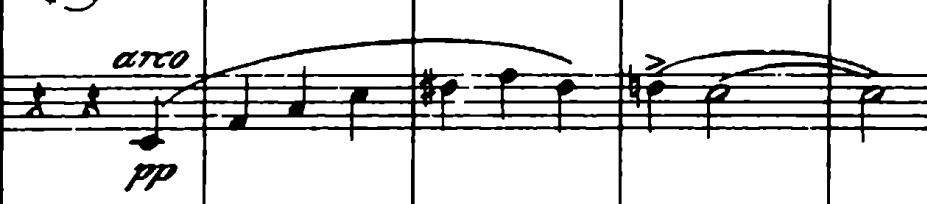
For the next long while, Nielsen continues to work on these ideas and further develop his theme 1, and towards the end of the movement combines both the fugue idea, themes 1 & 2 and creates a longer ending that slowly fades out the movement:
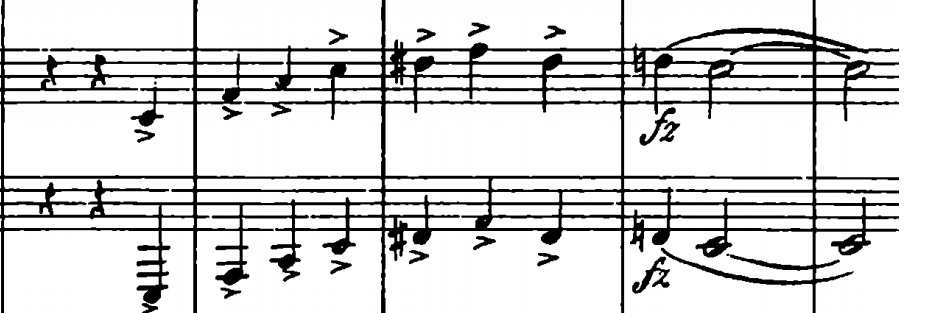
Here Nielsen concludes the first movement and has now presented us with ideas that will recur in the rest of the work.