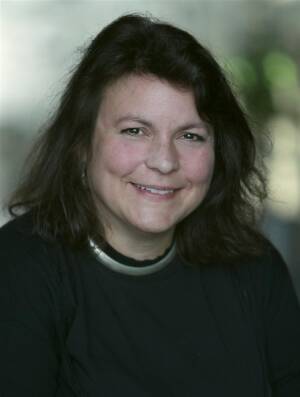
My day-to-day work consists of planning the concerts for several years ahead, getting the right people for the right programmes (and there is a waiting list for the right people), taking the time to evaluate and adjust the plans so that the orchestra always appears on the day as if everything was created from one happy moment.
I've printed out the above sentence and hung it in front of me, slightly to the right of my screen, so I can keep it in front of me at all times - because every now and then a sled comes rushing in from the right with a problem that needs solving right now.
The first days after the lockdown were tough - everyone was in shock and trying to get a handle on what was happening. The worst part was probably the extremely short horizon. In March and a few months later, most regulations were extended by weeks, so we cancelled concerts with short notice. The entire international industry was affected, and bad news must be delivered verbally as a matter of principle, so I spent many hours calling artists' agencies to tell them that their concert would be cancelled. Not just postponed, because the plans for next year are already in place, but cancelled altogether. Beautiful productions that we had been looking forward to, such as Shostakovich's rarely performed 13th Symphony, Babi Jar, great artists like Barbara Hannigan, who was even up for the Sonning Music Prize - all that disappeared into the eternal mists.
Future without Corona
But how adaptable humans are. It never ceases to amaze me how quickly a new reality is adapted and how the great symphonic machine is able to change course so that the goal is not lost, even if you are hit by storms from east and west. Valuable months would be lost if I didn't continue to look forward and get the 21/22 season in place, and sometimes it was actually a relief to be able to dream into a future where Corona was not on the agenda. It was also a relief for the agents when I called with offers instead of cancellations, so we maintained our good contact.
Then came the cautious reopening in May, when we had to have as many as 10 - wow, TEN! - people on a production. A sextet was just right, and then two on sound, one from P2 and then me to be lighting lady, chair setter (all chairs and music stands stripped), sheet music supplier for the technology and artistic planner. The first concert, when Henrik Dam Thomsen quietly opened with a Bach sonata, was completely goosebump-inducing. We knew our audience was at the speakers and I swear we could feel the vibrations back on stage. But how we missed our audience in the theatre.
It didn't come until mid-June, when we had to be a small orchestra on stage and a small audience in the hall. Now came the first experience with the new guidelines - it's not difficult to maintain a distance of 2 metres when you have six people on stage and seven on the back stage, but with 50 musicians, we had to work on a new orchestral arrangement - and this is material for a longer thesis, because an orchestra's arrangement has a crucial influence on ensemble playing and sound, so it is a basic substance that we now had to rethink. We succeeded, and we learnt to keep our distance, to make sure that the back stage didn't become a meeting place, but that there was air between everyone, to spray and scrub, and I think we all felt a huge sense of gratitude that times were beginning to look up.
Autumn season
That gratitude grew throughout August - we had ambitious programmes in the repertoire, including a CD recording of C.F.E. Horneman's grandiose opera Aladdin (you can look forward to it!) and not least Mahler's 2nd Symphony as the opening concert. We were proud and happy when we succeeded, and amazed that the increased distance between the performers turned out to give an incredibly strong and intense sound. It was hard to disappoint so many people who had bought tickets, and it was hard not to be able to be clear and say: ”from that date onwards, this is what it looks like”. But that's not our calling, so we've been focused on fulfilling our radiophonic task - and now the phone calls suddenly started pouring in to me from agencies who just wanted to say how much it meant to them in countries that were completely shut down musically that we were still letting music take centre stage, that we could provide a large orchestra that could bring the great works to everyone. Strauss’ Alpine Symphony, the last Romanticism juxtaposed with the early Mendelssohn's delicate violin concerto, a whole programme about the Rhine, where Schumann's Rhine Symphony was followed by Götterdämmerung's flooding of the world as we know it, or Sibelius’ lonely man in nature juxtaposed with Shostakovich's man caught in a brutal system. Thursday after Thursday, where music has once again spoken to us and aroused the emotions that constantly challenge our attempts to keep a straight face and shut down.
So it made sense to fight so hard, even when autumn brought new restrictions, including the requirement for a negative test for incoming artists. Not to mention the worst obstacle: Denmark was put on the negative list of several countries, so even though travelling artists could get tested and get the results within the specified 72 hours, several were not allowed to move on to the next job. This meant the first cancellation already in the third week of the season, when the French conductor, Alain Altinoglu, had to cancel because he had to open his new season with his own orchestra in Luxembourg and obviously had to prioritise that over a guest performance with us. Fortunately, we managed to get Gianandrea Noseda to come instead, and he gave a great concert with Berg's Violin Concerto and Brahms’ 3rd Symphony. He himself was thrilled to finally be allowed to conduct a large orchestra, and deeply grateful to Denmark and DR, who insisted that music should not be packed away as a superfluous pleasure, but should continue to shake and delight us.
The future
At the time of writing, our audience has been locked out of the concert hall again, but the art hasn't been told to go home and shut up, on the contrary, so we continue to spread the good word, not only to all of Denmark, but also to all our listeners in the European radio network that broadcasts a large part of our concerts.