of.
Music is my emotional valve
When solo flautist Ulla Miilmann takes her place in the Danish National Symphony Orchestra on Thursday evening to play Carl Nielsen's Flute Concerto, it is in a way just another day at the office for the experienced musician - and yet not. After more than 20 years as a professional musician, 42-year-old Ulla Miilmann is considered one of the world's best on her instrument. Yet she has never gotten rid of the inner insecurities and feelings of inadequacy that on the one hand are a constant yoke in her life, and on the other hand the fuel that allows her to constantly develop herself and her playing. In addition, Carl Nielsen's unconventional flute concerto, which he composed in the autumn of his life, speaks strongly to something in Ulla Miilmann's own mind.
»Unlike traditional classical concerts, it is not structured as a pairing between the orchestra on one side and the soloist on the other. There are many forces at play, with different instruments in the orchestra - the clarinet, trombone, even the timpani - taking turns as partners or counterparts to the bright flute,« she explains.
»Nor does Carl Nielsen choose, as is the norm, to end the concerto in the same key it begins in. There isn't that nice little loop where we return to the starting point, as you would expect.«
Ulla Miilmann interprets all of this together as an expression of Carl Nielsen's split worldview and perhaps also shattered illusions that characterised the composer's last years. A split that she in some ways recognises in her own personality.
»I also see myself as very complex. This can be an advantage, but it can also be difficult to live with, so in that way the flute concert means a lot to me,« she says.
I also see myself as very complex. This can be an advantage, but it can also be difficult to live with, so in that sense the flute concert means a lot to me
»I first played it when I was quite young, just 12-13 years old, but actually it's only in the last four or five years that I've really started to understand it. As a classical musician, it can be a challenge not to get stuck in the traditions of how to play a certain piece of music. It can quickly become a »truth« that you can't deviate from. For many years, I've had a desire to please authorities and have compromised on what I might think. But the older I get, the more I dare to follow my own inner truth, even if it goes against tradition and authority. And it is through this process that I now realise I am beginning to understand Carl Nielsen's flute concerto.«
Ulla Miilmann was only 22 years old when she became the youngest ever - and the first female solo wind player - to play her way into the Danish National Symphony Orchestra's woodwind section. It was a rather harsh encounter with an environment where, despite her professional qualifications, including a Bachelor of Music from the North Carolina School of the Arts, she struggled to find her place in the hierarchy. It wasn't easy back then, when a symphony orchestra was still a very male-dominated world,« she says.
As a musician, Ulla Miilmann has struggled with and benefited from a complex and highly sensitive mind throughout her career.
»I think there are many reasons why people become musicians. Some just love music and find great joy in it. Some people are born into a musical family - I wasn't, I grew up in a family of academics. For me, music is more of an outlet for the huge dynamic tension I experience within myself,« she says.
»They say that the higher a tree grows into the sky, the deeper the roots reach into hell,« she says and lets out a loud laugh. »That's how it is with me, I have a huge emotional range, it's like all my emotions run through an amplifier. That can be an advantage if you want to express it in music, but living in that range also comes at a great personal cost.«
This extreme sensitivity, combined with the pressure to perform at her best, ended up sending Ulla Miilmann into a personal and artistic crisis.
Ulla Miilmann is far from alone in her mental vulnerability and fear of failure. Many artists feel the same way, but unlike most of her colleagues, Ulla Miilmann chose to come forward and talk about her problems. It didn't go down well with the orchestra, but today she is pleased that her cry for help was actually taken seriously and has led to positive changes in the working environment at the Danish National Symphony Orchestra.
First female solo reader
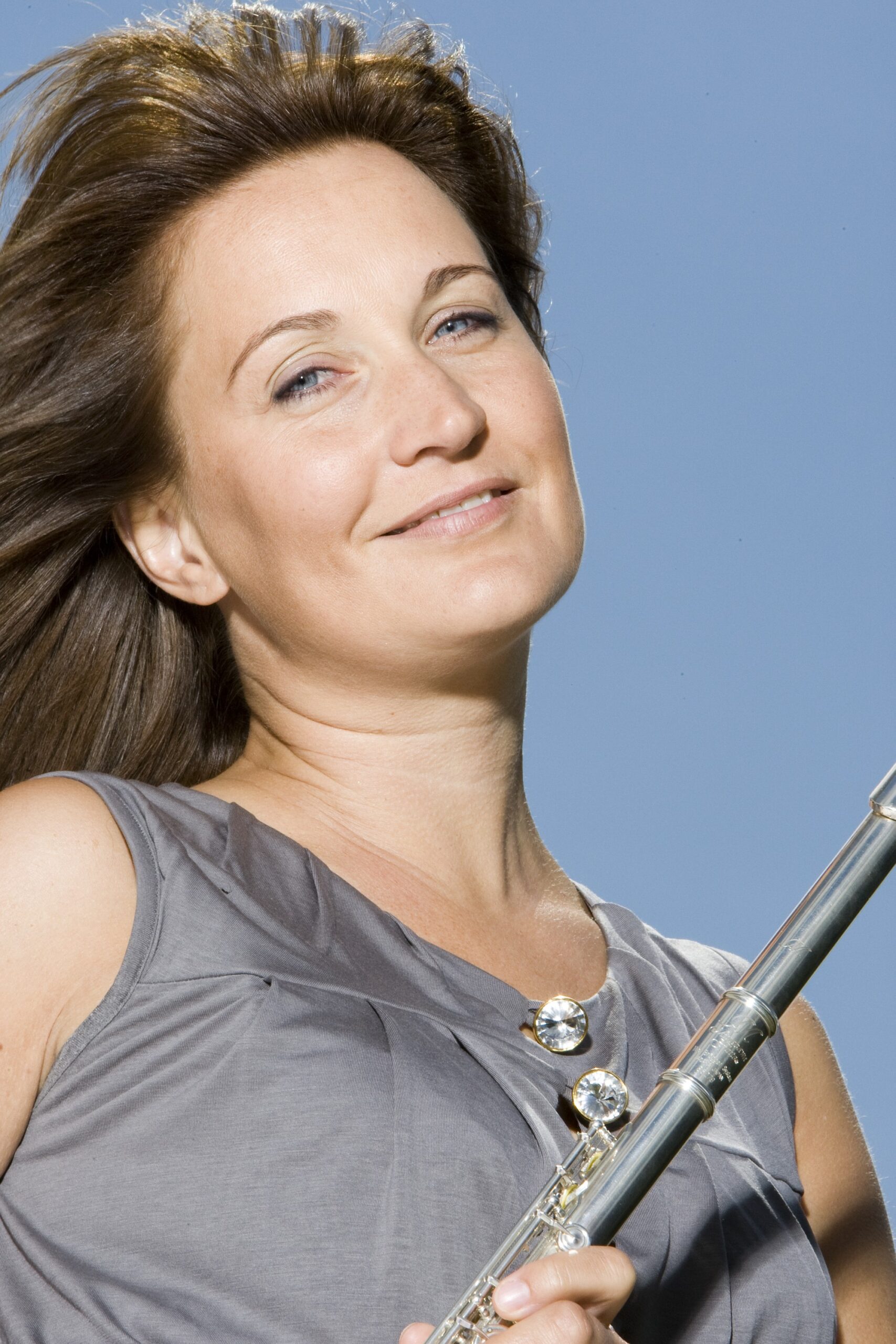
»Coming forward like that definitely came at a price, but sometimes you just have to realise that there can be a greater meaning to the fact that you feel life is unfair or hard. That you can help improve conditions for others,« she says.
»In recent years, there has been a huge focus in our workplace on the social element of playing in an orchestra and how important it is that we understand each other. Today it's OK to say you're nervous, before it was definitely not something we talked about. People talk much more freely and there's a lot more cross-talk in the orchestra. When I started, the different instrument groups kept to themselves.«
It has also been important that both the brass section - and the entire orchestra for that matter - has undergone a significant generational change, bringing the average age down significantly and bringing many more women behind the music stands.
»At the New Year's Eve concert, for example, we had three women in the front row of the horn section - in addition to myself, our brand new 1st solo oboist, Eva Steinaa, and our 2nd solo oboist Kristina Vestergaard. Ladies in the front. It gives a completely different image of us and makes it a completely different experience to be in the horn section,« she says.
»It's also been healing for me that I'm now one of the longest-serving members of the woodwind group. And when we get new members into the group, I want to help make their first years here as positive and fulfilling as possible. In the old days, a new member had to fight hard to gain respect. Today, it's much more about mutually enriching each other - the newcomers and those of us already in the orchestra.«
After 20 years with the Danish National Symphony Orchestra, Ulla Miilmann also feels that she herself has become much better at handling pressure.
»Experience has shown me that I will survive, and even if the critics write bad things about me or the conductor criticises me, I have learned not to take it personally,« she says.
»But I still struggle with my own insecurities. It will always be with me. But I also realise that it's what makes me constantly want to move and get better. The world is a duality of light and shadow, joy and sorrow. Everything has a price, and if I don't dare to be there as an artist where there's something at stake, I would be afraid of becoming a mediocre, average musician. Because then it wouldn't matter so much. It has to be a matter of life and death.«
OK to be nervous
Three years ago, Ulla Miilmann ventured into a whole new genre when she agreed to be a judge on the entertainment programme "Maestro", where famous amateurs competed to learn how to conduct a symphony orchestra in the best "Vild med dans" style.
»Firstly, I can't say no to a challenge. Secondly, I feel that art and creativity is also play,« she says about her reasons for accepting the offer.
»As Piet Hein said: »He who only takes joking for joking and seriousness for seriousness, he and she has actually understood both badly.« I think we should also remember to play. The worst thing we classical musicians can do is to take ourselves too seriously. That's when creativity dies. Then, of course, some people ask why we should make the elitist mediocre, but I think that's a completely twisted way of looking at it. When a lot of classical music was written, that's what you heard - it was the talk of the town when Mozart had written a new opera. You had to go and see it. Back then, what we now call classical music was for everyone. "Maestro" was a fun challenge, and the programmes made classical music accessible to people who might otherwise never have got to know it.«
Music should also be play