Departure from the hotel at 7.30am. It's a bit early after yesterday's concert and a lot of travelling. The train journey is scheduled for 4 hours today, we are going far south. The landscape starts off a bit sad and monotonous, many colleagues fall asleep, only to wake up a little later to a view of rice fields, low houses and tiny dots that turn out to be farm workers in the huge fields. A completely different and different China emerges. In between fields we drive through cities with buildings everywhere, construction site after construction site - who will live in these huge buildings?
We are approaching Shanghai. The city is colossal, around 35 million people are said to live there. The last 75 kilometres of the train is just city, city, city and more city. The trip from station to hotel is slow, but the surroundings have changed, now it all suddenly resembles the entrance to a large American city, 4- and 6-lane motorways, merges and queues.
The hotel is lovely, right in the centre of the city. There is life, lots of people and music in the streets. Some people call this the New York of Asia, and that's not entirely wrong.
We have some time in the city and together with a colleague we visit a temple in the city centre. We arrive in the middle of a small concert or rather a ceremony with lots of incense and instruments reminiscent of the Chinese percussion concerto that our Chinese soloist Li Biao plays with us every evening. We can walk from the hotel to the concert hall, the beautiful Grand Theatre Shanghai. Built exactly 20 years ago, inviting, plenty of audience. Here, classical music is a natural part of life, here the audience expects and appreciates the highest quality. Before the concert, I go on stage and tell the orchestra what I know about the government's media proposal that has just been announced in Copenhagen. Major cuts are to be made in DR - but no one knows yet where and how.
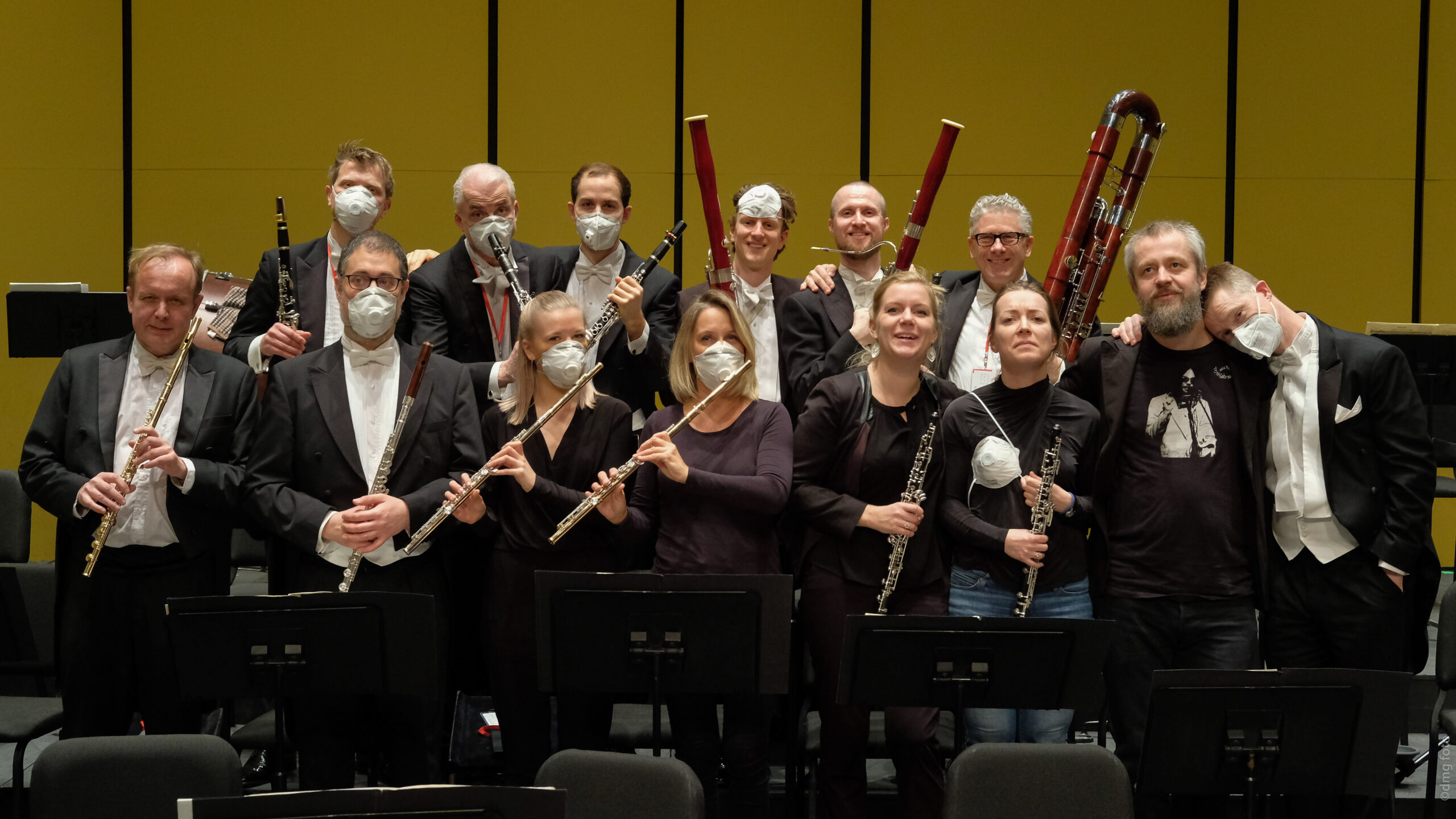
We give the audience full value for money this evening. Eva Steinaa's great oboe solo in Strauss's Don Juan makes even the most serious Chinese smile gently. Eva sets a rare standard, a performance that lifts all her colleagues - including a happy chief conductor - into the clouds.
Shanghai was a great experience, a vibrant city and a great concert hall. It's as if the houses, faces and trees have taken on colour.
We are travelling to Hong Kong today. It's a domestic flight, but that doesn't mean we have to travel in a small plane - quite the opposite.
The mood among the musicians is good, but travelling from China to Hong Kong involves a lot of practicalities and paperwork. Hong Kong is officially part of China - but not quite. New visas have been applied for and the instruments have to go through another declaration. Fabio Luisi has left the day before the rest of us. A man like him who is on the road 300 days a year knows his golf courses, and apparently there's one in Hong Kong that just has to be visited. I guess he's the exception to the rule.
Hong Kong is hot and humid as we arrive shortly before darkness falls. The hotel is by the harbour, there are ships and lots of activity above, beside and below us.
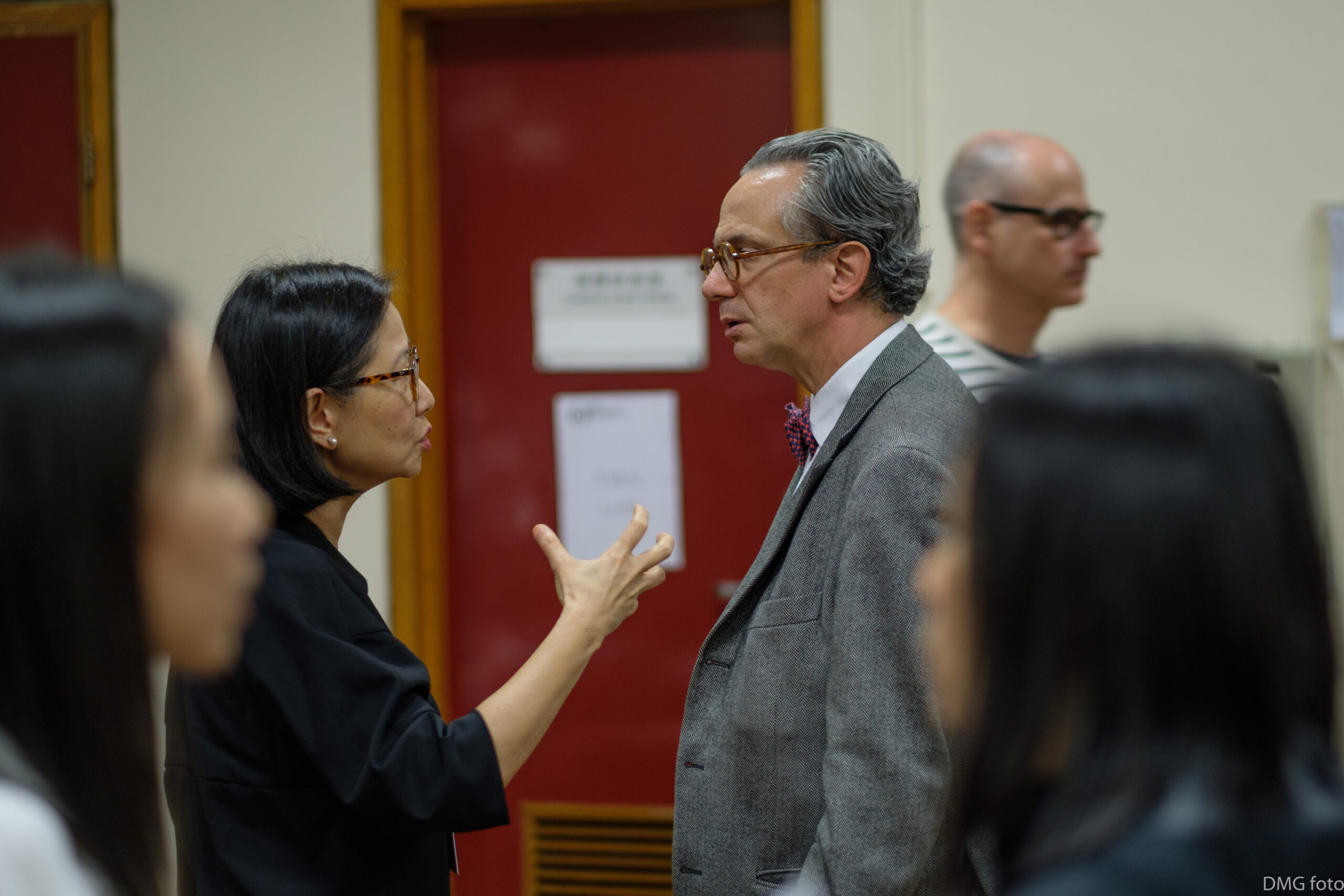
I'm meeting with my colleague, the orchestra director Margaret Yang, from the Hong Kong Sinfonietta. She's coming to Denmark in April to follow the Malko Competition and she's obviously very interested in new talent. We eat traditional Chinese food and drink lots of green tea. My chopstick skills are going really badly tonight. I thought I was getting the hang of it, but not tonight - my index finger, thumb and middle finger are working uncoordinated and by the time we finish the meal the tablecloth looks like something my two-year-old grandson could have created. I do get some food in my stomach though. In our conversation, I realise that there is a lot of art and culture here in Hong Kong. Not just on the surface, but right down to the roots of the city. It will be interesting to see what the audience is like here - I have a good feeling.
On the way back to the hotel, we feel the pulse of the city. It feels a bit like Monaco on speed: hot, hectic, huge stores with the most expensive branded goods, wealthy Chinese everywhere and plenty of opulence.
Travelling from Beijing through China to this super-mercantile, hectic shopping mecca is a bit unreal.
I don't have time to blink twice before I fall into a deep sleep in the hotel.
The tour is coming to an end. Today is the last concert and tomorrow the orchestra is travelling home.
There is a rehearsal in the concert hall at 11am. The hall is good, the sound is good, Luisi and the musicians capture the atmosphere immediately. The Hong Kong Arts Festival is one of the big festivals. Many big international names come here, the festival has a large loyal audience and everything is sold out.
Luisi lets the orchestra play for a while to get under the skin of the audience, and suddenly he starts working intensely on the encore. At first, everyone thinks that Tango Jalousie by Jacob Gade is right where it should be. But in just a few minutes, this little genius of a melody gets a loving overhaul from the chief conductor - it's as if everyone is rereading the notes, the music sparkles and reinvents itself with energy, humour and lots of, well, jealousy...
Outside, the sun is shining and the climate is great. Many are jumping into shorts and T-shirts. Having lunch in the sun, where one of the world's most beautiful skylines outshines the harbour with its hectic activity.
Maybe it's also time for a nap, as tonight's concert requires you to have all your strength.
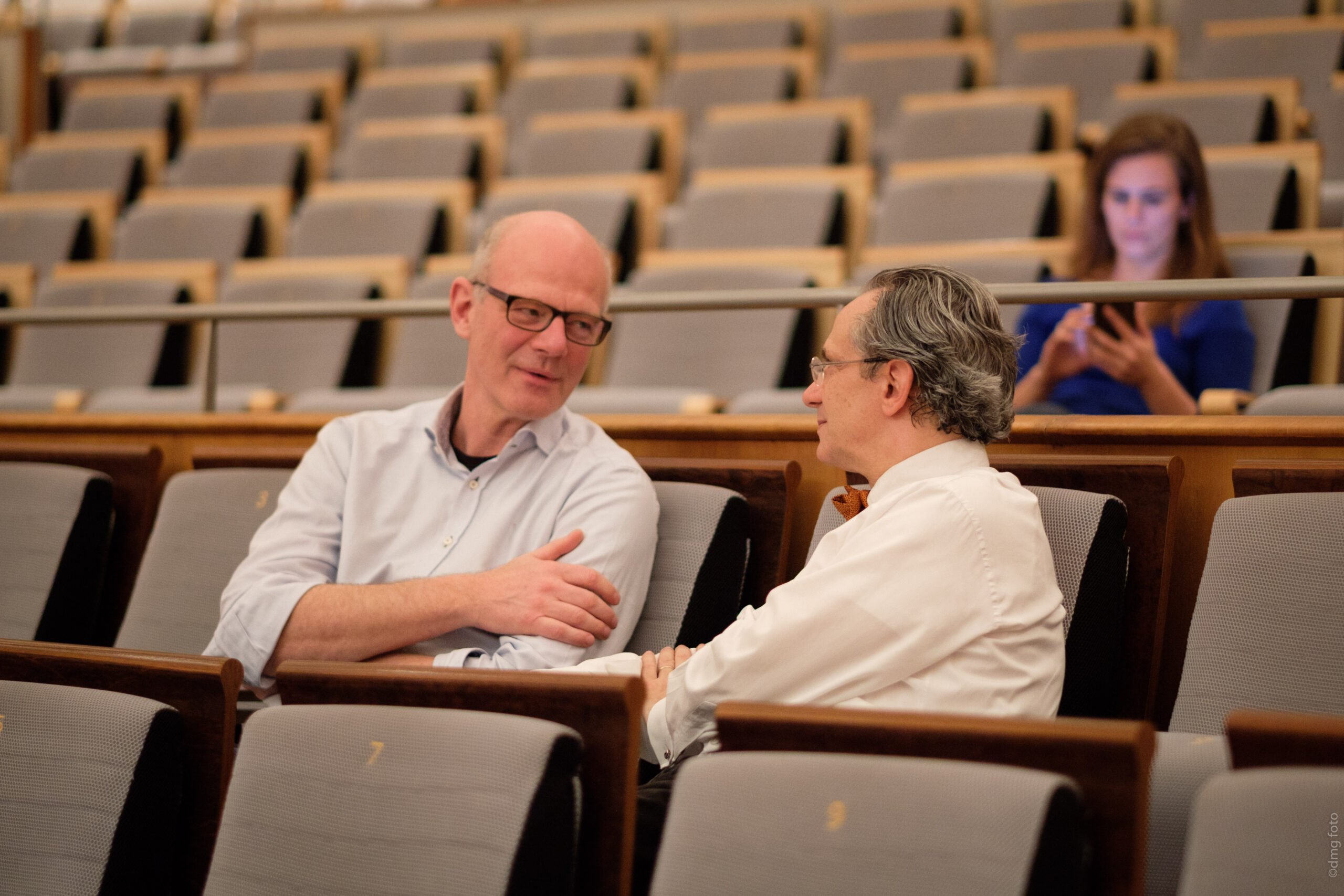
I have a meeting with Luisi, we are 2-3 years ahead and we talk about dates and plans. He's happy about the tour, happy about the orchestra, he's clearly proud of them and likes to show them off around the world.
I'm working on a presentation to give to my colleagues at the EBU in Athens on Thursday, it has to be precise and well thought out, they all want to know what the situation is in Denmark.
I'm eating a sandwich overlooking Hong Kong harbour, the sun slowly setting over the waterfront concert hall, where young couples are having a romantic evening stroll and taking endless selfies.
At 8pm there's a concert. People are pouring in, and I meet a business partner from the record label Naxos, which is headquartered in Hong Kong - a label we've worked with for almost 25 years. It's fun to put faces to faces and inspiring to hear new things.
The concert exceeds all my expectations. The audience is eating out of the palm of their hand and Nielsen is received with deafening applause. The atmosphere is a bit like the Royal Albert Hall: people are curious, interested and want to experience something new.
Next to me is Celine Haastrup from P2 doing the ringside presentation for the Danish radio broadcast of the concert. Some in the audience turn round when Celine speaks over the applause. In our own concert hall in Copenhagen, the audience is used to the live presentation of the P2 hosts, but the situation is new to the audience here in China. The concert is scheduled for P2 in April.
When the orchestra has played the last notes of the evening's official programme, concertmaster Christina Åstrand Gade's tango begins with her usual subtle smile. Her interplay with the orchestra and conductor brings smiles to the faces of the audience, who clap and clap and don't want to let go of the orchestra. Finally, Luisi waves to the audience, the musicians hug each other and the year's big overseas tour is over.
After the concert, Luisi and I change clothes in a hurry and are quickly driven to the airport. Maestro is going straight to Zurich and home. I have to take another flight to Athens. On the way in the car, the chief conductor is tired but very happy, we talk a little about the upcoming Malko Competition where he is jury chairman, and we are both looking forward to it. It's relatively quiet in the big airport, it's approaching midnight. Goodbye to Hong Kong - we'd love to come back.
It's been a great tour. China is overwhelmingly big and very, very different. We have been greeted by so many friendly people, big beautiful concert halls and overwhelming interest in our music. We all agree that classical music has a huge new market here, that there are millions of new potential music lovers, and that despite our smallness in Denmark, we have something important to offer outside the country. That Danish music and Danish orchestras belong to the elite and the top - something other countries want to experience and learn from. The Director of the Danish Cultural Institute was interviewed live on P1 Morgen on 19 March, and he explains how he feels that cultural campaigns like the one we have just carried out strengthen Denmark's reputation among the Chinese as a highly developed, well-organised and culturally high-profile country - a country they want to visit and cooperate with.
A tour like this requires a huge amount of practical preparation, a finely tuned orchestra and a top conductor. The Danish National Symphony Orchestra can clearly deliver, and based on money from the Chinese organisers supported by three Danish foundations, A.P. Møller Fonden, Knud Højgaards Fond and Carl Nielsen og Anne Marie Carl-Nielsen Legatet, the tour was made possible.
Over 20 hours later, I land at Athens airport and on the way into the city, the first reviews come in. Most of them are in Chinese and I can only speculate about them. The last one is from Hong Kong, and I am delighted and warmed when I read the review in the South China Morning Post. Here are a few extracts:
“Brilliantly polished playing from the Danish National Symphony Orchestra, energetically led by their Italian principal conductor, Fabio Luisi, impressed in this Hong Kong Arts Festival highlight.”
“They opened their concert programme in thrilling fashion, vividly conjuring the turbulence of raging seas in Richard Wagner's Overture to The Flying Dutchman.”
“The orchestra's finely polished playing produced a highly charged Don Juan, its depictions of the character's joy, promiscuity, melancholy and final breaths extremely vivid.”
“The sinister elements in Nielsen 5 were wonderfully captured; the viola section's dark time-ticking and the woodwind's “evil” interjections. The rich and majestic string playing was glorious and the mourning clarinet wonderful in solitude.”
“Luisi expertly shaped and paced the entire performance, allowing wistful strings to shine in passages of lyricism and the entire orchestra too in the final uplifting and victorious conclusion”