Antonín Dvořák was the director of the National Conservatory of Music of America in New York from 1892-95. During this period he studied American culture as well as music, and in 1883 he was asked to compose a symphony for the New York Philharmonic. During the autumn and winter of 1883, he composed his Ninth Symphony, which he titled ”From the New World.” The symphony is composed in E minor and consists of four movements: - Adagio, - Largo, common time, - Scherzo: Molto vivace - Poco sostenuto
- Allegro con fuoco
This symphony is probably Dvořák's most famous and probably greatest musical success. I will focus on the first part of the last movement, as it is the culmination of the work and contains a lot of interesting elements.
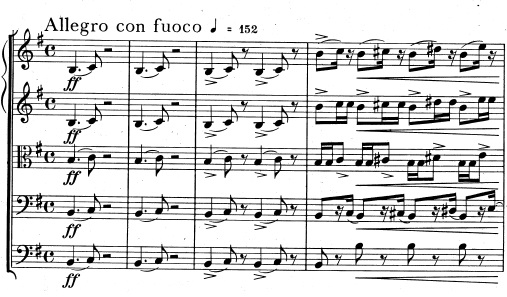
The movement opens slowly with a theme in the strings. They almost have to pull the orchestra into action:
The strings stop for a split second... And then the whole orchestra joins in with a slightly funny chord progression:
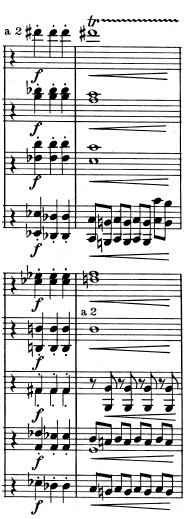
From an Eb major, to Eb minor, to the key of Em in the Symphony. The relationship between Eb and E is a little tense as they are only a semitone apart, but via the transition Eb major to Eb minor (a perfect stack of minor thirds), the Eb major takes on the character of a B major, the dominant of E minor. Therefore, it can lead to the heroic theme that settles in the trumpets and horns:
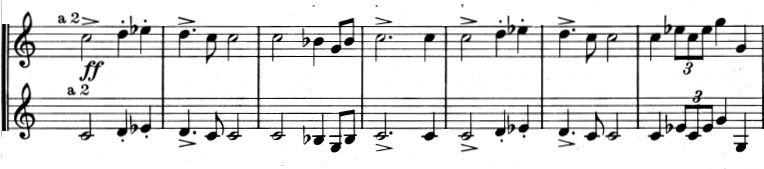
This is the main theme of the movement and probably one of the most famous themes Dvořák composed. The theme is orchestrated sparingly, with the orchestra only marking the harmonies underneath. The theme is repeated and developed further, and this time the theme is given a little more counterpoint from the orchestra:
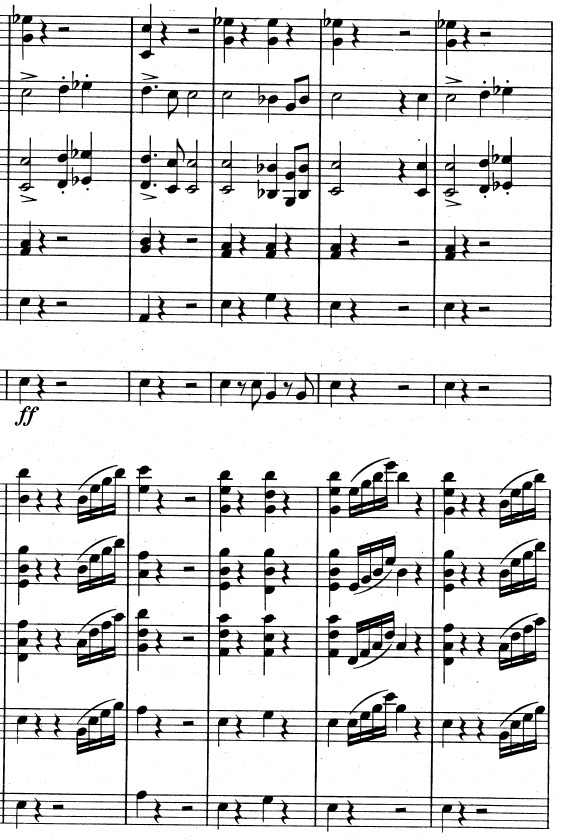
Then the strings take over the theme and the contrast with the brass is clear. The theme doesn't have the same power, but it flows in a completely different way:
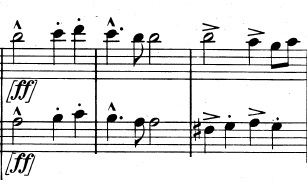
The theme is carried into another development, this time led by the violins, complemented by the entire woodwind section:
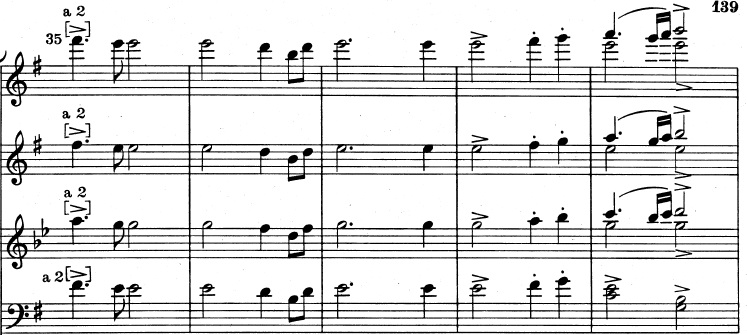
The theme is not brought to a conclusion, but begins to ’chop’ and thoughts are drawn to the strings' opening of the entire movement:
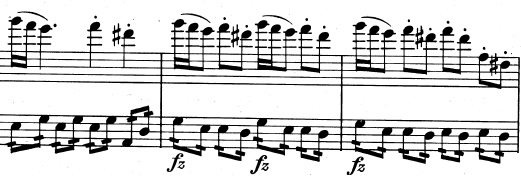
After these repetitions, however, we don't get the same release as those that opened the movement: these led to the main theme, but the repetitions we hear now instead continue in a fresh melody played in the violins:
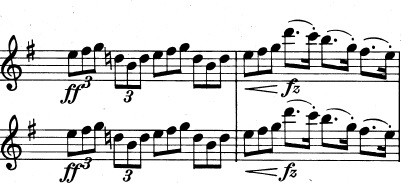
The contrast with the theme is very clear, as the notes here are short and move on quickly. Furthermore, the triolisations provide a dynamic counterpoint to the half notes of the main theme. The violins play this melody twice and the music is then taken up by the bright woodwinds playing a counterpart:
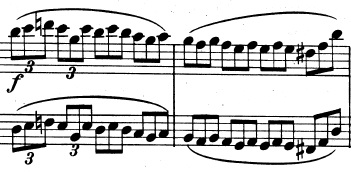
This melody is, if possible, even more fluid, as the dynamics indicate that it should be played legato (Ital. tied), the notes should flow into each other as much as possible. After this, the string melody from before returns and is further developed in the middle of the second repetition:
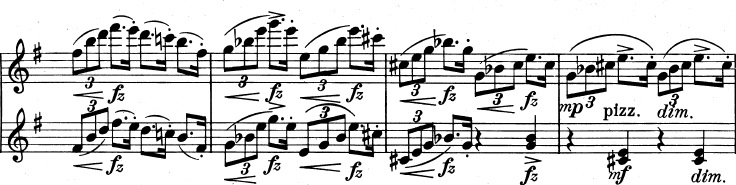
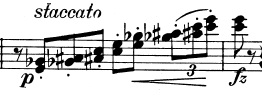
Now it's as if the orchestra is losing power, there are fewer and fewer instruments, and the strings play the same phrase in circles. But suddenly the bassoons play a prelude:
And this leads to a very calm solo in the clarinet:
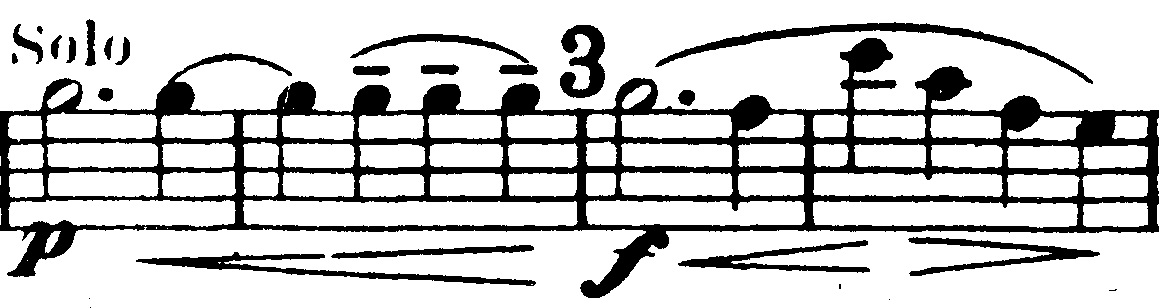
The clarinet is lightly supported by the flutes during the solo, and towards the end the violins completely take over the calm melody and make it their own:
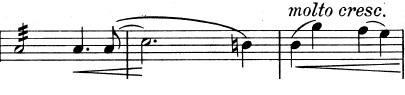
The following piece slowly builds on this idea in strings and woodwinds, but the brass section also begins to make its mark and play a counterpart part:

After this has been going on for a few bars, we are introduced to two new elements. First, a theme played in the violins:
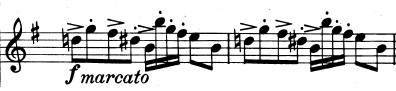
And a more general idea consisting of gradually descending notes. The descending notes are complemented by the bassoons playing a variation on the violins' theme from before until they also descend:
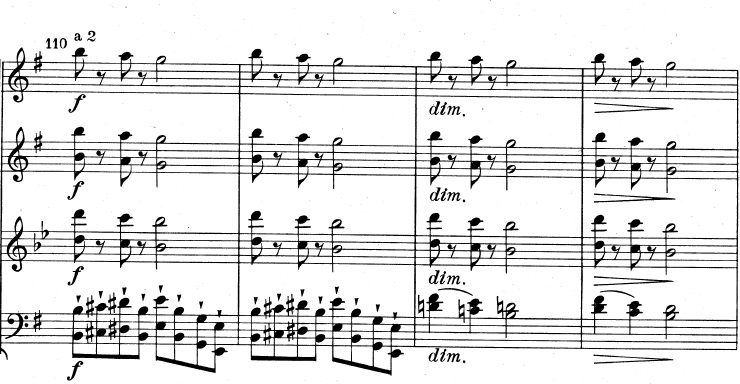
The violins return with their theme and the music becomes quieter and quieter until it almost stops, but just before it seems to end, the bassoon begins a short solo that ends almost as quickly as it begins:
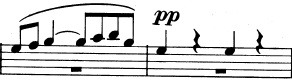
We are left with the descending idea that moves from the top to the bottom of the orchestra:
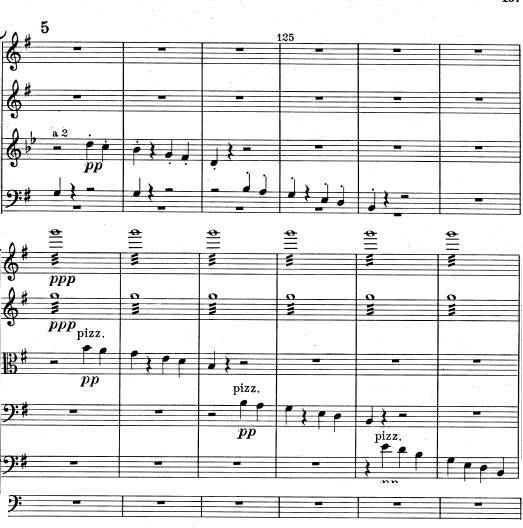
The idea is repeated, but interrupted halfway through by the horns playing a theme that is melodically similar to the main theme, but distorted and disturbed:
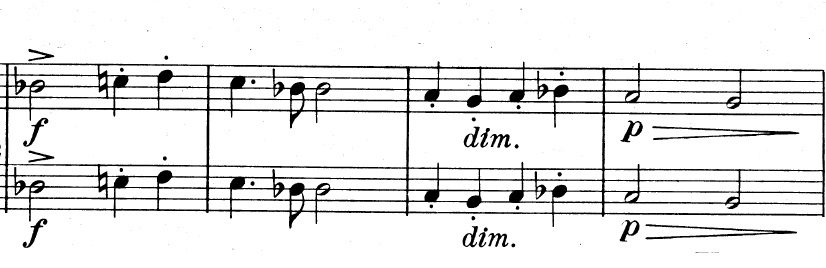
This pattern is repeated: descending theme in the top, variation on the main theme in the horns, now even more distorted:
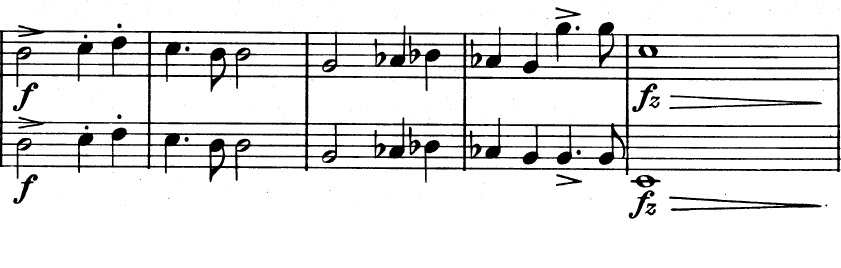
Then the power is slowly drained from the orchestra and the orchestration becomes more and more sparse, the violins play up and the horns answer back. But suddenly something happens, the flutes play a theme that is almost identical to the one that opened the second movement of the symphony:
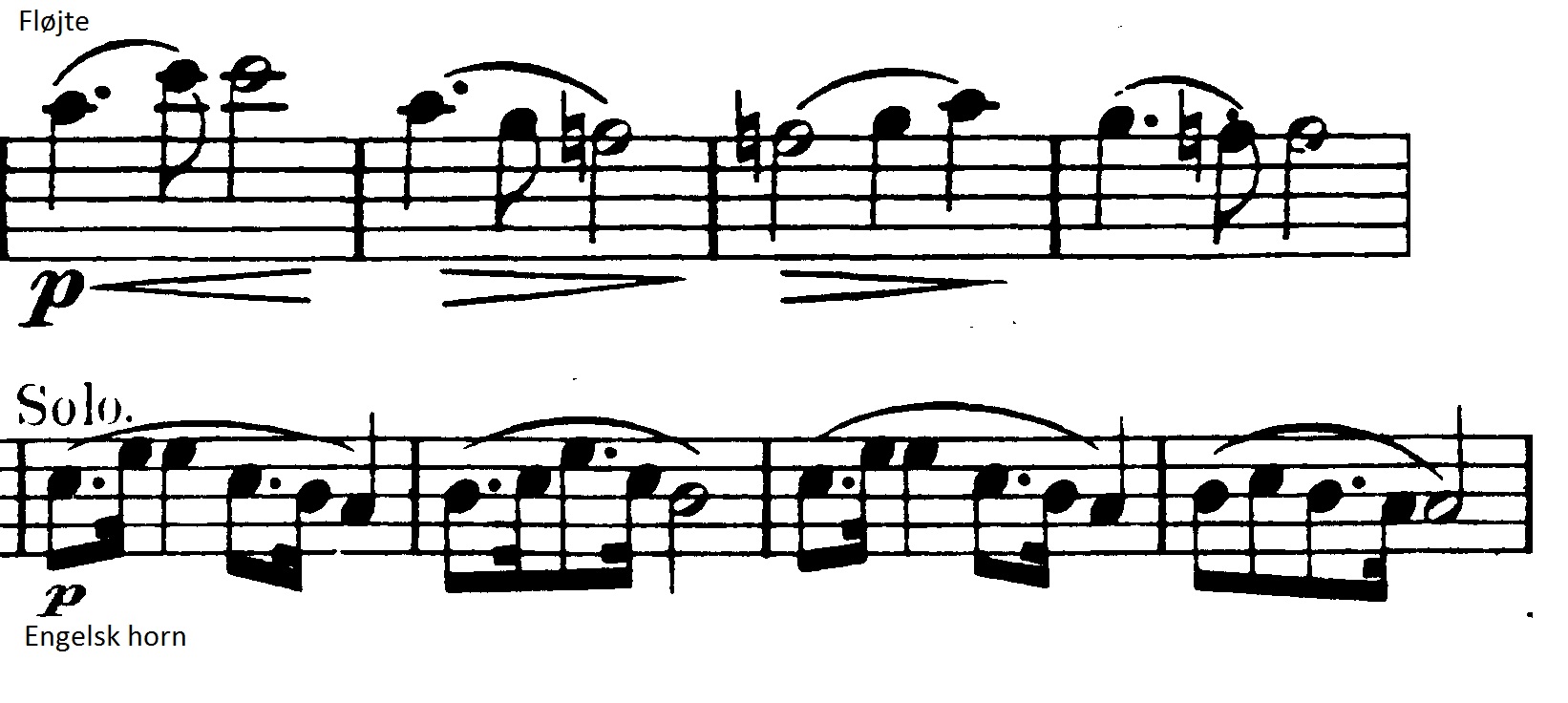
But this theme does not stand alone and leads directly into the main theme:
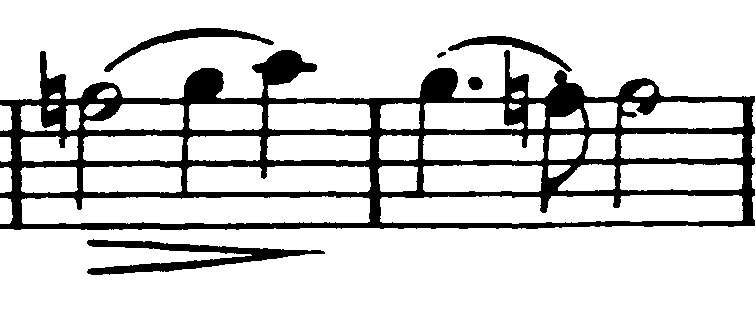
Dvořák juxtaposes his themes here, showing how they may have once been part of the same musical idea - and how they can easily be woven together. The flutes continue to intertwine the themes, played legato, until it is as if they begin to chop. Gone is the legato and instead the theme is dominated by staccato, and it's as if this forces the orchestra to repeat, again and again:

This continues, the music becomes more and more chaotic until horns and trumpets cut through with the main theme of the movement:
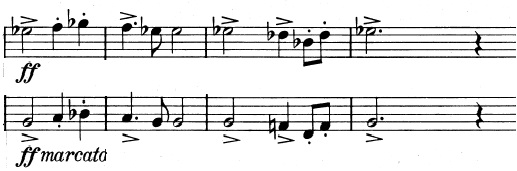
But something is a little off - instead of being played in the familiar E minor, we are in Bb major, as far away from E minor as you can get. Again, however, Dvořák shows us how Bb can have a leading effect towards E, because he does indeed orchestrate a transition here that leads us back:
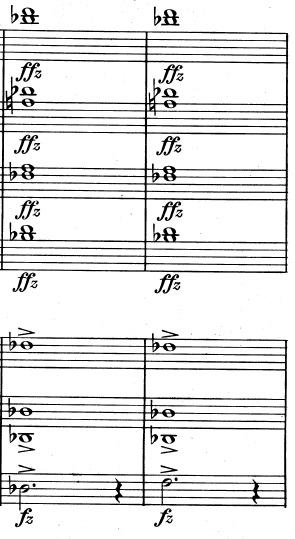
Then trombones can come in with full force on the main theme back in E minor:
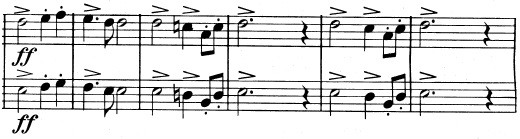
This is where this section of the kit ends, and this is also an appropriate place to conclude the analysis.
What can we interpret from this final movement so far? Dvořák shows us how themes can intertwine, change and become something new, an inspiration he may have found in the African-American spirituals that he spent a lot of time studying. But perhaps inspiration can also be found in the
slow spread of the gramophone. Thomas Edison invented what would later become the gramophone in 1877, and Dvořák may have been fascinated by their ability to reproduce the exact same phrase over and over again, a motif that is quite pervasive especially in the last movement. This is far from certain, but it's certainly where my mind goes when the music insists on repeating itself as it does in this symphony.