In 1829, Felix Mendelssohn visited Scotland, where he stayed for 8 months, from April to December. The Scottish Highlands and weather made a great impression on Mendelssohn, and as a direct result of his visit he composed The Voyage to the Hebrides. But Mendelssohn was captivated by Scotland and spent the next 13 years composing his 3rd Symphony. In the meantime, both the 4th and 5th symphonies were completed and performed, but Mendelssohn insisted that this was his third symphony. It was premiered in Leipzig in 1843 and again later that year in London in front of an audience that included Queen Victoria, to whom the symphony is dedicated.
The Scottish, is a symphony in A minor and consists of four movements:
- Andante con moto / allegro un poco agiato
- Vivace non troppo
- Adagio
- Allegro vivacissimo / Allegro maestro aasi
Of these, the most musically interesting movement is the first, and will therefore be explored in the following section.
The first movement opens with a melody played by the oboe.

The melody clearly establishes the tonality of A minor and creates a slightly sombre mood. The melody is instrumented with oboe, clarinet and the low strings. The melody is then continued in the flutes, which develop it slightly:
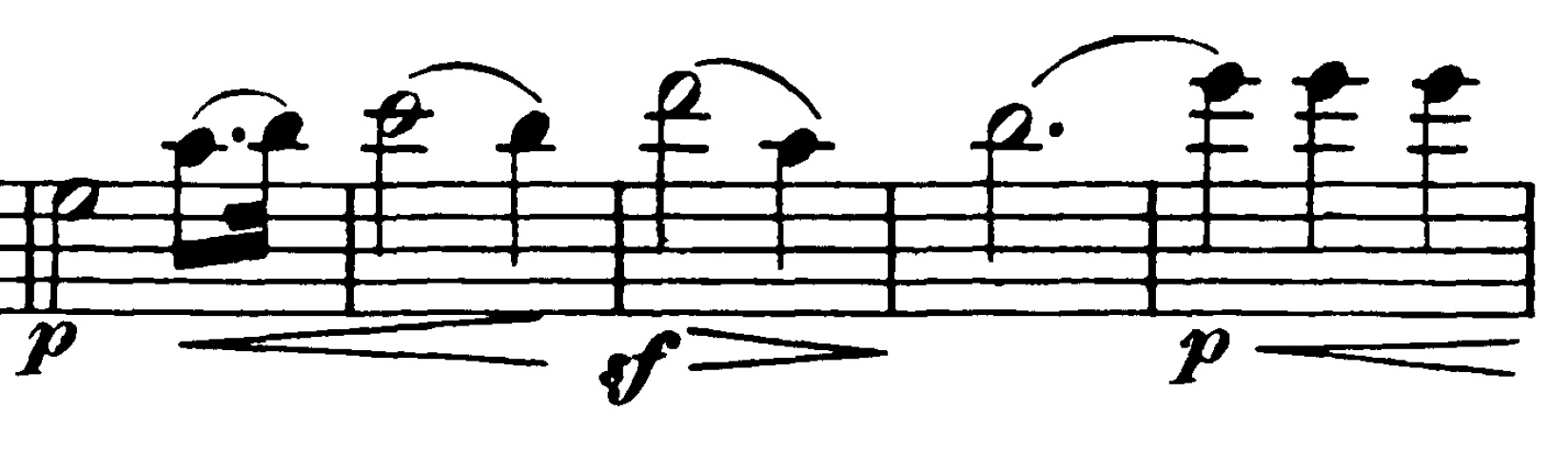
Only then do we get to hear the violins, who have been on hiatus until now, which is unusual for orchestral music in this period. But their absence helped give the opening melody an edge, and when they now enter, they radically change the music:

The violins' melody moves in E major, the dominant key of A minor. So even though the melody moves in major, we are soon led back to minor. However, it is a slightly broken E major as it has a lowered 2nd step, but perhaps this is what compensates for the lack of a low 7th step that would lead us back to A minor. In addition, we never feel that the melody returns home, it seeks and is never really completed, and this allows the oboes to return with a variation on the melody that opened the entire symphony:

The next piece unfolds as an interplay between these melodies, the oboe in A minor and violins in a slightly off-kilter E major, and ends with a return to the melody that opened the movement:

Allegro un poco agitato opens with a much more powerful theme. Although the instrumentation is almost identical to the opening of the symphony, violin, clarinet and low strings, the feel is completely different. Here the violins lead us through a theme in E minor

The theme retains some of the dominant function of the earlier melody introduced by the violins, but this time the theme is much more independent and remarkable. After the violins have led us through it, he lets the flutes take over:

However, it doesn't take long before the violins start tuning in again, and they develop it further. As well as increasing the tempo, against a sudden change of mood. The violins repeat the same phrase 3 times
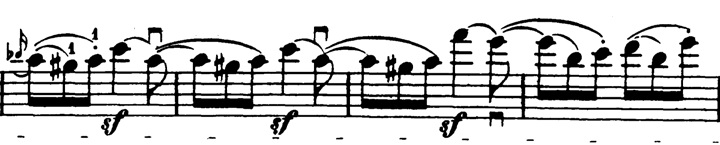
And we are then immediately led into a radical shift:
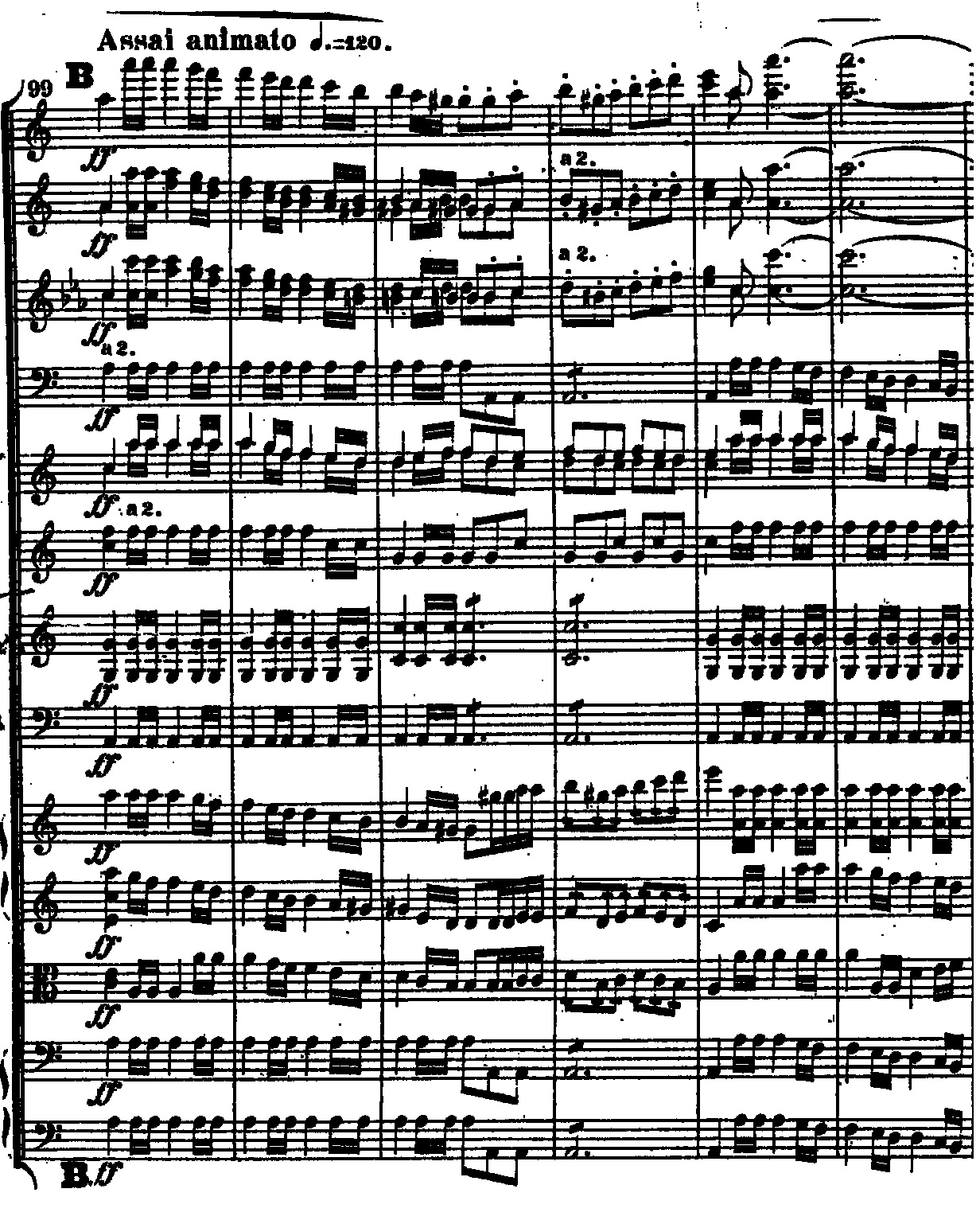
This is the beginning of what you might call ”the storm”. One interpretation of the first movement is a boat on its way to a small island off the coast of Scotland that is suddenly thrown into a storm, something Mendelssohn himself experienced during his visit to Scotland.
The weather is changeable and can disappear as quickly as it came, as we experience when the intensity suddenly disappears and the clarinet introduces us to a new theme.

There's a gap in the storm and some peace, the boat holds and we get through. But the storm can return as suddenly as it disappeared:

The storm is back, and in the following piece it keeps returning, coming and going. There are moments of calm, but always an underlying sense of movement and uncertainty. Some of the music almost takes on the character of a waltz, a dance with the waves.

In the following piece, these themes fight against each other, the ship dancing with the waves and the people on board who must hold on to the fact that they will make it to shore.
Suddenly it's as if everything stops, the violins almost pull us to a halt:

The tempo and melody both drop, we descend further and further until the storm suddenly picks up again

The storm continues and the oboe and flute again echo the theme that the boat will hold:
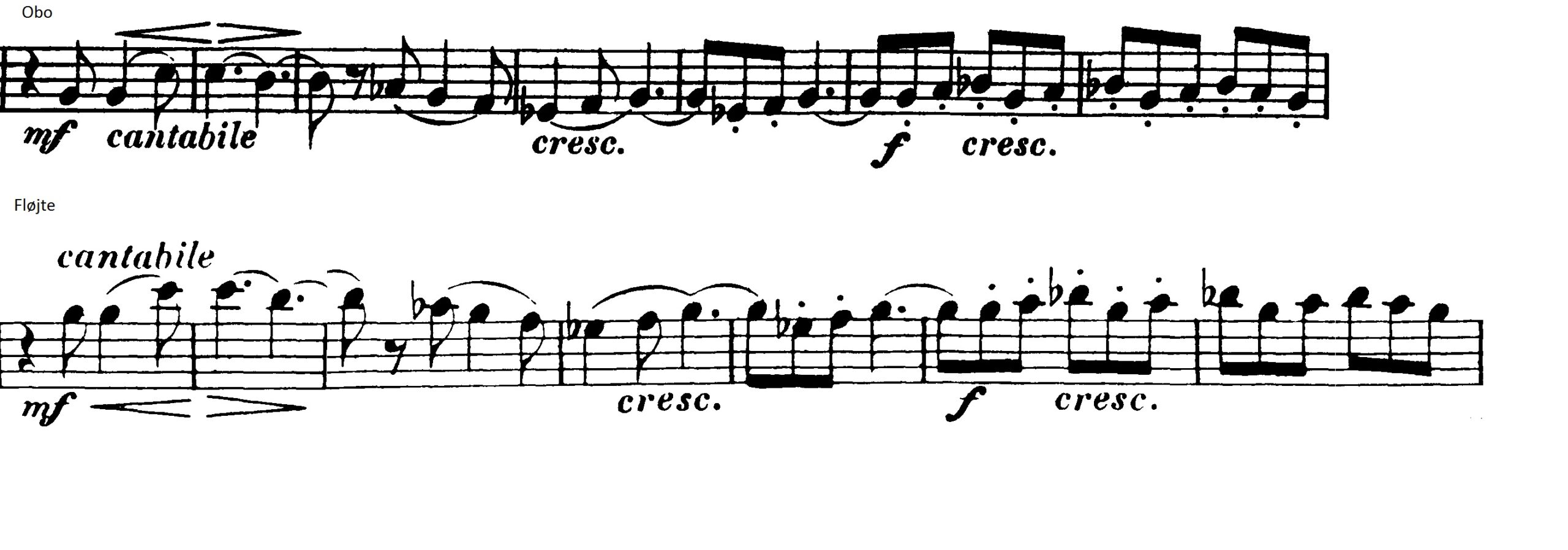
The clarinet follows shortly after with the same theme, but suddenly something happens. The oboe and flute play a theme that could be mistaken for the one that began the movement:
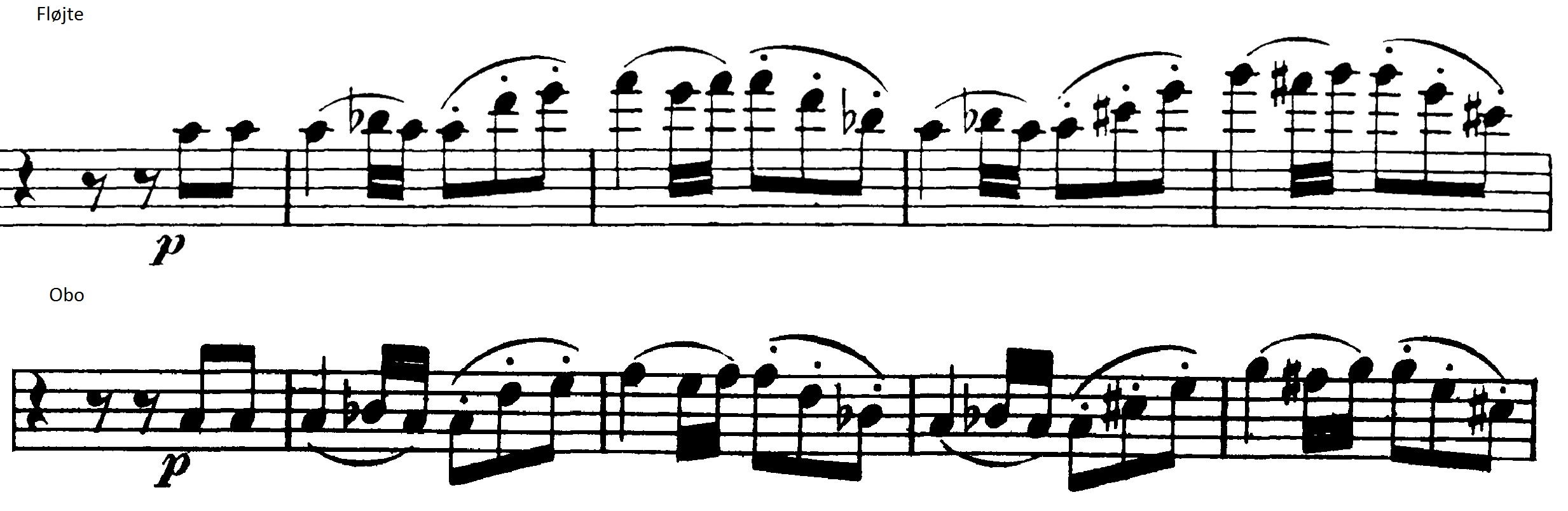
Is that land? Something is happening, and although the storm is still blowing, it's as if the power is fading out of it. The music becomes calmer and calmer, and slowly the cellos creep in with a theme:

A calm is coming over the music. And soon the violins return with the theme they opened with:

Below this, the cello adds a counter theme that blends elements from the previous themes we heard during the storm.
From here, as the last part of the movement unfolds, it's as if the storm is just an echo. Much of the build-up is similar to when we first heard the storm, but it's not as powerful, not as all-encompassing. Perhaps the last half should be interpreted as the sailors returning to land and recounting their experiences. That would fit with the variations and also the less all-encompassing feeling in the music.
At the end of the movement, we return once again to the melody that opened the entire movement:

All music excerpts are taken from Edwin F. Kalmus’ 1933 reprint of the Breitkopf & Härtel edition from 1877.